English
  Spanish
  French
  German


Group Facilitation Training: Conquer Meetings 2025
Why Most Meetings Fail and How You Can Fix Them
Group facilitation training is the key to changing how leaders guide discussions, make decisions, and open up their team’s potential. We’ve all been in meetings that drain energy and waste time. The reason is simple: most meetings fail because they lack skilled facilitation. The difference between a meeting that energizes and one that frustrates comes down to how well someone guides the group process.
Great facilitators don’t just run meetings—they create an environment where ideas flourish, conflicts become breakthroughs, and every voice matters. They manage the process so participants can focus on the content. Yet, most of us were never taught these skills. We were promoted into leadership roles without learning how to draw out quiet team members, manage dominant personalities, or guide a group through complex decisions. These practices also align with our approach to organizational communication improvement, helping teams communicate with clarity and confidence.
I’m Steve Taormino, and over 25 years of building teams and leading organizations, I’ve seen that group facilitation is one of the most powerful investments a leader can make. Through my work helping organizations achieve sustainable growth, I’ve witnessed how skilled facilitators transform workplace culture and drive real business results.
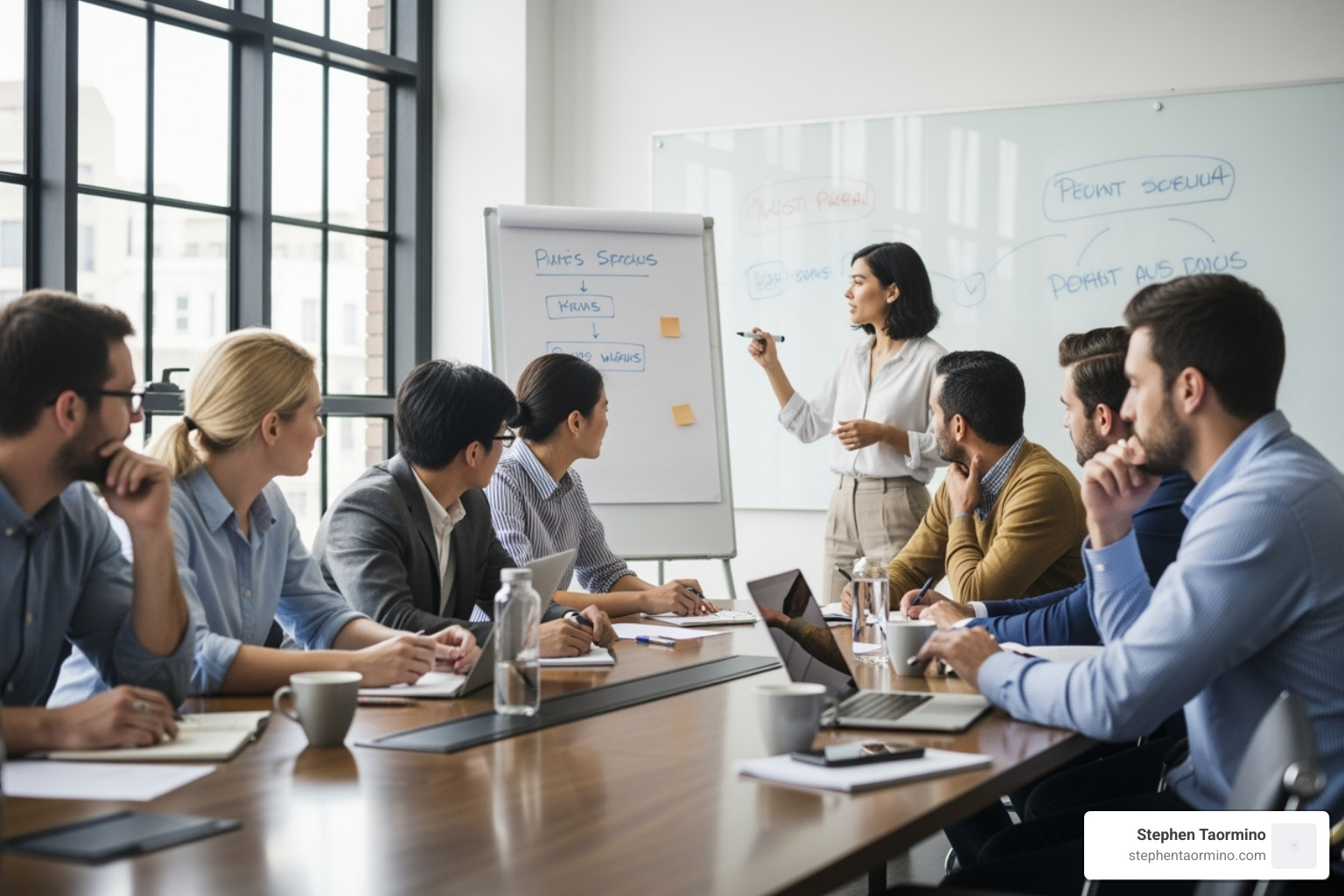
Ineffective meetings breed frustration and stifle creativity. When a group trusts that the process is well-managed, they feel safe to engage, share diverse perspectives, and contribute meaningfully. This leads to higher engagement, greater empowerment, and more productive outcomes. The facilitator acts as a “guide from the side,” ensuring the discussion stays on track and achieves its purpose.
The Facilitator’s Mindset: Core Skills for Leading Groups to Greatness
Masterful facilitation requires a mindset shift from being a content expert to a process expert. Instead of having all the answers, you become the guide who helps the group find its own solutions. This mindset is built on several core skills.

It starts with active listening—tuning into words, emotions, and what’s left unsaid. Neutrality is key; stepping back from your own agenda empowers the group to take ownership. Great facilitators use powerful questions to challenge assumptions and open new perspectives. They synthesize information to clarify the group’s collective wisdom, maintain focus to keep the discussion on track, and build consensus by ensuring all voices are heard and respected. These aren’t just meeting skills; they are leadership superpowers that lead to organizational communication improvement and help in building high-performing teams.
Creating a Positive and Engaging Environment
The first few minutes of a session set the tone. Your goal is to create psychological safety, the single biggest predictor of team performance. This starts with how you arrange the room and greet people. Establish ground rules by engaging the group in creating their own agreements for interaction.
Encourage participation by watching for non-verbal cues and inviting quieter members to speak. Validate all contributions, even if you don’t agree, by acknowledging the value in each perspective. This builds trust and encourages open sharing. Many modern approaches also incorporate healing-centered techniques that focus on mutual support and empowerment, which is especially valuable during times of change.
To see these principles in action, you can View Video with Audio Descriptions that demonstrates effective group facilitation techniques.
The Psychology of Group Dynamics
Every group has a personality and moves through predictable stages: forming, storming, norming, and performing. Understanding these stages helps you adapt your approach, providing structure when needed and stepping back as the team hits its stride.
Your role is to foster connection, steer conflict constructively, and balance participation. Reframe conflict as creative tension, focusing on shared goals rather than personal differences. To balance the conversation, gently redirect dominant speakers and use structured exercises to give everyone equal airtime. The principles of marketing psychology insights are invaluable here, as understanding human behavior helps you design processes that bring out the best in any group.
The Facilitator’s Playbook: From Preparation to Flawless Execution
Effective facilitation isn’t about charisma; it’s about preparation. Like a chef planning a meal, a great facilitator designs the meeting experience with intention. Behind every smooth, engaging session lies careful planning and thoughtful execution.
The preparation phase is where the magic happens. This includes defining clear objectives, designing an agenda that flows logically, selecting the right tools and activities for your goals, and managing logistics like room setup and technology. The work doesn’t end when the meeting does; debriefing and creating feedback loops are essential for continuous improvement. This structured approach is similar to frameworks used in our panel discussion script guide.
How to Prepare for a Successful Group Facilitation
Define purpose and outcomes: Start by asking what specific result the group needs to achieve. Clear objectives are your North Star.
Know your audience: Understand their backgrounds, relationships, and potential power dynamics to anticipate challenges.
Structure the agenda: Create a logical flow, starting with easier items to build momentum and tackling complex topics when energy is high. Be realistic about timing.
Choose activities: Select exercises that intentionally serve your goals, whether it’s brainstorming, problem-solving, or consensus-building.
Prepare materials: Have everything ready beforehand. A well-stocked facilitator’s toolkit is essential.
Essential Facilitator’s Toolkit:
- Detailed agenda
- Flip charts and markers
- Sticky notes and index cards
- A visible timer
- Masking tape
- A “parking lot” space for off-topic ideas
- Backup activities
Managing Challenges and Difficult Behaviors
Even with perfect preparation, human dynamics can be unpredictable. You’ll encounter common challenges like disengagement, side conversations, or dominant personalities. The key is to see these behaviors not as personal attacks, but as signs that a need isn’t being met.
Manage dysfunction by referring back to the group’s ground rules. For a dominating speaker, you might say, “Thank you, John. Let’s hear some other perspectives.” For side conversations, a gentle pause and an invitation to share with the group often works.
When conflict arises, don’t avoid it—manage it. Keep the discussion focused on ideas, not personalities. Your biggest challenge may be staying neutral under pressure. Your job is to protect the process, not drive the outcome. Practicing these scenarios through role-play is one of the most effective ways to build confidence, a skill that also applies to learning how to moderate a panel discussion.
Your Path to Mastery: A Guide to Group Facilitation Training
Becoming a masterful facilitator is a journey of continuous professional development. It’s a learned skill that anyone can develop with the right training and commitment. For individuals, these skills build leadership capabilities and confidence. For organizations, the result is more productive meetings, better decisions, and a healthier workplace culture. This is why our leadership development consulting services emphasize facilitation as a cornerstone skill.

Types of Group Facilitation Training Available
The landscape of group facilitation training offers a path for every learning style and schedule.
- In-Person Workshops: These are often multi-day, immersive programs that provide intensive, hands-on practice with immediate feedback from instructors and peers. The focus is on building muscle memory for real-world scenarios.
- Live Virtual Classes: Offering the interactivity of in-person training without the travel, these online sessions use breakout rooms and collaborative digital tools to create an engaging learning experience.
- Self-Paced Online Courses: For those who need flexibility, online modules and video series allow you to learn at your own pace. They are excellent for refreshing specific skills or gaining foundational knowledge.
- Peer-Based Training: This approach is powerful in community or support settings, where facilitators with shared lived experiences guide groups. The focus is often on building relationships and creating safe, healing-centered spaces.
Key Facilitation Approaches and Methodologies
Great facilitators draw from a variety of approaches depending on the group’s needs.
Participatory Decision-Making: This foundational approach empowers every group member to contribute to decisions that affect them. The goal is collective ownership of the outcome. The Facilitator’s Guide to Participatory Decision-Making is a classic resource on this topic.
Experiential Learning: The most effective training emphasizes learning by doing. Through role-playing and group exercises in a safe environment, you build the confidence and skills needed for real-world challenges.
Healing-Centered Facilitation: This powerful approach focuses on fostering mutual support and genuine connection. It recognizes that groups can be spaces for both professional and personal growth, especially in therapeutic or peer-led settings.
Graphic Facilitation: Using drawings and visual maps, this technique makes abstract conversations concrete. It helps groups see their thinking unfold, identify patterns, and engage visual learners more effectively.
Advanced Facilitation: Adapting to a Complex and Digital World
The facilitator’s role has expanded dramatically. What once required a physical room now spans continents through screens, demanding new skills to steer virtual environments, cultural differences, and complex ethical considerations. Adapting your techniques isn’t just helpful—it’s essential for success in our interconnected world.
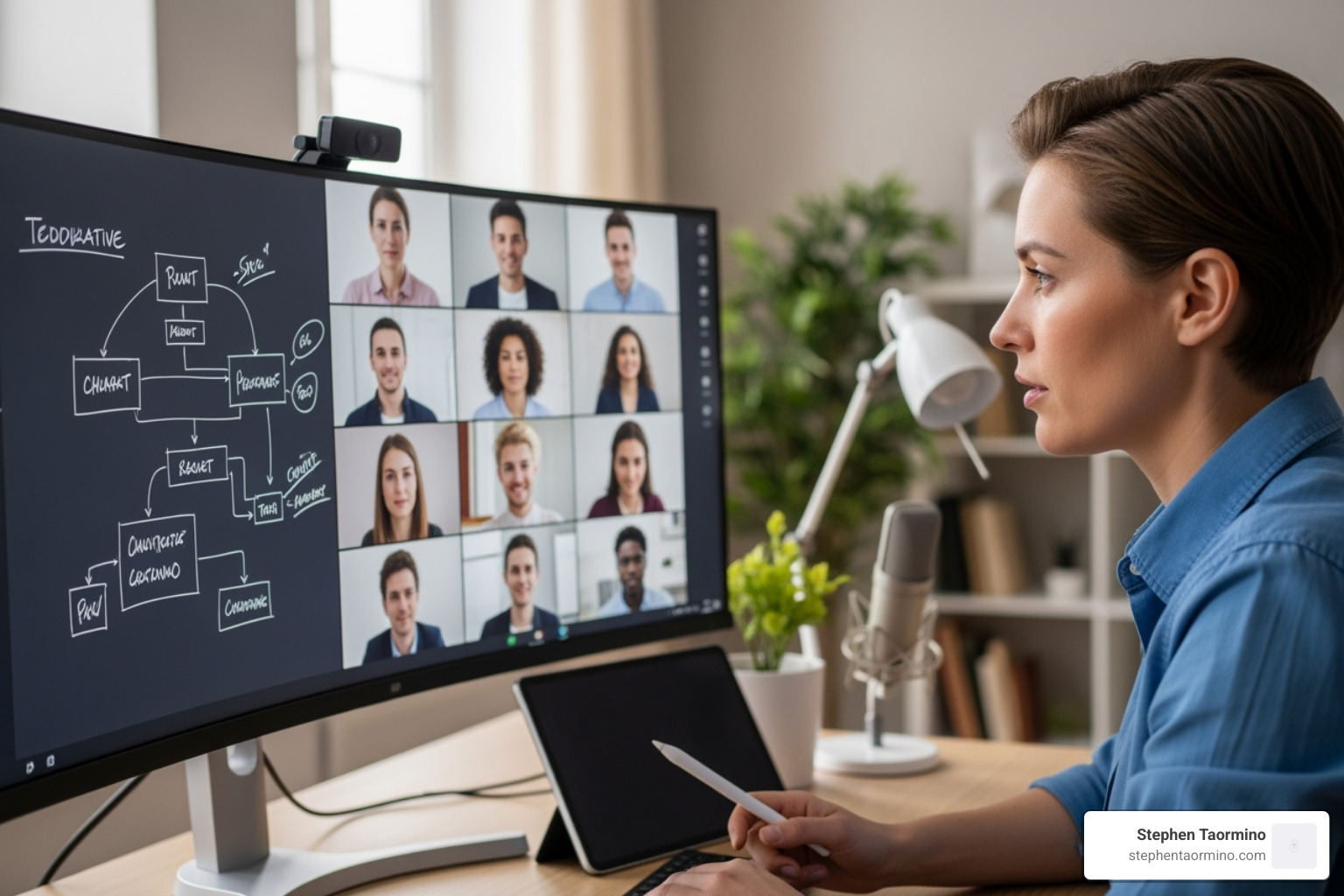
Leveraging Technology for Virtual Group Facilitation
While virtual facilitation presents challenges like reading body language, technology offers powerful solutions.
- Digital Whiteboards: These create collaborative canvases for brainstorming and organizing ideas in real-time.
- Polls and Quizzes: Use these for quick temperature checks, to gauge understanding, and to guide decision-making.
- Breakout Rooms: These are essential for recreating the intimacy of small-group discussions where quieter voices can emerge.
Managing online dynamics requires a different skill set. You must become comfortable with digital silence, establish clear virtual etiquette (e.g., using the “raise hand” feature), and work harder to maintain human connection. Actively call on participants and create multiple ways for people to contribute. For more strategies, resources like How to Make Virtual Engagement Easy can be helpful as you steer digital change technology.
Adapting for Different Groups and Cultures
A one-size-fits-all approach to facilitation will fail. You must adapt your style to the group you’re serving, whether it’s a high-energy youth group, a trust-based peer support circle, an efficiency-focused corporate team, or a passionate non-profit board.
Cross-cultural awareness is non-negotiable. Participants from diverse backgrounds bring different communication styles, approaches to conflict, and expectations about hierarchy. Be mindful of your language, avoid idioms that may not translate, and use inclusive examples. Our cross-cultural leadership training offers deeper insights into navigating these dynamics.
Finally, ethical considerations are paramount. Facilitators must understand confidentiality, data privacy, and intellectual property, especially in virtual settings. Your primary responsibility is to protect the group’s integrity and ensure the well-being of all participants.
Conclusion: Lead with Confidence, Transform Your Organization
In today’s workplace, the ability to guide groups effectively is a leadership superpower. Group facilitation training transforms meetings from obligations into engines of creativity and collaboration. When you master these skills, you’re not just running better meetings—you’re fundamentally changing how your team works together.
Facilitation isn’t about having the answers; it’s about helping others find them. For individuals, these skills build influence and confidence. For organizations, the result is faster decisions, higher engagement, and a culture of innovation.
My approach combines the technical aspects of group dynamics with deep insights into marketing psychology—understanding not just what people do in groups, but why. This perspective helps leaders create environments where human behavior naturally aligns with organizational goals.
The impact of skilled facilitation ripples through an entire organization. When you change how teams collaborate, you change the culture. When you change the culture, you change business results. Continuous learning is the hallmark of a great facilitator, and it’s a journey worth taking.
Ready to transform your leadership and open up your team’s full potential?
Explore our hands-on workshops to master your facilitation skills.