
Why Expert Moderator Questions for Career Panel Discussions Drive Success
Moderator questions for career panel discussions can make or break the entire experience. The right questions transform a generic Q&A into a dynamic conversation, revealing authentic career insights, unexpected wisdom, and actionable advice that attendees can’t find anywhere else.
Top 5 Essential Moderator Questions for Career Panels:
- “What’s a skill you learned in an unexpected place that proved invaluable in your career?”
- “Describe a major failure or setback that ultimately set you up for later success.”
- “What’s the biggest misconception people have about your industry?”
- “If you could go back, what advice would you give your younger self?”
- “What will be the most critical change in your industry in the next five years?”
A successful career panel depends on questions that spark genuine conversation, not rehearsed responses. The best questions are open-ended, draw on personal stories, and can’t be answered with a simple Google search. They encourage panelists to share specific stories and unique perspectives that resonate with the audience’s career aspirations.
As Stephen Taormino, I’ve spent over 25 years helping leaders communicate more effectively by understanding the psychology behind meaningful engagement. Through moderating panels and coaching executives, I’ve found that the right moderator questions for career panel discussions create connections that extend far beyond the event itself.
The Foundation: What Makes a Career Panel Question Great?
Did the last career panel you attended offer fresh insights or the same generic advice? The difference often comes down to the quality of the moderator questions for career panel discussions. Great questions open up the real stories behind a panelist’s journey—the messy pivots, unexpected lessons, and hard-won wisdom.
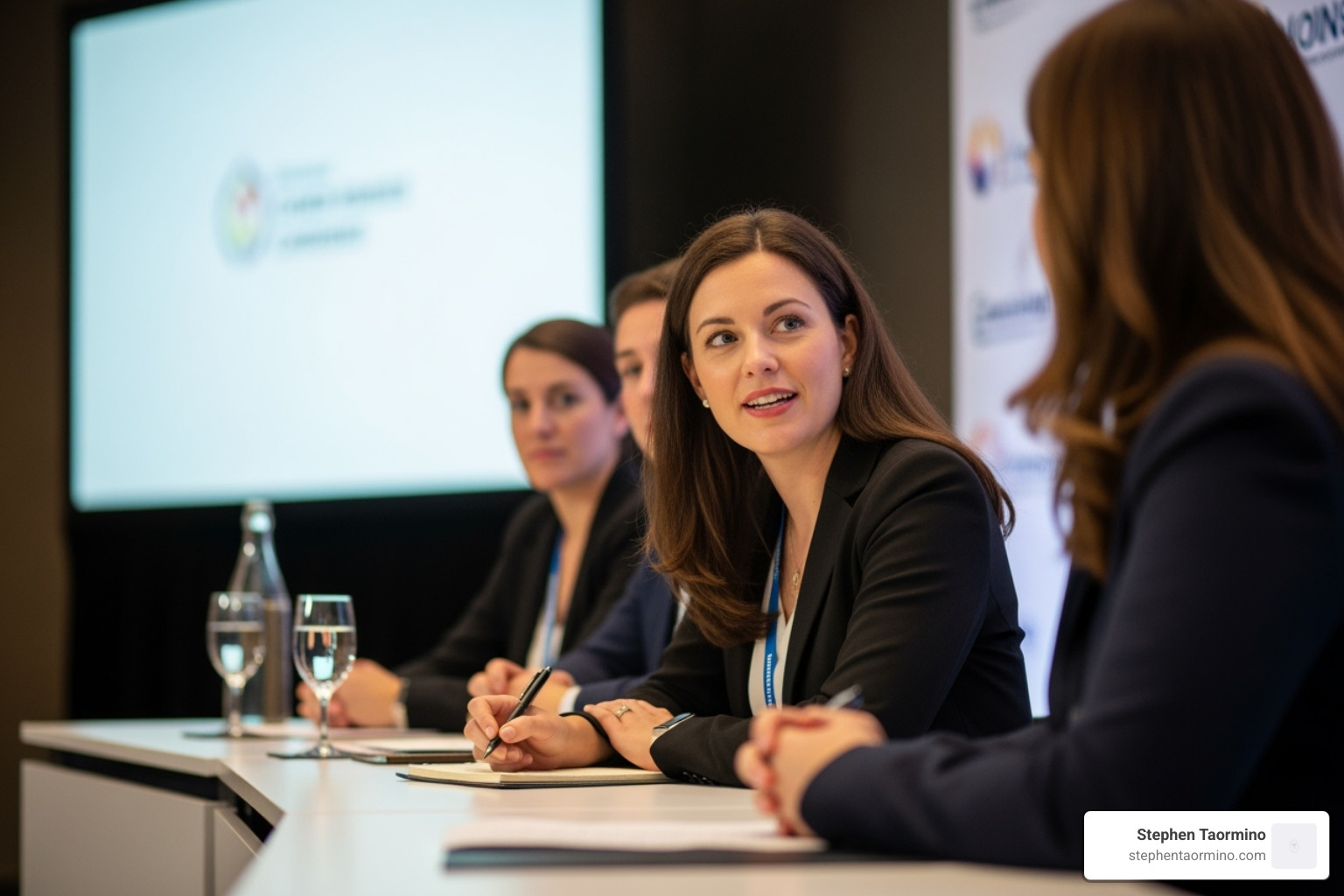
As a moderator, your role is to facilitate genuine conversation. This means asking questions that draw out personal stories and reveal insights that can’t be Googled. Instead of asking, “What does your job involve?” try, “What’s one aspect of your role that would surprise people?” The first gets a job description; the second gets a story.
Open-ended questions are your secret weapon. They force panelists to reflect, share stories, and move beyond simple yes-or-no answers, leading to richer insights.
For more on effective communication strategies, check out More info on effective communication strategies.
However, several types of questions can derail a discussion. Vague questions lead to rambling, leading questions shut down authenticity, and multi-part questions cause confusion.
The Anatomy of an Impactful Question
After years of moderating, I’ve developed a 5-point checklist to ensure every question hits the mark.
- Clarity: The question must be easy to understand. If you have to explain it, rephrase it.
- Relevance to your audience: Tailor questions to your attendees’ specific concerns, whether they’re students or career changers.
- Sparks thoughtful discussion: The best questions invite different perspectives and even respectful disagreement.
- Unique perspectives: Ask about experiences only your panelists can share. Instead of “What skills are important?” try “What’s a skill you learned outside of work that unexpectedly helped your career?”
- “Ungoogleable” questions: Aim for questions that require personal reflection or opinion, creating value that makes attending worthwhile.
Common Pitfalls to Avoid When Formulating Questions
Even experienced moderators can fall into traps. Here’s what to watch out for.
- Obvious Answers: Don’t ask questions that could be answered on a company website or LinkedIn profile.
- Overly Complex Questions: Keep language simple and your focus clear to avoid confusing panelists and the audience.
- Ignoring Audience Needs: Always prioritize what your audience genuinely wants to know over what sounds impressive.
- Poor Time Management: Pace your questions to avoid rushing through important topics or running out of time.
- Letting One Panelist Dominate: Design questions that give everyone a chance to contribute their unique perspective.
- Failing to Follow Up: When a panelist shares something insightful, don’t just move on. Ask them to elaborate or invite others to respond. This is often where the best moments happen.
The Ultimate List of Moderator Questions for Career Panel
When preparing moderator questions for career panel discussions, a strategic approach is key. Think of it as conducting an orchestra: start with introductions, build to personal stories, dive into practical insights, and finish with inspiring takeaways.
A well-structured panel flows naturally. We begin by helping the audience get to know panelists as real people, then explore the non-linear reality of career paths before getting into the day-to-day details.
Opening Questions & Icebreakers
These first questions help panelists relax and connect with the audience on a human level.
- “Can you share a brief personal story or experience that led you to your current work?” This invites storytelling over resume recitation.
- “What’s a common misconception about your job or industry that you’d like to clear up?” This generates interesting responses and provides immediate value to the audience.
- “If you had to describe your career journey in the length of a tweet, what would it say?” The constraint forces panelists to be creative and memorable.
- “Beyond your official title, what’s one thing you do in your job that most people wouldn’t expect?” This reveals the hidden, often surprising, aspects of a career.
The Career Journey: Path & Pivots
Careers are rarely straight lines. These questions explore the detours, failures, and unexpected opportunities that shape a professional path.
- “What was a major failure or setback that ultimately set you up for later success?” This question consistently produces memorable and valuable responses by normalizing setbacks.
- “If you could go back, what advice would you give your younger self at the start of your career?” This encourages specific, personal reflection rather than generic advice.
- “Many people follow a linear path, but you’ve had some ‘side quests’ or detours. What motivated those changes?” This frames career pivots as valuable exploration, not failure.
- “What was the most important thing you got out of high school or college that has helped you in your career?” The answers are often surprising and highlight unconventional skills.
For students looking to continue these conversations, here’s A guide for students on networking questions.
The Day-to-Day: Skills, Culture, and Challenges
This section gets practical, helping the audience understand what it’s really like to work in these fields.

- “Could you describe a typical workday or workweek for you?” This simple question is incredibly valuable for those trying to envision themselves in a role.
- “What’s a skill you learned in an unexpected place that proved invaluable in your current career?” This often uncovers fascinating stories about skills gained from hobbies, sports, or part-time jobs.
- “How do you handle stress or prevent burnout in your role?” This addresses a critical topic and reveals insights about workplace culture and personal sustainability.
- “What are the biggest challenges you’ve faced in this position?” This helps the audience understand that every career has difficulties and shows how successful people steer them.
Looking Ahead: Industry Trends and Future Advice
These questions help the audience prepare for the careers of tomorrow, not just today.
- “What will be the most critical change in your industry in the next five years?” This pushes panelists to think about fundamental shifts and necessary future skills.
- “What is one piece of practical advice you would give someone trying to enter this field today?” The emphasis on “practical” ensures actionable guidance over generic inspiration.
- “How do you stay updated with the rapid changes in your field?” This reveals the learning strategies that busy professionals use to stay current.
Closing Questions: Leaving a Lasting Impression
Wrap up with questions that create memorable takeaways and motivate the audience.
- “What is the single most important thing you hope our audience takes away from this discussion?” This helps panelists distill their most essential message.
- “What’s a book, podcast, or resource that has significantly influenced your professional life?” This gives the audience concrete next steps for their own learning.
- “If there’s one thing we haven’t covered that you feel is crucial for our audience to know, what would it be?” This catch-all question ensures no critical insights are missed.
Customizing Your Questions for Audience and Panelists
The magic of an impactful career panel happens when every question feels custom to the people in the room. This requires homework: audience research and panelist research are the foundation for creating those “aha!” moments.
I’ve found the best panels feel like intimate conversations, even in a large room. This happens when we understand who is in the audience and why each expert is on stage. When we tailor questions thoughtfully, we build bridges between where people are and where they want to be.
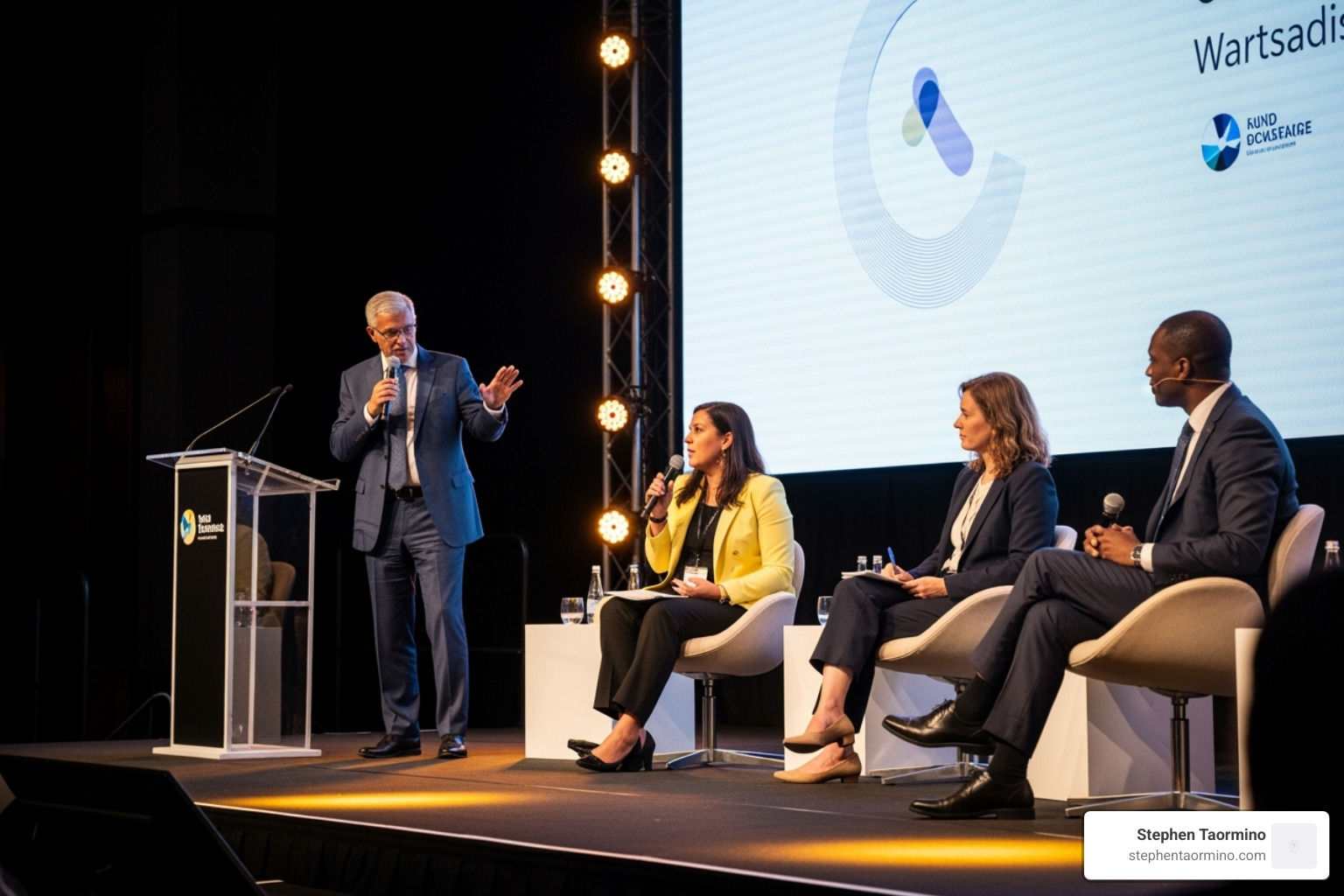
This dual focus on panelists and audience allows me to craft moderator questions for career panel discussions that spark genuine connection and deliver real value.
Tailoring Moderator Questions for a Career Panel Audience
A question that resonates with a college senior might miss the mark with a mid-career professional. Customizing for your audience is key.
- High School Students: Make careers feel accessible. Ask how school subjects translate to real work and how to explore fields through volunteering or internships.
- College Students: They’re closer to making decisions and need practical advice. Focus on job search strategies, company culture, and how to stand out in a competitive market.
- Ph.D. Candidates: Address the unique challenge of transitioning from academia. Discuss transferable skills and how to communicate complex research to a broader audience.
- Career Changers: This group is interested in how skills translate across industries, how to rebuild networks, and what it takes to start over. Their questions often bring out the most authentic stories from panelists.
By understanding your audience’s career stage, you can ensure every question is relevant and addresses their specific anxieties and aspirations.
Highlighting Unique Panelist Expertise
Every panelist has a unique story. Your job is to help them tell it. This means playing to their strengths and understanding why they were invited.
I often assign specific questions that showcase a panelist’s unique background. Instead of a generic question, I might ask, “Based on your experience transitioning from engineering to marketing, how did you steer that shift?” This honors their journey and provides targeted insights.
Encouraging interaction between panelists also creates valuable moments. After one panelist answers, I might turn to another and ask, “How does your experience in a startup environment compare to what Sarah just described about corporate culture?” These exchanges reveal different perspectives and show there’s rarely just one right way to do things.
This personalized approach transforms a generic Q&A into a rich discussion that reflects the real complexity of professional life.
Beyond the Moderator: Empowering Your Audience to Ask Great Questions
The magic of a career panel isn’t limited to the moderator’s questions. Some of the best moments come from the audience. As moderators, we love seeing hands go up during the Q&A because it signals genuine curiosity and engagement.
Successful audience participation starts with preparation. We encourage attendees to take notes during the panel. When a panelist says something that resonates, that’s the perfect time to jot down a follow-up question.
Student engagement is far more meaningful when they come prepared. The difference between “What’s your job like?” and “You mentioned using data visualization in unexpected ways—can you share a specific example?” is night and day. The second question open ups a story you can’t find anywhere else.
A Student’s Guide to Asking Effective Questions
Asking questions in a large room can be intimidating, but remember: panelists genuinely want to help. A thoughtful question often leads to the most valuable advice of the session.
- Research Panelists Beforehand: A quick LinkedIn search allows you to ask specific, informed questions that show respect for their time and expertise.
- Ask Insightful Questions: Move beyond the obvious. Instead of asking about a typical day, try, “How does your experience in a previous role inform how you approach your work today?”
- Avoid Salary Questions: Public panels are not the right venue for compensation questions. Save those for one-on-one networking opportunities.
- Focus on Growth: Ask about skills, learning opportunities, and what hiring managers look for. “What’s a skill you wish you’d developed earlier in your career?” provides actionable advice.
- Ask for Practical Next Steps: A great question is, “How can I best ‘try out’ this line of work through internships, volunteer opportunities, or projects?” This shows initiative and helps you get concrete advice.
- Follow Up Effectively: Connect on LinkedIn with a brief, personalized thank-you message that references their answer to your question. This proves you were listening and keeps the conversation going.
Students who make the strongest impression ask questions that benefit the entire audience, not just themselves. By making a good impression through thoughtful questions, you’re not just gathering information—you’re opening doors to mentorship and professional connections.
Conclusion: Sparking Meaningful Career Conversations
The art of crafting exceptional moderator questions for career panel discussions is about creating moments of genuine connection. When a panelist shares a story that changes how someone sees their own future, the event becomes a success. The goal is to create authentic connections between experienced professionals and those eager to learn from them.
As moderators, our role is to be storytellers, weaving together different career experiences into a narrative that speaks to our audience’s hopes and concerns. This process is driven by the power of curiosity. When we approach each question with genuine interest, that curiosity becomes contagious.
Great moderation is ultimately about understanding the psychology of engagement—knowing how people connect, what motivates them to share authentically, and how to create an environment where meaningful conversations unfold. This deeper understanding of human behavior is essential for mastering not just panel moderation, but leadership communication in all its forms.
The ripple effects of a well-moderated panel are significant. Attendees leave with clearer direction, and panelists gain new perspectives. These conversations spark the kind of meaningful professional relationships that can shape entire careers.
To truly master leadership communication, one must understand the psychology of engagement. This is my specialty at Stephen Taormino. This approach builds stronger connections and opens up potential, creating prosperity through the simple act of asking the right questions.
Find more leadership and communication insights on our videos page