
Conference Moderator: 3 Essential Steps for Success
The Unsung Hero of Every Great Event
A conference moderator is the experience architect who guides discussions, manages speaker dynamics, and ensures audience engagement throughout panels and conference sessions. They serve as the bridge between speakers and attendees, facilitating meaningful conversations while maintaining event flow and time management.
Key Conference Moderator Responsibilities:
- Before the event: Research topics, prepare questions, coordinate with speakers
- During the session: Introduce speakers, manage time, facilitate Q&A, maintain engagement
- After the event: Summarize key points, guide next steps, collect feedback
The spotlight shines on the speakers, but the success of any panel or conference often rests on the shoulders of its unsung hero—the conference moderator. While attendees focus on the content being presented, a skilled moderator works behind the scenes as what industry experts call an “experience architect,” shaping every aspect of the attendee journey.
These professionals don’t just introduce speakers and manage time. They act as strategic guides who can make the difference between a forgettable session and a transformative experience. Research shows that moderators function like orchestra conductors, ensuring each element of the event harmonizes to create maximum impact for the audience. We often draw on principles from behavioral science to improve engagement and clarity—for example, see our guide on leveraging communication with behavioral economics.
The stakes are higher than most people realize. A great moderator can lift average content into something memorable, while a poor moderator can undermine even the most brilliant speakers. They’re responsible for reading the room, adapting on the fly, and ensuring every attendee walks away with clear value.
I’m Steve Taormino, and through my 25+ years in strategic communications and my work as both a professional speaker and conference moderator, I’ve seen how the right facilitation can transform an entire event. In this guide, we’ll share the essential responsibilities and proven strategies that separate exceptional conference moderators from those who simply fill the role.
The Architect of Engagement: What is a Conference Moderator?
Think of a conference moderator as the invisible hand that guides every great conversation. We’re not just the person with the microphone; we’re the conductor of the entire experience. While speakers bring the content, we serve as the bridge between their brilliant minds and an audience that needs to connect with the information. Our job goes far beyond introductions—we are the guardians of the agenda and stewards of time, ensuring every moment serves the audience.
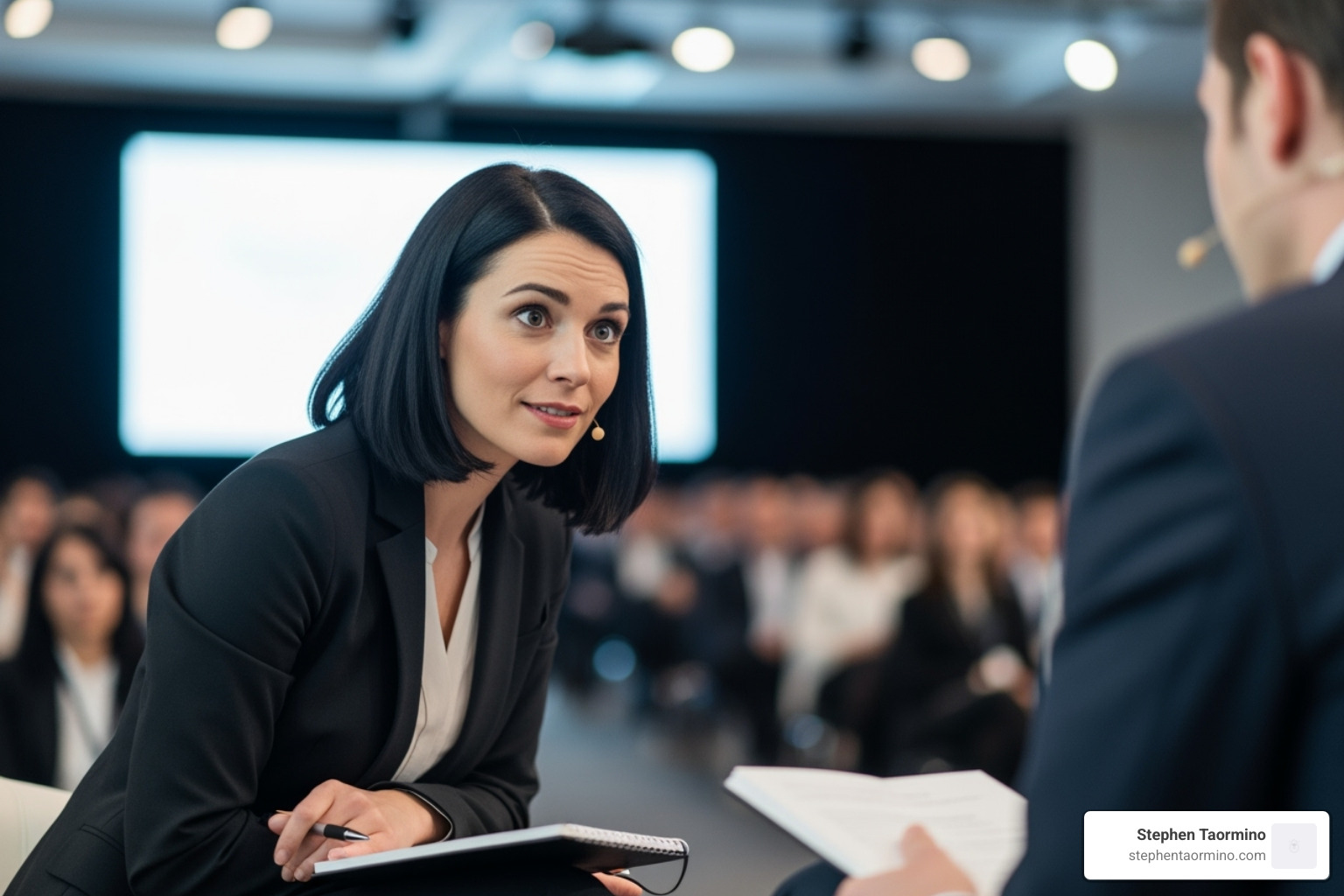
A skilled moderator contributes to event success by setting the tone from the first moment. We create a welcoming, energetic atmosphere where both speakers and attendees feel comfortable engaging with complex ideas. This is the difference between a flat, disconnected room and one buzzing with intellectual curiosity.
The Core Purpose of a Skilled Moderator
Great moderators serve the audience, not their own curiosity or the speakers’ egos. Every question, transition, and intervention is filtered through one question: will this add value for the people in the seats? We act as real-time translators, pulling industry jargon back to practical applications and finding the connecting threads when speakers talk past each other.
Speakers provide the raw materials; we help build something meaningful from them. By asking probing questions, redirecting conversations that drift, and synthesizing key takeaways, we ensure the audience can follow the logic and see the bigger picture emerge.
How a Moderator Shapes the Attendee Experience
The difference between a forgettable session and a transformative one is often the moderation. We turn passive listening into active engagement, creating memorable moments through careful attention to human dynamics. We read the room, sense when energy is flagging, and know how to reignite it.
Great moderation makes complex topics accessible to everyone. We break down technical concepts and connect abstract ideas to real-world situations. Perhaps most importantly, we foster genuine human connection, not just between the stage and the seats, but among attendees themselves. The best sessions feel like a shared conversation, an atmosphere carefully cultivated through skilled facilitation.
When we do our job well, we become nearly invisible. The audience focuses on the valuable content, never realizing the strategic work that created the seamless experience. That’s the mark of true experience architecture.
The Moderator’s Toolkit: Essential Skills and Qualifications
A great conference moderator is like a Swiss Army knife—versatile, reliable, and equipped for any situation. The best moderators develop a unique blend of natural instincts and honed skills, mastering both the hard and soft skills that make people feel heard and valued.

Foundational Communication Skills
- Exceptional Public Speaking: The bedrock of moderation isn’t about being the star but about commanding attention while directing it toward the speakers. It’s the ability to be authoritative yet invisible.
- Active Listening: This is the true art form. Skilled moderators absorb every nuance, enabling them to ask articulate, probing questions that open up new perspectives.
- Storytelling Ability: A well-placed anecdote or analogy transforms dry transitions into memorable moments, making complex concepts accessible.
- Non-Verbal Communication: A gentle hand gesture to signal time or a warm smile to encourage a panelist works like a conductor’s baton, guiding the flow without words.
These skills are rooted in the psychology of effective engagement, a topic we explore in our work on leveraging communication with behavioral economics.
Strategic and Intellectual Skills
- Subject Matter Expertise: This doesn’t mean knowing everything, but having enough depth to ask intelligent follow-up questions and guide discussions with confidence.
- Quick Thinking and Adaptability: Technology fails and speakers run long. These aren’t problems; they’re opportunities for a skilled moderator to turn potential disasters into moments of authentic connection.
- Impartiality and Objectivity: Personal opinions take a backseat to the audience’s learning. This means ensuring all perspectives get fair representation by encouraging quiet speakers and reining in dominant ones.
- Strong Organizational Skills: Great moderators track time, remember key points, and weave threads into a coherent narrative, all while making it look effortless.
- Problem-Solving Abilities: From managing personality conflicts to clarifying confusing concepts, experienced moderators approach challenges with calm creativity, not panic.
These skills compound over time, as each event teaches new lessons and builds the resilience needed to tackle bigger opportunities.
The Three-Act Structure: A Professional Conference Moderator’s Playbook
Exceptional moderation is like directing a three-act play: thoughtful preparation, skillful execution, and meaningful follow-up. This structure transforms good events into unforgettable experiences.

Act I: Before the Event – Laying the Groundwork for Success
The magic of great moderation begins long before the event. As a conference moderator, this preparation phase is where you build the foundation for success.
- Research the Topic and Audience: Dive into the subject matter and understand who is in the audience. Are they beginners or experts? Their expectations shape every question you’ll ask.
- Collaborate with Speakers: Reach out to each panelist individually to discuss their perspectives, review their presentations, and confirm details. This helps create a natural flow during the live session.
- Prepare Insightful Questions: Craft about ten thoughtful questions, with at least one custom to each panelist’s expertise. The goal is revelation, not just filling time.
- Plan the Session Flow: Choreograph the session by crafting compelling introductions, planning transitions, and coordinating with event organizers on AV and timing.
Act II: During the Session – The Art of a Live Conference Moderator
When the lights come up, your preparation pays off. This is where you bring everything together.
- Set the Stage: Start by conveying the session’s objective to the audience, connecting the content to their needs.
- Introduce Panelists Effectively: Keep introductions concise and relevant. Highlight why each speaker’s insights matter for this topic.
- Manage Time and Participation: Use subtle signals to keep speakers on track. Intervene politely to balance participation, drawing out quiet contributors and reining in dominant ones.
- Facilitate Engaging Discussion: Ask thought-provoking questions and weave narrative threads to connect panelists’ answers, helping the audience see the bigger picture.
- Manage the Q&A: Filter and rephrase audience questions for clarity and impact. Use tools like polls to boost engagement.
- Keep Energy High: Watch for audience engagement signals and adjust the pace as needed to maintain a dynamic atmosphere.
Act III: After the Event – Ensuring a Lasting Impact
Your role extends beyond the final applause to ensure the session has lasting value.
- Summarize Key Takeaways: Crystallize the main points of the discussion to reinforce learning.
- Provide a Powerful Closing: Deliver a closing statement that offers a sense of completion and gratitude.
- Guide Next Steps: Direct attendees to additional resources or ways to connect with speakers, turning passive learning into active application.
- Collect and Provide Feedback: Debrief with the event team, sharing your insights to help improve future events.
This comprehensive approach is what makes a moderator a true “experience architect.”
Grace Under Pressure: Handling Challenges and Disruptions
Even the best-planned session can have curveballs that test a conference moderator. A professional’s value becomes clear when things go wrong. Our ability to maintain composure defines the attendee experience, turning disruptions into opportunities to demonstrate grace under pressure.
Here’s how to handle common challenges:
- The Dominating Panelist: Use polite but decisive intervention. A gentle interjection like, “Thank you, Sarah. Michael, I’d love to get your take on that,” redirects the conversation while ensuring everyone gets a chance to speak.
- The Quiet Panelist: Draw them out with targeted questions that speak to their expertise. A specific prompt like, “Based on your research, how do you see this playing out?” helps shy speakers feel more confident jumping in.
- The Off-Topic Question: Acknowledge the questioner’s curiosity, then gently steer the conversation back. “That’s a fascinating angle. For our discussion today, let’s focus on our main theme.” This validates the person while keeping the session on track.
- The Controversial Comment: Maintain neutrality. Acknowledge the viewpoint without endorsing it (“I appreciate you sharing that perspective”) and quickly pivot to broaden the conversation (“What other factors should we consider here?”). Your job is to facilitate, not debate.
- Technical Failures: When mics cut out or slides fail, fall back on human connection. Engage the audience with an impromptu question or a relevant anecdote. These unscripted moments often become the most memorable.
The secret is to never let the audience feel the stress. When you handle disruptions with humor and professionalism, you improve the experience. A well-handled challenge demonstrates expertise and often becomes a highlight that attendees remember long after the event.
Frequently Asked Questions about Conference Moderation
People often wonder about the subtle but important differences between various event roles. Let me clear up some of the most common questions.
What is the difference between a moderator and a discussant?
A conference moderator is like a play’s director, while a discussant is like a theater critic. My job as moderator is to manage the process: guiding the conversation, managing time, and ensuring everyone is heard. My expertise is in facilitation.
A discussant, common in academic settings, provides expert content analysis. They are invited to offer critical commentary on the presentations. In short: moderators focus on process, while discussants focus on content.
What is the difference between a moderator and an emcee (MC)?
The main difference is scope. An emcee (Master of Ceremonies) is the host of the entire event, responsible for the overall energy, announcements, and transitions between segments. They keep the whole show moving.
As a moderator, my focus is narrower and deeper. I facilitate the dialogue within a specific session or panel, ensuring the content connects with the audience. An MC introduces the session, and I dive into the substance.
What are the benefits of being a conference moderator?
Moderating is a demanding but incredibly rewarding role with significant professional and personal benefits.
- Networking: You get direct access to industry leaders, building relationships that can lead to future collaborations.
- Visibility: Being on stage guiding important conversations positions you as a thought leader in your field.
- Leadership Skills: Managing panel dynamics, thinking on your feet, and keeping discussions productive are all valuable leadership qualities.
- Continuous Learning: The preparation for each session requires you to dive deep into new topics, constantly expanding your knowledge base.
- Personal Satisfaction: There’s deep satisfaction in knowing you helped create a meaningful experience where people learned and connected.
Conclusion: Elevating the Conversation and the Experience
Throughout this guide, we’ve explored how a skilled conference moderator serves as the vital bridge between speakers and audiences, changing ordinary presentations into extraordinary experiences. We’re not just timekeepers or introducers—we’re the strategic architects who shape every moment of an event’s success.
The impact of skilled facilitation cannot be overstated. When we bring our expertise to an event, we create an environment where complex ideas become accessible, where diverse perspectives find common ground, and where every attendee walks away with genuine value. We’ve seen how the right moderation can turn a good conference into an unforgettable one.
From the meticulous preparation that happens weeks before the event to the thoughtful follow-up that ensures lasting impact, our role touches every aspect of the attendee experience. We manage the unexpected challenges with grace, facilitate meaningful conversations, and ensure that every voice is heard. This comprehensive approach is what separates exceptional events from those that are quickly forgotten.
For organizations planning their next conference, panel, or corporate event, investing in expert moderation isn’t just a nice-to-have—it’s a key investment in the success of your entire gathering. The difference between a moderator who simply fills the role and one who truly understands the art of facilitation can determine whether your audience leaves inspired or simply informed.
As someone who has spent over 25 years in strategic communications and marketing psychology, I understand that great moderation combines technical skill with genuine human connection. It’s about reading the room, adapting in real-time, and creating those memorable moments that spark meaningful conversations long after the event ends.
The best conferences don’t just share information—they create experiences that change how people think, work, and connect with one another. That’s the true power of expert moderation, and it’s why skilled facilitators remain the unsung heroes of every great event.
To see how expert communication can transform an event, explore our Videos.