German
  English
  Spanish
  French


How to start a panel discussion as a moderator: 5 Ace
Why Your Panel Discussion Opening Determines Everything
How to start a panel discussion as a moderator can make or break your entire event. The research is clear: the first five minutes are absolutely critical for audience engagement. A strong opening transforms a potentially boring, repetitious panel into an informative and captivating experience, while a poor one causes audiences to mentally check out within minutes.
Here’s how to open your panel with confidence:
- Welcome and establish credibility – Greet the audience and briefly state your relevant expertise.
- Hook your audience – Use a startling statistic, compelling quote, or a thought-provoking question.
- Set clear expectations – Outline the format, timing, and rules for interaction.
- Introduce panelists strategically – Keep introductions brief and focused on their relevance to the topic.
- Launch with a broad “softball” question – Start with an easy, open-ended question to warm up everyone.
The moderator’s primary role is to serve the audience first and foremost. Your job is not to impress people with your brilliance or satisfy panelist egos, but to facilitate a conversation that delivers value to everyone who invested their time to attend.
As Steve Taormino, I’ve moderated numerous panels by applying marketing psychology principles to drive meaningful dialogue. My experience in leadership and human behavior has shown that mastering how to start a panel discussion as a moderator is essential for creating impactful, memorable events that resonate long after they end.
If you’d like to explore related topics, search our site for guidance on moderating techniques, best practices, and must-ask questions for panel moderators.
The Foundation: Pre-Panel Preparation for a Flawless Start
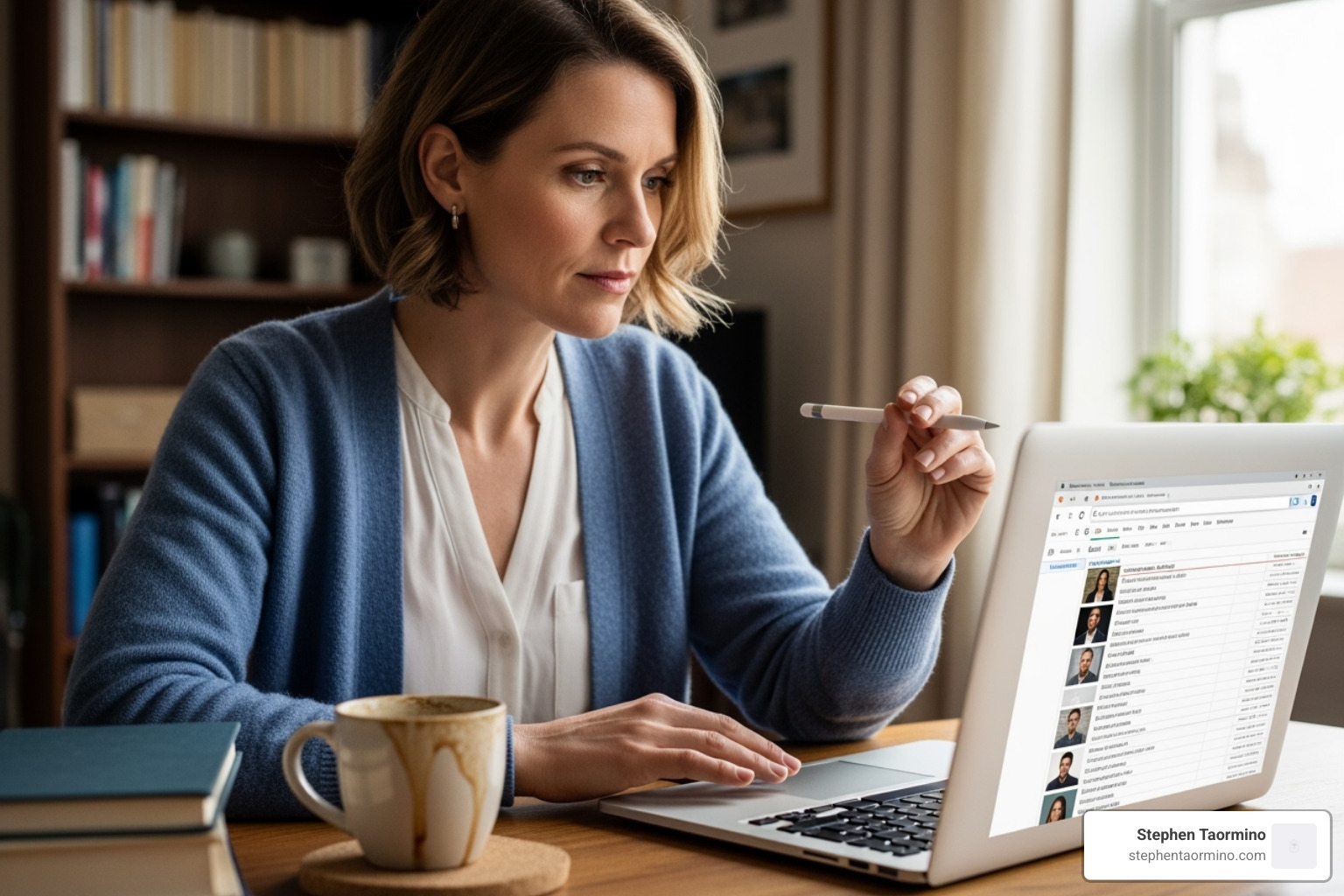
The secret to knowing how to start a panel discussion as a moderator successfully lies in your pre-event homework. Think of preparation as the invisible foundation of a house; nobody sees it, but without it, everything crumbles. Your audience will never know about the hours you spent planning, but they will absolutely feel the difference it makes. Get these elements right, and you’re already ahead of 90% of other moderators.
Understanding Your Core Objective: The Audience is King
Your primary role is to serve the audience. Every decision, from the questions you ask to how you manage time, must be aimed at delivering value to attendees. They came for insights, solutions, or fresh perspectives—your job is to ensure they get them.
This means embracing neutrality as your superpower. Resist the urge to share your own opinions or offer enthusiastic validation like “That’s brilliant!” Simple acknowledgments like “Thank you” or a professional nod are more effective. You are the facilitator, not the star of the show.
My work in behavioral economics and marketing techniques confirms that audiences engage when content directly addresses their needs. Before your panel, ask yourself: What problems are we solving for them? What insights will make their time investment worthwhile? When you keep the audience at the center, the conversation naturally becomes more relevant and memorable.
Know Your Material: Researching the Topic and Panelists
Deep research is non-negotiable, even if you’re an expert on the topic. Understand the latest trends, recent developments, and the nuanced perspectives your panelists might bring. This groundwork allows you to ask probing follow-up questions and gracefully redirect the conversation if it goes off track.
Researching your panelists is equally crucial. Review their published work, recent interviews, and social media to understand their unique expertise and communication style. This helps you craft personalized questions that showcase their strengths.
Pro Tip: Schedule a brief, 15–20-minute pre-panel call with your panelists. This call is perfect for building rapport, confirming name pronunciations, discussing the flow, and addressing any concerns. Thorough preparation allows you to be more flexible and responsive during the live event because you aren’t frantically trying to remember basic facts.
Structuring for Success: Crafting the Agenda and Flow
A well-crafted agenda is your roadmap. Without one, even the best panelists can end up in a rambling conversation that loses the audience. The ideal panel runs 45–60 minutes with 4–5 panelists, providing diverse perspectives without becoming unwieldy.
Here’s a sample structure to manage your time effectively:
- Introduction (5 minutes): Your welcome, topic setup, and panelist introductions.
- Main Discussion (30–40 minutes): The core of your panel, where the key insights are shared.
- Audience Q&A (10–15 minutes): Essential for audience interaction and engagement.
- Closing Remarks (5 minutes): Final thoughts and key takeaways from panelists.
Share this timed agenda with panelists beforehand so they understand the expected pace and can give concise answers. The biggest mistakes that derail a panel are poor preparation, making the discussion about yourself, wasting time on long introductions, and failing to set clear expectations. Your preparation creates the space for an organic, engaging conversation that delivers genuine value.
The First 5 Minutes: How to Start a Panel Discussion as a Moderator
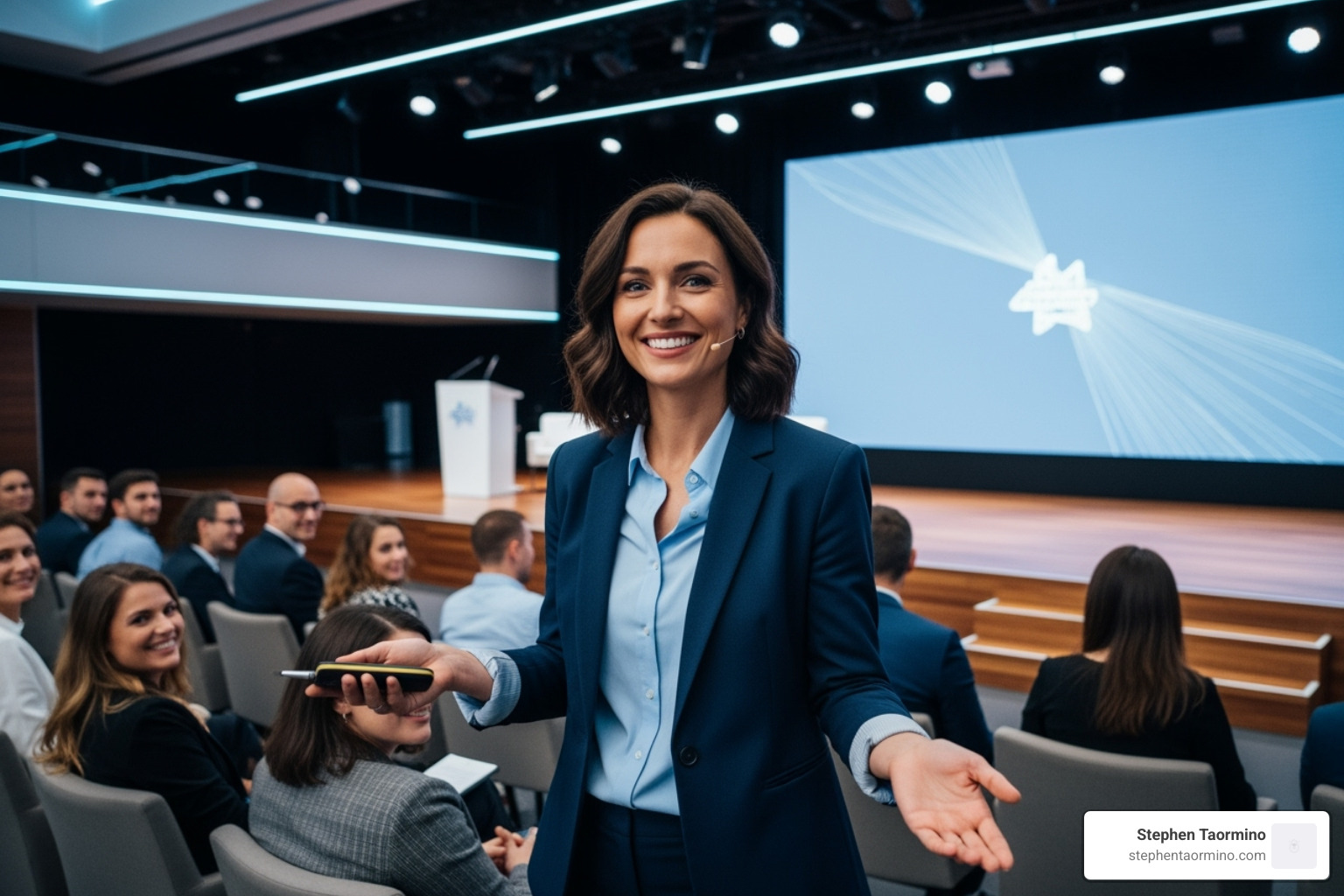
The first five minutes of your panel discussion are pure magic—or pure disaster. These opening moments determine whether your audience leans in with curiosity or mentally checks out. The good news is that how to start a panel discussion as a moderator follows a proven formula that works every time. This is your chance to make a strong first impression and set the stage for a valuable discussion.
Crafting a Compelling Opening Statement
Your opening statement isn’t just a greeting; it should establish credibility, capture attention, and create anticipation.
- Welcome and Credibility: Start with a warm welcome and a brief credibility check. For example, “Good morning, I’m Stephen, and having worked with hundreds of companies on communication strategies, I’m excited to guide today’s conversation.” This establishes expertise without being self-promotional.
- The Hook: Grab attention with a startling statistic, a relevant anecdote, or a thought-provoking question. For instance, “Did you know that 73% of executives say poor communication is their biggest barrier to growth?” This makes the audience think, “This is going to be interesting.”
- State the Purpose: Clearly tell the audience what value they will receive. “Today, we’re exploring practical communication strategies your teams can implement immediately.”
- Set the Format: Give a simple roadmap to help everyone relax. “We’ll have a dynamic conversation for about thirty minutes, then open it up for your questions for the final fifteen.”
Key steps for how to start a panel discussion as a moderator: Introducing Panelists with Pizazz
Avoid the costly mistake of asking panelists to introduce themselves. This wastes precious time—often 15 minutes—and can lead to rambling or repetitive information. Moderator-led introductions are far more effective, allowing you to control the pace and highlight what’s most relevant to the audience.
Instead of listing every achievement, focus on relevance. Rather than, “Please welcome Jane Smith, CEO of ABC Company,” try, “Next is Jane Smith, whose innovative approach to team communication at ABC Company increased productivity by 40%. Jane, we’re particularly excited to hear about your experience with remote team dynamics.”
Make eye contact and add a personal touch that shows you’ve done your homework. This builds immediate rapport and makes each panelist feel valued from the start.
Setting the Stage: Rules of Engagement and What to Expect
Now, establish the framework for the conversation. This creates clarity and allows for a better discussion.
- Outline the Format: Briefly reiterate the flow. “I’ll start with a broad question, then we’ll dive into specifics. Feel free to build on each other’s ideas—this is a conversation, not a series of presentations.”
- Communicate Time Expectations: Gently guide the pace. “We’ll aim to keep individual responses to about two minutes so everyone can contribute.”
- Explain Audience Interaction: Be specific. If you’re using a Q&A tool, explain how to use it. “You can submit questions anytime through the link provided in your program.”
- Create a Comfortable Environment: Encourage collaborative dialogue. “Panelists, please respectfully build on or even disagree with each other—that’s where the best insights come from. And audience, all thoughtful questions are welcome.”
Nailing these opening steps transforms a group of individuals into a community ready for meaningful dialogue.
Fueling the Conversation: From Opening Questions to Engaging Dialogue
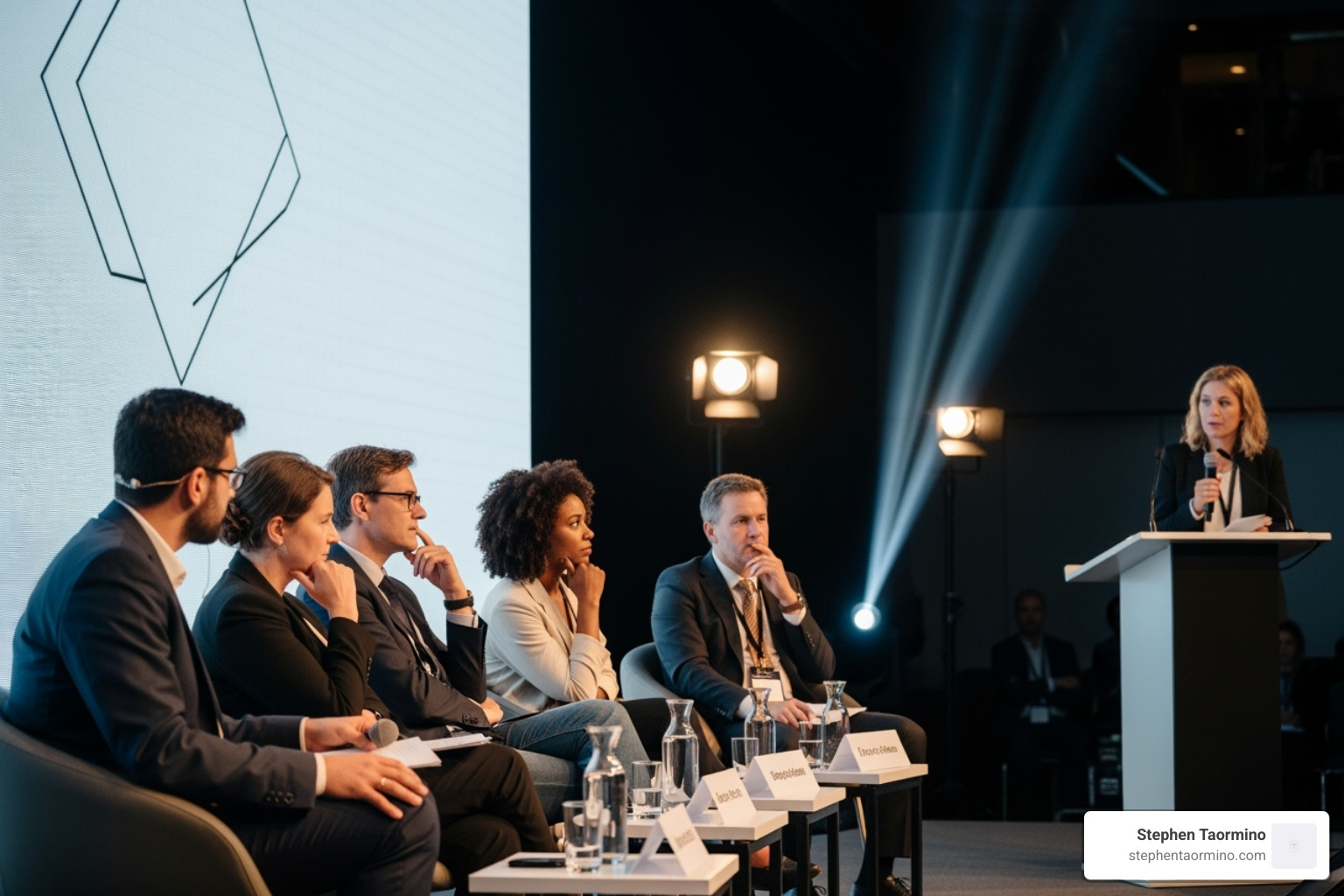
You’ve set the stage, and now it’s time for the main event. The transition from your opening to the first question should be smooth and build momentum. This is where knowing how to start a panel discussion as a moderator shifts from preparation to execution, changing a formal setup into a dynamic conversation that feels both professional and genuinely interesting.
Asking Your First Question: The Art of the “Softball”
Your first question is a conversational warm-up. The “softball” question is a strategic tool to get everyone’s mental muscles moving without overwhelming them right out of the gate.
Craft a broad, open-ended question that allows each panelist to approach it from their unique angle. Instead of diving into technical specifics, try something like, “What’s the most significant change you’ve seen in this field over the past year?” Questions beginning with “why,” “how,” or “what if” invite more thoughtful responses and storytelling than simple yes-or-no queries.
This first question warms up your panelists, giving them a chance to find their rhythm and build confidence. It also immediately signals that you’re facilitating a collaborative discussion, not conducting a series of individual interviews.
Mastering Active Listening from the Get-Go
Many moderators are so focused on their next question that they miss the gold in the panelists’ responses. Active listening is your secret weapon for elevating the discussion. From the first answer, be fully present. Listen not just to the words but to the energy, passion, and subtle cues that reveal where the real insights live.
Pay attention to word choice and body language. A panelist leaning forward, hesitating, or using tentative language can be a cue to probe deeper or bridge to another panelist with a different perspective. This deep listening allows you to create natural follow-up questions that feel organic rather than scripted.
While you should prepare 5-7 key questions as a safety net, the real magic happens when you can follow the conversation where it naturally wants to go. As research from the International Coach Federation highlights, the power of active listening creates space for authentic dialogue rather than just extracting predetermined information.
Navigating In-Person vs. Virtual Panels: Key Differences in Your Opening
The principles of engagement are the same for in-person and virtual events, but the execution differs. Understanding these nuances is key to maintaining momentum.
- In-person panels allow you to read the room’s energy and use non-verbal cues like eye contact and hand gestures to manage the flow. The shared physical space encourages more spontaneous dialogue and lets the audience see interactions between panelists more clearly.
- Virtual panels require you to be more explicit in managing turn-taking, as subtle social cues are lost. However, you can leverage platform features like polls and chat for real-time audience engagement. Silence can feel more awkward online, so you may need to be more direct in guiding the conversation to keep the energy up.
Technology also shapes the discussion. While in-person events flow naturally, virtual panels often benefit from a Q&A platform to crowdsource questions, keeping the audience involved throughout. Regardless of the format, your goal is to create an environment where meaningful dialogue can flourish.
Frequently Asked Questions about Starting a Panel Discussion
Even experienced moderators get pre-panel butterflies. Here are answers to common concerns that come up when people are learning how to start a panel discussion as a moderator. These questions often stem from real (and sometimes painful) past experiences, but the good news is that most common pitfalls are completely avoidable.
What’s the biggest mistake a moderator can make when starting a panel?
The biggest mistake is making the opening all about yourself instead of the audience. This is a fatal error that often stems from a few key issues:
- Poor preparation: Asking generic questions because you haven’t researched the topic or panelists. The audience can sense this immediately.
- Wasting time on long introductions: Spending five minutes on your own bio or letting panelists ramble through their career histories hemorrhages audience attention. We can save about 15 minutes by handling introductions ourselves.
- Failing to set clear expectations: Leaving the audience confused about the format, timing, or how to participate. They came for value, not confusion.
- Trying to be the star of the show: Dominating the conversation or injecting your own opinions instead of facilitating insights from the experts. Your mission is to make the panelists shine.
How do I handle a panelist who tries to take over from the very beginning?
Every moderator eventually faces a panelist who wants to dominate the conversation. The key is addressing it immediately with grace and firmness.
- Politely interrupt and redirect: “Thank you, Sarah, that’s a fascinating point. Before we go deeper, let me bring in Michael for his take on this foundation.”
- Acknowledge and bridge: “So what I’m hearing is that automation is key. David, how does that align with what you’re seeing in the healthcare space?” This validates their point while smoothly transitioning to another voice.
- Gently reiterate the format: A simple, “We want to make sure everyone gets a chance to share their unique insights today,” sends a clear message without causing embarrassment. Your body language can reinforce this.
Intervene early and consistently. If you let it slide in the first five minutes, it becomes much harder to course-correct later in the discussion.
Should I have my opening remarks memorized or scripted?
This is a common fear, but overly scripted openings often sound stilted and disconnected. Aim for a balance between preparation and natural delivery.
- Memorize key structural points: Know your welcome, hook, purpose, and format overview. Having these locked in gives you confidence and ensures you hit every important beat.
- Script the first few sentences: If it helps with nerves, practice your opening lines to launch confidently and overcome initial jitters.
- Sound natural and genuinely engaged: Authenticity connects with people more than perfection. A warm, genuine opening is always better than a flawlessly delivered but robotic one.
- Use brief notes as a safety net: A small card with bullet points can be invaluable if your mind goes blank, but it should only be a guide, not a script to be read.
Conclusion
When you master how to start a panel discussion as a moderator, you’re not just learning a skill—you’re developing the ability to transform ordinary conversations into extraordinary experiences. The opening minutes aren’t just for introductions; they lay the foundation for genuine connection, meaningful dialogue, and lasting impact. The best panels you’ve attended likely started strong, with a moderator who signaled from the outset that your time would be well spent.
Your secret weapon is always effective preparation. When you’ve done your homework—researching your topic and panelists, crafting thoughtful questions, and structuring a clear agenda—you create the space for authentic moments to emerge. This audience-centric approach sets you apart from moderators who simply go through the motions. When you focus on serving the people in the room, your questions become sharper, your transitions smoother, and your entire presence more magnetic.
Starting with warmth, confidence, and clear expectations sets a positive tone that ripples through the entire discussion. At Stephen Taormino, this approach reflects our deep understanding of marketing psychology and human behavior. We know that people connect with authenticity and respond to clear communication. Applying these insights will help you develop a presence that transforms not just your panels, but your leadership and professional relationships.
Master the beginning, and you’ve mastered the art of bringing out the best in others while serving your audience with excellence.
Looking for more inspiration? Check out the video section of our site to watch talks on communication and leadership.