
Why the Panel Discussion Method of Training Transforms Learning
The panel discussion method of training is a dynamic, interactive approach where a group of experts (typically 3-5 panelists) share diverse perspectives on a specific topic in front of an audience of learners, guided by a skilled moderator. Here’s what makes it work:
Core Components:
- Expert Panelists: 3-5 professionals with diverse backgrounds and real-world experience
- Skilled Moderator: Facilitates discussion, manages time, ensures balanced participation
- Active Audience: Learners who engage through Q&A, polls, and discussion
- Focused Topic: Specific, relevant subject matter aligned with training goals
- Interactive Format: Typically 60-90 minutes combining structured discussion and audience engagement
Key Benefits:
- Exposes learners to multiple viewpoints and diverse perspectives
- Promotes critical thinking and problem-solving skills
- Creates a forum for open dialogue and respectful debate
- Offers cost-effective training with high engagement
- Builds networking and collaboration opportunities
Imagine you’re sitting in a team meeting when your boss announces you’ll be attending a panel discussion on digital change. Will it be another boring talk? Or will it spark the kind of “ah-ha moments” that actually change how you work?
The difference lies in understanding how this training method works—and why it works from a human behavior perspective.
Unlike traditional lectures where one expert talks at you, panel discussions create a conversation among experts that you’re invited to witness and join. It’s social learning in action. You’re not just absorbing information; you’re watching experts challenge each other, share real-world experiences, and tackle problems from different angles. This mirrors how we naturally learn best—through observation, dialogue, and active participation.
As Steve Taormino, I’ve spent over 25 years studying marketing psychology and human behaviors in professional development contexts, helping organizations worldwide leverage the panel discussion method of training to build more engaging and effective learning experiences. My work has consistently shown that when you understand how people think, connect, and act, you can transform simple training sessions into catalysts for real change.
This guide will walk you through everything you need to know about the panel discussion method—from understanding its core mechanics to planning, executing, and measuring the impact of this powerful training tool.
What is the Panel Discussion Method of Training?
The panel discussion method of training is a powerful educational technique where a select group of individuals – typically 4-8 people – engage in a creative discussion about a specific topic, issue, or problem before a larger audience. We see it as an interactive forum where ideas and opinions intersect, driven by a diverse group of panelists. The primary goal is to provide information, present new facts, and analyze problems from various angles, ultimately enriching the audience’s understanding.
At its heart, a panel discussion brings together expert guest speakers, known as the “panel,” to dig into a particular subject. Their aim is not just to lecture, but to present different perspectives, bounce ideas off each other, and generate those invaluable “ah-ha moments” that truly stick with learners. It’s about fostering an open-minded attitude and respect for differing opinions, stimulating thought and discussion far beyond the session itself.
Here’s how panel discussions differ from other common training formats:
- Panel Discussion vs. Seminar: Unlike a seminar, which is typically a one-way delivery of information from an expert, a panel discussion is a multi-directional conversation. The audience benefits from a variety of viewpoints in real-time.
- Panel Discussion vs. Workshop: While a workshop focuses on hands-on, skill-based training, a panel discussion’s strength lies in exploring a topic from various angles, encouraging critical thinking rather than just direct skill acquisition.
This dynamic format makes it a unique and effective tool in the learning and development toolkit.
The Strategic Advantage: Key Benefits for Learning and Development

The panel discussion method of training offers a compelling array of benefits that lift learning and development beyond passive information transfer. We’ve seen how this dynamic approach can transform how individuals absorb, process, and apply new knowledge.
Enhancing Critical Thinking and Problem-Solving
One of the most significant advantages of panel discussions is their ability to foster higher-order thinking skills. When we expose learners to experts analyzing problems from different angles, we’re not just giving them answers; we’re teaching them how to think. Panelists often present diverse and sometimes conflicting viewpoints, compelling the audience to:
- Analyze Problems from Different Angles: Hearing multiple perspectives on a single issue encourages a holistic understanding and discourages simplistic solutions. This is crucial for developing robust problem-solving skills.
- Evaluate Arguments: As panelists present their cases, we train the audience to critically assess the evidence, logic, and assumptions behind each argument. This helps them discern credible information from conjecture.
- Form Informed Opinions: By weighing various viewpoints, learners are better equipped to develop their own well-reasoned positions, rather than simply adopting a single narrative. This influences the audience towards an open-minded attitude, respecting others’ opinions and stimulating thought and discussion.
- Encourage Intellectual Curiosity: The vibrant exchange often sparks new questions and areas of interest, propelling learners to dig deeper into the subject matter long after the discussion concludes.
For those interested in the broader context of guiding group processes and fostering learning, exploring more on facilitation training can provide valuable insights into these dynamics. See more here: [/facilitation-training-ultimate-guide/].
Building a Culture of Open Dialogue and Respect
In any learning or organizational environment, the ability to engage in constructive dialogue is paramount. Panel discussions inherently cultivate this skill by:
- Promoting Tolerance for Differing Ideas: When experts with varied backgrounds and experiences respectfully discuss a topic, it models healthy intellectual discourse. This teaches the audience to appreciate and tolerate ideas that may not align with their own.
- Fostering Respect for Others’ Opinions: The format encourages listening and understanding, even when there’s disagreement. This influences the audience towards an open-minded attitude and mutual respect, which is a cornerstone of effective teamwork and collaboration.
- Influencing Open-Minded Attitudes: By presenting complex issues through multiple lenses, panels challenge preconceived notions and encourage flexibility of thought, moving away from rigid thinking.
- Developing Social Thinking Skills: Participating in or observing a panel discussion improves skills like active listening, empathy, and the ability to articulate one’s thoughts clearly within a group setting. This translates into improved interpersonal communication and collaboration in various professional contexts.
If you’re keen to deepen your understanding of how to orchestrate these kinds of productive group interactions, we encourage you to explore more on group facilitation here: [/group-facilitation-training/].
The Blueprint: Planning and Organizing Your Training Panel

A successful panel discussion method of training doesn’t happen by accident; it’s the result of meticulous planning and organization. We approach it like setting the stage for an exciting play, ensuring every element is in place for a compelling performance.
How to select the right topic for the panel discussion method of training
Choosing the right topic is the critical first step. A vague or overly broad topic can lead to a meandering discussion, so we aim for topics that are:
- Relevant and Timely: The topic should directly address the audience’s current challenges and knowledge gaps. Instead of “The Future of Work,” a more specific topic like “Adapting to Remote Work in the Post-Pandemic Era” provides clear focus.
- Aligned with Training Goals: Ensure the topic contributes directly to the overall learning objectives.
- Audience-Informed: Use pre-event surveys to understand what attendees want to learn. This can help identify knowledge gaps and shape the discussion.
Assembling Your Dream Team: Selecting Panelists
Your panel is only as good as its panelists. We assemble a “dream team” by looking for:
- Expertise and Authority: Panelists must be credible experts with real-world experience.
- Diversity of Thought: A mix of backgrounds (professional, cultural, demographic) ensures a rich, multi-faceted discussion.
- Communication Skills: Panelists should be engaging speakers who can articulate their ideas clearly.
- Enthusiasm: A passion for the topic is contagious and keeps the audience engaged.
Once selected, we brief panelists on the format, objectives, and timing. We recommend a panel of three to five guests to ensure everyone can contribute meaningfully. Using a collaborative tool for pre-panel coordination helps everyone align on key talking points.
The Linchpin: The Moderator’s Role and Essential Skills
The moderator is the linchpin of a successful panel, acting as a facilitator, not just a question-asker. Their key responsibilities include:
- Guiding the Conversation: A great moderator keeps the discussion on track, introduces topics, and asks insightful follow-up questions based on active listening.
- Time Management: They must manage the clock effectively to ensure all key points are covered. Using a built-in timer feature can be a great help.
- Ensuring Balanced Participation: The moderator’s job is to draw out quieter panelists and politely manage those who might dominate the conversation, ensuring all voices are heard.
- Maintaining Neutrality: A moderator facilitates the discussion without interjecting personal opinions, ensuring the focus remains on the panelists’ expertise. A moderation feature can also help filter audience questions to maintain an unbiased discussion.
- Handling Challenges: From technical glitches to difficult conversations, a skilled moderator can steer unexpected issues with grace and professionalism.
For anyone looking to master this crucial role, we offer extensive resources, including our [/ultimate-panel-moderator-guide/] and tips on [/how-to-moderate-a-panel-discussion/].
From Stage to Synapse: Maximizing Engagement and Learning
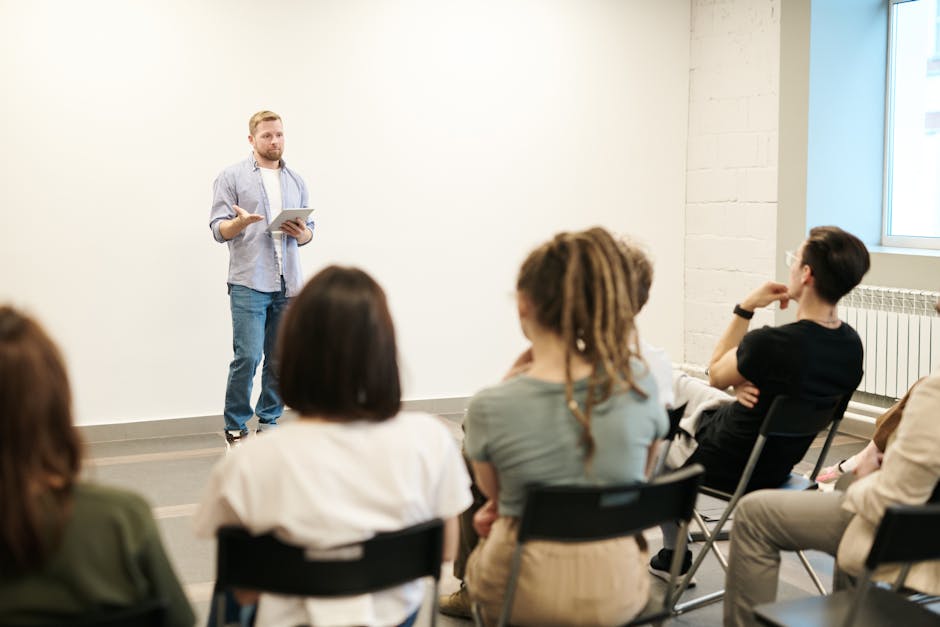
Once the planning is complete and our stellar moderator and panelists are ready, the focus shifts to maximizing engagement. We know that true learning happens when participants are actively involved, not just passively observing. This is where we bridge the gap “from stage to synapse,” ensuring the information truly connects with our audience.
Strategies for Active Audience and Panelist Participation
To make a training panel discussion truly effective, we employ various strategies to ensure everyone feels involved:
- Interactive Q&A: Instead of saving questions for the end, integrate them throughout the session using interactive Q&A tools. Features like upvoting help prioritize the most popular questions.
- Live Polling: Use live polls to gauge audience understanding and kick off discussion points.
- Panelist Interaction: Encourage panelists to respond to and challenge each other’s points, fostering a more organic and insightful conversation.
- Breakout Groups: For longer sessions, small breakout groups can discuss a sub-topic and report back, increasing participation.
A skilled moderator will also use open-ended questions to spark deeper conversation. Examples include:
- “What’s the biggest misconception about [topic]?”
- “What emerging trend in [industry] will have the most significant impact?”
- “Can you share a specific challenge you faced related to [topic] and how you overcame it?”
- “What’s one piece of advice you’d give to someone starting in [field]?”
For more ideas on how to facilitate engaging learning experiences, our guide on [/how-to-facilitate-a-training-workshop/] offers additional strategies.
Navigating Unexpected Challenges
Even with meticulous planning, challenges can arise. A prepared moderator is key to a smooth experience.
- Technical Difficulties: For virtual or hybrid panels, have a backup plan and a tech support contact. If a panelist drops off, the moderator should seamlessly shift focus to others.
- Difficult Conversations: If a discussion becomes too contentious, a skilled moderator can acknowledge the differing viewpoints and gently redirect the conversation back to a productive path.
- Dominant or Off-Topic Speakers: It’s the moderator’s job to politely interject, summarize the point, and pivot back to the agenda or another panelist.
- Inappropriate Questions: Use a moderation feature to filter audience questions, ensuring the discussion remains professional and on-topic.
Being prepared for these scenarios maintains a professional and effective learning environment. For a deeper dive into handling these challenges, see our [/best-practices-for-moderating-a-panel-discussion/].
Beyond the Applause: Evaluation and Long-Term Impact
Our work isn’t over when the panel ends. The true measure of a successful panel discussion method of training lies in its lasting impact. We believe in meticulous post-event follow-up, not just to reinforce learning, but to continuously improve our future training initiatives.
How to evaluate the effectiveness of the panel discussion method of training
To measure the impact of a panel discussion, we evaluate it against the initial training objectives. This helps us understand what worked and how well the audience absorbed the information.
Key evaluation methods include:
- Feedback Surveys: Collect quantitative and qualitative feedback on topic relevance, panelist engagement, and overall satisfaction.
- Post-event Quizzes: Use short quizzes to gauge knowledge retention.
- Audience Question Analysis: The type and depth of questions reveal audience engagement and remaining knowledge gaps.
- Social Media Monitoring: Track hashtags and mentions to gauge sentiment and key takeaways from public events.
- Panelist Debriefs: Gather feedback from panelists and the moderator to identify areas for improvement.
- Learning KPIs: Track metrics like engagement rates (poll participation, questions asked), satisfaction scores, and, if possible, changes in on-the-job behavior.
This feedback is invaluable for refining future training panels.
Concluding, Follow-Up, and Leveraging for the Future
An effective conclusion and robust follow-up strategy are vital to maximize learning and ensure the panel’s insights resonate long after the event.
- Concluding with Impact: The moderator should end with a strong summary of 2-3 key takeaways, a final thought from each panelist, and thanks to all involved. This reinforces the main messages.
- Post-Event Follow-Up: The learning journey continues after the session.
- Share Resources: Provide attendees with a summary, links to panelists’ work, and other relevant materials.
- Distribute Recordings: Sharing a recording allows attendees to revisit key points and those who missed it to catch up.
- Send Follow-Up Communications: Use email to send reminders, summaries, resources, and feedback surveys.
- Foster Continued Engagement: Encourage further discussion on a dedicated online forum or social media group.
- Leveraging Insights for the Future: The data and feedback collected are a blueprint for future success. Analyze the results to inform and improve subsequent training initiatives. This continuous cycle ensures that each panel discussion contributes to a broader, evolving professional development strategy.
Conclusion
The panel discussion method of training offers a powerful, engaging, and multifaceted approach to professional development. It moves learning from a monologue to a dynamic dialogue, changing how individuals consume and apply knowledge. By bringing diverse expert perspectives into an interactive forum, we not only deliver information but also foster critical thinking, problem-solving, and a culture of open dialogue.
We’ve seen that when planned carefully, moderated skillfully, and followed up thoughtfully, a panel discussion can transcend a simple talk. It becomes an impactful learning experience that resonates deeply with participants, sparking “ah-ha moments” that drive real change. Our expertise in marketing psychology and human behavior allows us to dig into how people think, connect, and act, ensuring that every panel discussion we help facilitate is designed to maximize engagement and open up potential.
By understanding the psychology of communication and group dynamics, you can transform a simple talk into an unforgettable conversation and a truly impactful learning experience.
To explore how to master panel discussions and leverage this dynamic method for your organization’s training and development needs, we invite you to learn more: [/panel-discussions/].