
Moderator panel discussion tips: Top 3 for Mastery
From Moderator to Master of Ceremonies
Moderator panel discussion tips can transform what feels like herding cats into a seamless, engaging experience that serves your audience and builds your reputation. The most successful moderators understand a simple truth: your primary objective is to engage and enlighten the audience, not to satisfy panelists’ agendas or showcase your own expertise.
Your role encompasses four key functions: planner (preparing questions and logistics), stage-setter (creating the right environment), facilitator (guiding conversation flow), and time-keeper (managing the schedule). Master these roles, and you’ll transform any panel from a potential snooze-fest into a memorable experience.
Essential moderator panel discussion tips for success:
- Prepare thoroughly: Research your topic, know your panelists, and craft 5-10 open-ended questions.
- Serve the audience first: Every decision should benefit attendees.
- Structure for success: Aim for 4-5 panelists and a 45-60 minute runtime, with 15-20 minutes for audience Q&A.
- Master the basics: Ensure good audio, proper seating, and clear introductions.
- Stay neutral: Guide the conversation without imposing your own agenda.
- Manage time firmly: Use a visible clock and have polite cutoff phrases ready.
I’m Steve Taormino, and with over 25 years in strategic communications, I’ve learned that effective moderation is about understanding human psychology. These tips will help you build organizational prosperity through better communication and audience engagement.
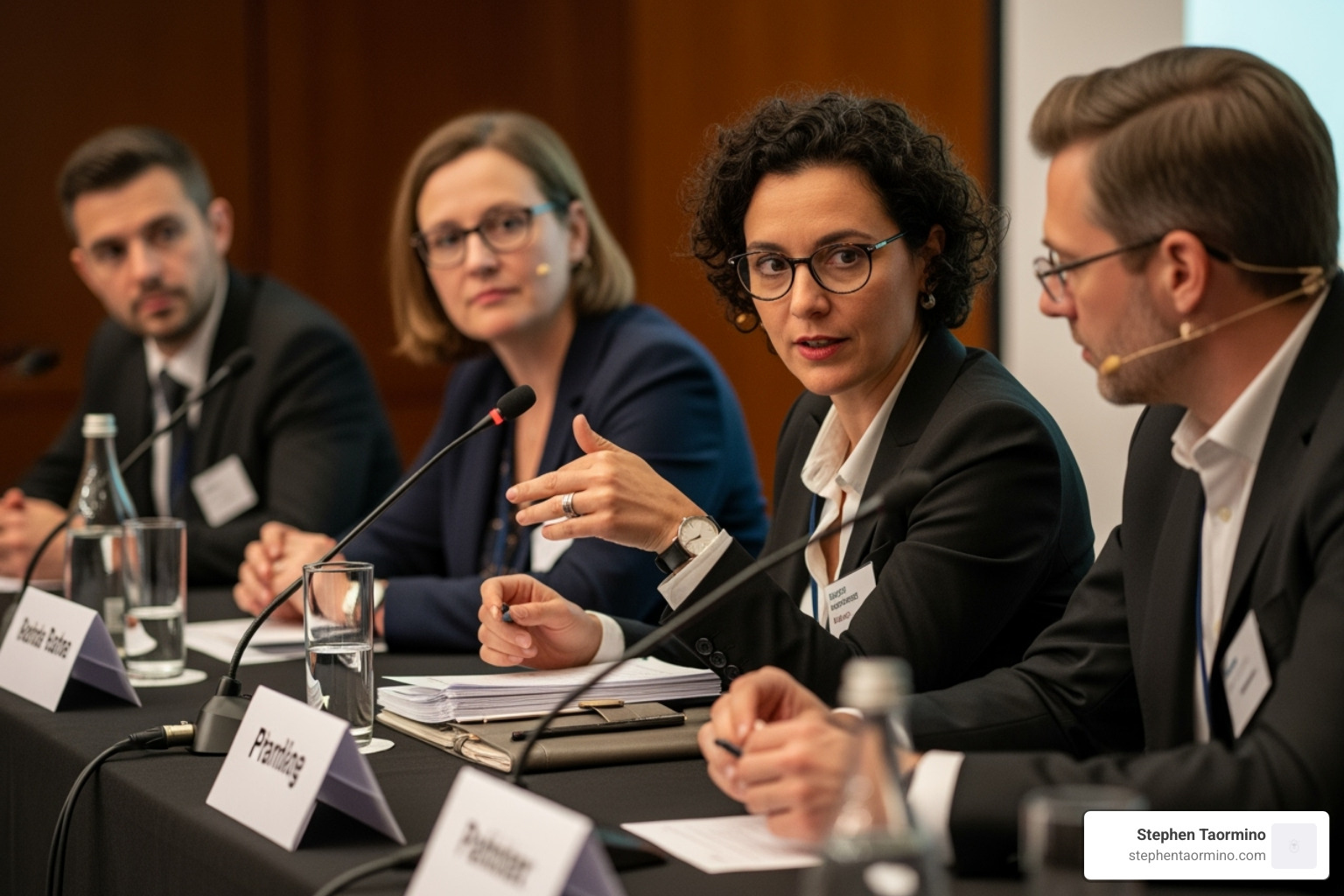
Simple moderator panel discussion tips word guide:
The Foundation: Pre-Panel Preparation for a Flawless Discussion
Here’s the truth about moderator panel discussion tips: the magic happens long before you step on stage. The difference between a mediocre moderator and a memorable one often comes down to homework.
Start by getting curious about your topic. You don’t need to be the top expert, but you need enough knowledge to ask insightful follow-up questions. Then, analyze your audience. Are they newcomers or seasoned pros? What do they need to learn? This analysis shapes every decision you make.
Next, research your panelists beyond their LinkedIn profiles. What are they passionate about? What unique perspective do they bring? The best panelists are D.E.E.P.:
- Diverse: Offering different perspectives and backgrounds.
- Experts: True authorities in their field.
- Eloquent: Able to explain complex ideas simply.
- Prepared: Ready with stories and insights.
One of my favorite moderator panel discussion tips is to schedule a pre-event panelist call. This is for relationship building, not just logistics. Use this call to establish rapport, set gentle ground rules about time, and find what excites them about the topic. These conversations often reveal the golden nuggets that become your best questions.
Crafting the Perfect Panel Structure
The ideal panel size is four panelists plus a moderator. Any more, and it becomes difficult to give everyone adequate airtime. The sweet spot for panel length is 45-60 minutes, which is long enough for depth but short enough to hold attention. This should include 15-20 minutes for audience Q&A.
Different panel formats serve different purposes:
| Format Type | Best For | Watch Out For |
|---|---|---|
| Conversational | Natural flow and building on ideas | Drifting off-topic without firm guidance |
| Q&A Focused | Addressing specific audience needs | Feeling rigid or lacking panelist interaction |
| Debate-Style | Highlighting different viewpoints | Conflict overshadowing the insights |
When creating your agenda, think in story arcs. Start broad, dive into specifics, and end with actionable takeaways. Your questions should build on each other to create momentum.
How to Prepare Questions for Your Panel Discussion
Great questions are thought-starters, not scripts. Preparing 5-10 open-ended questions gives you flexibility without over-scripting. The best questions often begin with “How,” “What,” or “Why” and invite stories, not just facts.
- Opening Question: Start with a broad, “softball” question anyone can answer confidently, like “What’s the biggest misconception people have about this topic?”
- Personalized Questions: Craft questions for each panelist based on their unique expertise to let them shine.
- Provocative Questions: Use these strategically to energize a discussion, such as “What would you tell someone who says this approach never works?”
- Backup Questions: Always have a few extra questions ready in case the conversation stalls or the audience Q&A is quiet.
Listen actively to what’s being said to avoid redundancy. Instead of asking a question that’s already been answered, build on the previous comment with a new angle. Understanding behavioral-economics-marketing-techniques can help you craft questions that tap into what really motivates your audience and panelists.
Setting the Stage: How to Kick Off Your Panel with Impact
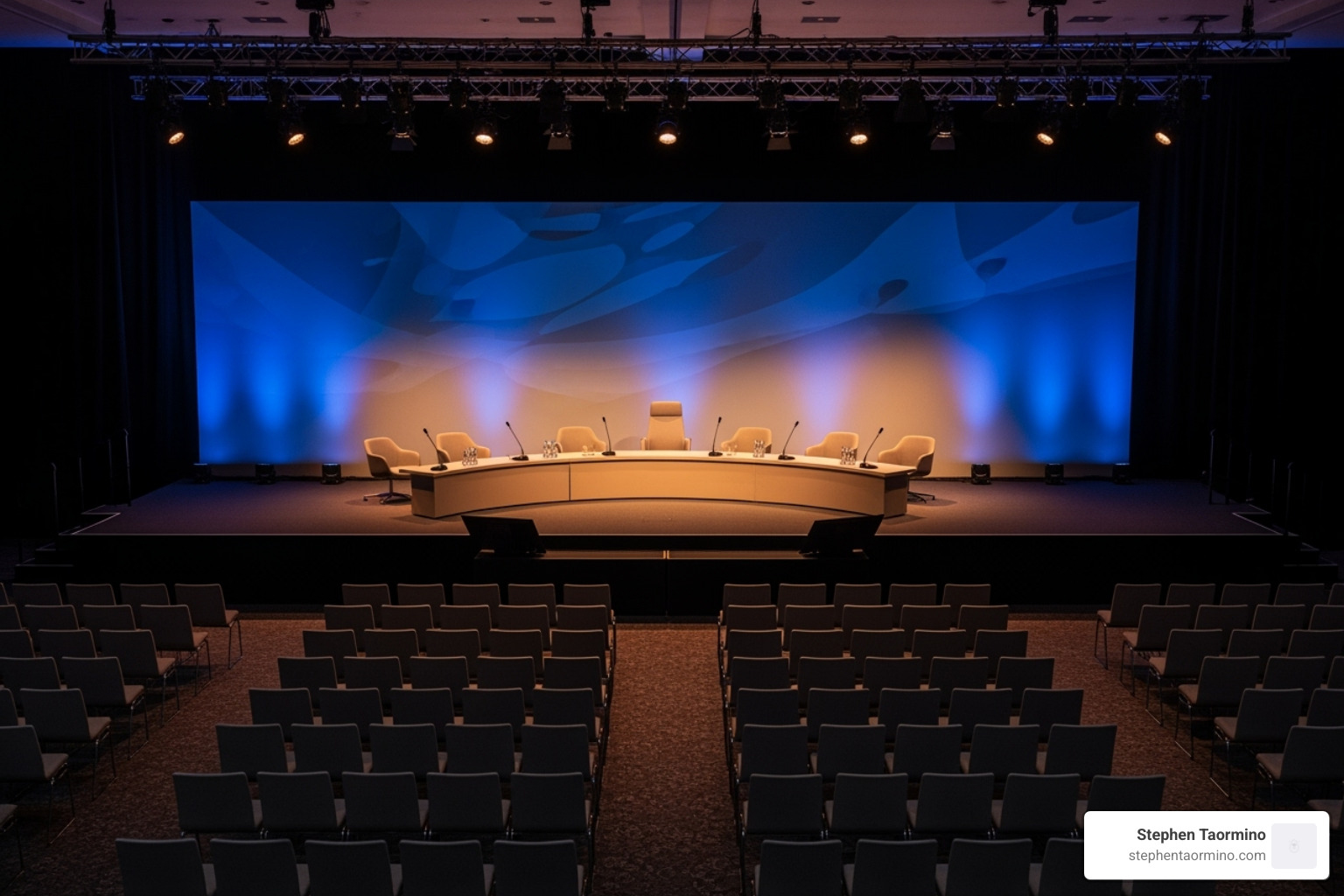
The way you set the stage—literally and figuratively—determines whether your moderator panel discussion tips translate into a memorable event.
Arriving early is non-negotiable. Get to the venue at least 30 minutes beforehand to conduct a thorough tech check. Test every microphone, as bad audio will lose an audience faster than anything. Ensure the lighting allows the audience to see panelists’ facial expressions, which adds connection.
The seating arrangement also matters. Arrange chairs in a gentle semi-circle, not a straight line. This encourages panelists to interact with each other, fostering a natural conversation. Your calm, confident energy is contagious; if you’re stressed, the panel will feel it.
Your opening remarks set the tone. Start with a warm greeting, then hook the audience with a surprising statistic, a brief story, or a thought-provoking question. Clearly state the panel’s purpose and, more importantly, what the audience will gain. Instead of saying, \”Today we’re talking about digital marketing,\” try, \”This discussion will give you three actionable strategies to double your online engagement.\”
The Art of the Introduction: One of the Most Crucial Moderator Panel Discussion Tips
The introduction phase can make or break the panel’s dynamic. Introduce yourself first, briefly establishing your credibility. A simple \”I’m Steve, and I help organizations build prosperity through better communication\” works well.
Next, take control of panelist introductions. Letting panelists introduce themselves often leads to awkward timing inconsistencies. Instead, you should craft and deliver each introduction yourself. This is one of the most important moderator panel discussion tips you can follow.
Focus on relevance over résumés. Highlight 1-2 key details that connect each panelist directly to the topic and the audience’s interests. Humanize them by weaving in a brief, relatable personal detail. Aim for roughly equal introduction lengths for each panelist to establish fairness and trust from the start. This makes panelists feel valued and gives the audience clear reasons to listen.
The Art of Conversation: Guiding an Engaging and Balanced Discussion
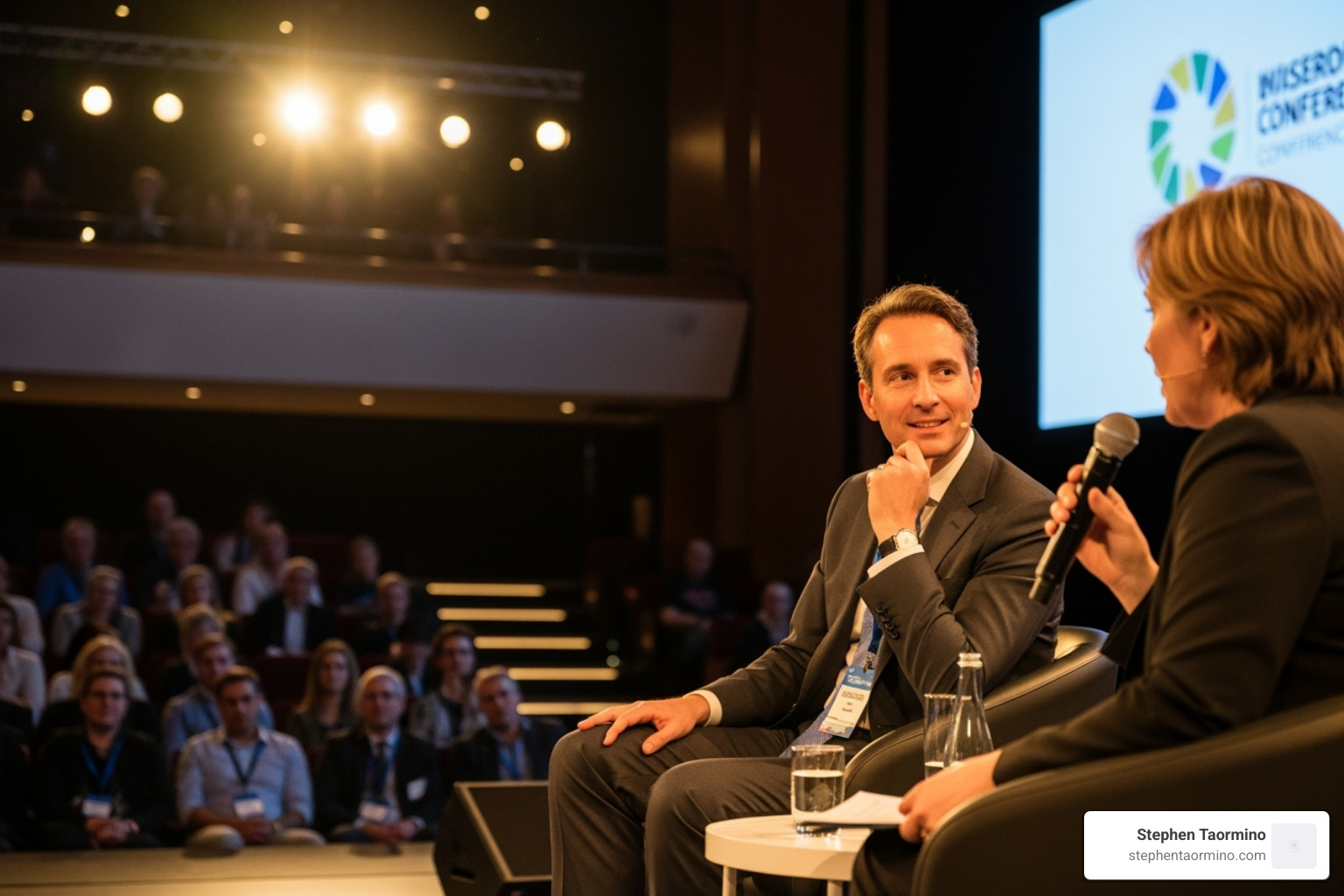
Once introductions are done, your role shifts to orchestrating a symphony of ideas. The goal is a natural conversation, not a stilted Q&A session.
Active listening is your superpower. Listen not just for content, but for the passion, conviction, and even what’s not being said. This level of listening creates meaningful connections. Pay attention to non-verbal cues—a raised eyebrow or a forward lean often signals a point of view waiting to be shared.
Ensure equitable airtime by watching for both the quiet panelist who needs an invitation and the enthusiastic expert who may be dominating. A simple, “Sarah, I can see you have thoughts on this,” can gracefully redirect the conversation. Weave individual comments together into a cohesive narrative. When one panelist mentions a challenge, ask another, “Michael, have you faced something similar?”
Techniques for a Lively and Interactive Session
- Encourage panelist interaction: Instead of having every response flow through you, invite panelists to respond to each other. “Lisa, how does David’s point align with your research?”
- Use humor appropriately: A light, self-deprecating joke can relax the room. Just be sure it’s inclusive and professional.
- Manage the flow: Be flexible enough to follow a great discussion thread but decisive enough to move on when a topic is exhausted. Use transition phrases like, “That’s a great foundation—let’s build on that by exploring…”
- Engage the audience early: Don’t save all questions for the end. Sprinkling in audience Q&A or taking a quick poll with a show of hands keeps energy high.
Want to sharpen these skills? You can practice your public speaking skills with these videos to build confidence in managing group dynamics.
Essential Moderator Panel Discussion Tips for Audience Engagement
Your audience came to be part of the conversation. To manage audience Q&A effectively, always repeat the question into your microphone. This ensures everyone heard it, confirms your understanding, and gives panelists a moment to think.
Filter questions to find those that are curious and clarifying, not confrontational or self-promoting. If a question is too complex or off-topic, gently reframe it to address a core issue that benefits everyone. Acknowledge every contribution with a simple “Thank you for that question” to encourage more participation and make the audience feel valued.
Graceful Guidance: Managing Challenges and Concluding with Confidence
Even the best-prepared panels can have unexpected moments. A great moderator handles these challenges gracefully while keeping the discussion on track.
Time management is crucial. Stick to your agenda. A visible countdown clock or a designated timekeeper is your best friend. The biggest mistakes moderators make often relate to poor preparation and time management, allowing one panelist to dominate, or ignoring audience needs.
How to Handle Difficult Panelists and Situations
With the right moderator panel discussion tips, difficult situations become manageable.
- For dominant panelists: Use gentle but firm intervention. A simple, \”Thank you, Roger. I’d like to bring Sarah into the conversation now,\” works wonders. Have cutoff phrases ready, like, \”In the interest of time, let’s move to our next point.\”
- For hesitant panelists: Watch for non-verbal cues like nodding. Invite them in with a targeted question: \”Mark, given your expertise in X, what’s your perspective?\”
- For a panelist who freezes: If someone draws a blank, stay calm. You can reframe the question, provide a starting point (\”Perhaps you can start by telling us about…\”), or redirect to another panelist while promising to circle back.
Throughout any challenge, stay neutral. Your role is to guide the conversation, not take sides. If the discussion veers off-topic, a simple, \”That’s an interesting point, but let’s bring it back to our main topic for the audience’s benefit,\” is usually all that’s needed.
Concluding Your Panel Discussion Gracefully
The end of the panel is what the audience often remembers most. Follow these steps for a strong finish:
- Signal the end: Announce, \”We have time for one final question.\”
- Ask a final question: Pose a question that allows each panelist a memorable final thought, such as, \”What is the one key takeaway you’d like to leave with our audience?\”
- Summarize key insights: Briefly recap the 2-3 most important themes from the discussion.
- Thank everyone: Thank the panelists for their specific contributions and the audience for their time and engagement.
- Provide a call to action: Tell the audience what to do next—connect on LinkedIn, download a resource, or apply what they’ve learned.
- Encourage post-panel interaction: Invite panelists to stay for a few minutes for informal conversations.
Frequently Asked Questions about Moderating a Panel
After years of helping professionals master panel moderation, I’ve noticed the same questions come up repeatedly. Here are the short answers to the most common concerns.
What are the top three qualities of a great panel moderator?
- Active Listening: This is more than just hearing; it’s about understanding the subtext and connecting ideas to ask better follow-up questions.
- Strong Preparation: This means thoroughly researching your topic, audience, and panelists to guide the conversation with confidence.
- Neutral Facilitation: Your job is to guide the discussion to serve the audience, not to share your own opinions or be the star of the show.
How do you keep a panel discussion on time?
Time management becomes simple with the right systems. First, create a detailed agenda with specific time allocations for each segment. Second, use a visible clock or a designated timekeeper to stay on track. Finally, have polite but firm transition phrases ready to gently cut off long-winded speakers and move the conversation forward. Your primary responsibility is to the schedule and the overall audience experience.
What’s the biggest mistake a moderator can make?
The biggest mistake is focusing on yourself instead of serving the audience. This happens when moderators try to showcase their own knowledge, dominate the conversation, or ask questions that serve their own curiosity rather than the audience’s needs.
Your role is to be a facilitator who makes the panelists shine and provides value for attendees. Every decision you make should answer the question, \”Does this serve my audience?\” When you adopt a service mindset, the timing, flow, and energy of the panel naturally fall into place.
Conclusion: Your Blueprint for Moderation Mastery
Mastering the art of panel moderation is about creating moments of genuine connection and insight. The moderator panel discussion tips in this guide provide a blueprint for changing ordinary conversations into extraordinary experiences, from thorough preparation to a graceful conclusion.
We’ve covered how to set the stage, facilitate a dynamic conversation, and handle challenges with confidence. Effective moderation is fundamentally a leadership skill. It shows your ability to bring out the best in others, manage complex dynamics, and create value for everyone involved. These skills are invaluable well beyond the stage, helping to build stronger teams and drive change in any organization.
As someone who has spent over 25 years helping businesses open up their potential through better communication, I know that mastering these skills can lift your professional reputation. When you consistently deliver valuable experiences, you become the moderator that event organizers seek out.
Your ultimate role is to empower your audience with the knowledge and inspiration they need to succeed. Approach every panel with this servant-leader mindset, and you will create a meaningful impact.
Ready to take your communication skills to the next level? Continue developing your communication skills with our expert videos and transform your ability to connect, influence, and inspire.