German
  English
  Spanish
  French


The Power of Connection: Why Customer Engagement Marketing Matters More Than Ever
Customer engagement marketing is the strategic practice of building meaningful, two-way relationships with customers across their entire journey. It moves beyond one-way promotional messages to create ongoing dialogue and personalized experiences. In today’s hyper-connected world, the traditional funnel is evolving into a continuous loop of interaction where the value is co-created between the brand and the consumer.
Why does it matter? Engaged customers have a 306% higher lifetime value and drive 23% higher profitability than average customers. In a world of rising ad costs and high customer expectations, this relationship-based approach is no longer optional—it’s a core competitive advantage that transforms one-time buyers into loyal brand advocates. When a customer feels heard and valued, they move from being a passive recipient of marketing to an active participant in the brand’s ecosystem.
Simply having the best product isn’t enough. With acquisition costs climbing and over half of customers willing to leave after just one bad experience, the focus must shift from shouting louder to building connections. Companies that master engagement consistently outperform their revenue goals, while others see diminishing returns on their ad spend. This shift requires a fundamental change in mindset: viewing marketing not as a series of transactions, but as a series of conversations.
I’m Steve Taormino, and for over 25 years, I’ve helped organizations harness customer engagement by leveraging marketing psychology to build prosperity through authentic connections. My firm guides companies in creating engagement-focused strategies that deliver lasting value. Learn more about building strong business relationships.
In this guide, we’ll break down what customer engagement marketing is, why it’s essential, and how to build a strategy that turns customers into devoted advocates. We will explore the psychological triggers that drive loyalty and the technological frameworks that allow for personalization at scale.
Customer engagement marketing definitions:
- customer engagement platform
- customer engagement analytics platform
- ai-driven customer engagement solutions
The ‘What’ and ‘Why’: Defining Customer Engagement Marketing in a Crowded Market
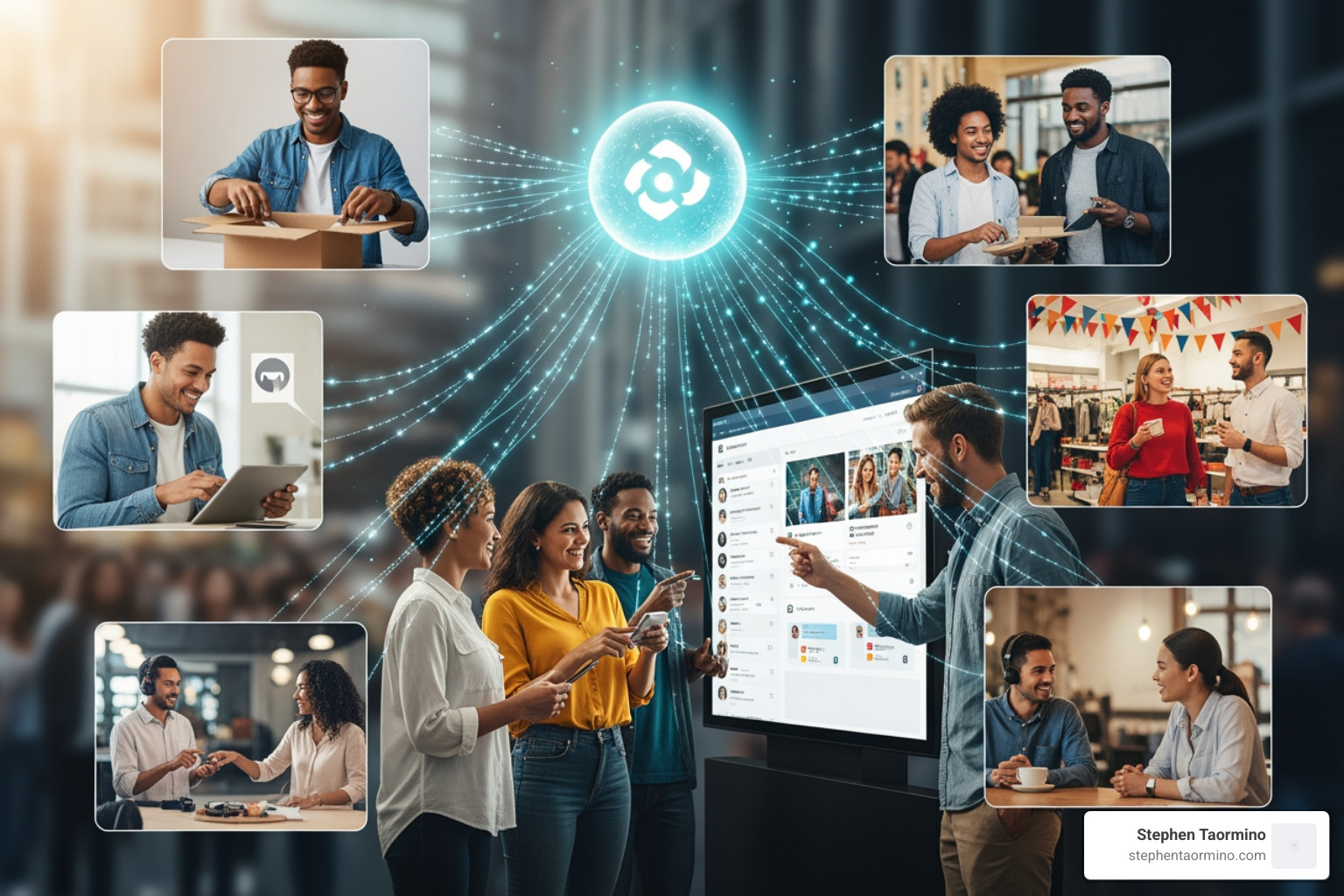
At its heart, customer engagement is about fostering an ongoing relationship with your audience. It moves beyond the traditional, one-way communication of advertising by inviting customers to actively participate in the brand’s story. This shift is crucial as digital advertising costs soar and consumers, inundated with messages, become harder to reach. We are living in the “Participation Age,” where consumers want to be part of the process, not just the end result.
Today’s consumers expect personalized, seamless interactions. Their tolerance for friction is low; if resolving an issue requires high effort, 96% report being disloyal. This makes engagement a business imperative, not just a marketing buzzword. It is the difference between a customer who buys once because of a discount and a customer who buys repeatedly because they believe in the brand’s mission.
While related, customer engagement differs from customer experience (CX). CX is the customer’s overall perception of all interactions with your brand. Engagement is the active process of fostering those interactions. A great CX can lead to higher engagement, and vice versa—they are two sides of the same coin. Think of CX as the stage and engagement as the performance that happens upon it.
Customer engagement marketing aims to turn passive consumers into active participants and loyal advocates, recognizing that trust and relationships are your most valuable assets. More on driving growth through marketing.
The Core Benefits of Strong Customer Engagement
Investing in a robust customer engagement marketing strategy delivers tangible benefits that directly impact your bottom line:
- Increased Customer Loyalty and Retention: Engaged customers feel a stronger connection, making them less likely to switch to a competitor. Increasing retention by just 5% can boost profits by 25% to 95%.
- Higher Customer Lifetime Value (CLTV): Engaged customers spend more, more often. According to Gallup, they have a 306% higher lifetime spend than unengaged customers.
- Improved Brand Reputation and Advocacy: Engaged customers become brand cheerleaders, driving powerful word-of-mouth marketing. A Gallup study showed they yield a 23% higher share of profitability and revenue.
- Valuable Customer Feedback: Engaged customers are more willing to share opinions and pain points, providing a goldmine of insights for product and service improvements.
- Cost-Effective Marketing: Retaining loyal customers is far less expensive than acquiring new ones. Their advocacy also provides free, credible marketing, reducing reliance on paid channels.
Understanding the 4 Types of Customer Engagement Marketing
Engagement isn’t a single concept; it manifests in four key forms that work together to build a holistic customer relationship.
- Contextual Engagement: This is about relevance and timing. It uses data (location, demographics, behavior) to deliver the right message at the right moment. Think of a targeted discount on a recently viewed product. It’s marketing that understands the customer’s immediate context and provides value without being intrusive.
- Convenient Engagement: This focuses on making every interaction effortless. It’s about reducing friction with features like one-click purchasing, intuitive interfaces, and easily accessible support. The goal is to minimize customer effort, as ease of use is a primary driver of long-term loyalty.
- Emotional Engagement: This taps into the feelings, values, and aspirations of your customers, building a connection beyond price or function. Brands achieve this through storytelling, community initiatives, and demonstrating empathy, turning buyers into true advocates who feel a sense of shared identity with the brand.
- Social Engagement: This involves using social media and community forums to humanize your brand and foster a sense of belonging. It includes responding to comments, running interactive campaigns, and building online communities where customers can connect with the brand and each other, creating a network effect of loyalty.
By strategically combining these four types, you can create a multi-faceted approach to customer engagement marketing that resonates deeply with your audience through “actionable empathy” and a true human-to-human connection.
The Blueprint for Connection: Core Strategies for Customer Engagement Marketing

Building a successful customer engagement marketing strategy requires a clear blueprint. Our approach centers on creating a seamless, valuable journey for each customer, guided by four core pillars: an omnichannel approach, customer-centricity, data-driven insights, and continuous feedback loops. This framework ensures that every touchpoint is an opportunity to strengthen the bond between the brand and the individual.
An omnichannel approach is essential for meeting customers on the many platforms they use, providing a consistent, connected experience. Marketers using three or more channels see a 494% higher order rate than those using a single channel. Customer-centricity places the customer at the heart of every business decision, moving away from product-focused silos. Data-driven insights from customer behavior allow for personalization and optimization, ensuring that messages are relevant rather than generic. Finally, feedback loops ensure your strategy remains dynamic by actively listening to customers and refining your approach based on real-world sentiment.
Together, these pillars form a framework for cultivating genuine, two-way conversations. Explore digital marketing strategies.
Personalization: The Heart of Modern Customer Engagement Marketing
In an age of infinite choice, personalization makes customers feel seen and understood. It’s about treating them as individuals, not segments. The impact is clear: research shows that 76% of consumers are more likely to purchase from brands that personalize, and 71% now expect it. Personalization is no longer a “nice to have”; it is the baseline for modern consumer expectations.
Key personalization tactics include:
- Dynamic Content: Tailoring website or email content in real-time based on user data, such as showing product recommendations based on browsing history or local weather conditions.
- Behavioral Targeting: Sending relevant messages based on user actions, like an email reminder for an abandoned cart or a “welcome back” message for a returning visitor.
- Predictive Analytics: Using machine learning to forecast future behavior, allowing you to proactively offer solutions or products before the customer even realizes they need them.
Effective personalization makes every interaction feel like a one-on-one conversation. However, it requires a commitment to ethical data practices and transparency to build the trust that underpins true engagement. Leverage marketing psychology insights to understand the nuances of human behavior and how to apply them ethically.
The Role of Content in Your Customer Engagement Marketing Funnel
Content is the lifeblood of engagement, used to educate, entertain, and connect with your audience at every stage. It must be value-driven and designed to foster interaction rather than just passive consumption.
- Value-Driven & Educational Content: Help customers solve problems and make informed decisions with blog posts, how-to guides, webinars, and tutorials. This positions your brand as a trusted advisor.
- Interactive Content: Move beyond passive consumption with quizzes, polls, and calculators that gather valuable data while making engagement fun and memorable.
- User-Generated Content (UGC): Encourage and feature customer-created content like reviews, photos, and testimonials. UGC is authentic, highly trusted, and provides social proof that traditional advertising cannot match.
- Storytelling: Weave narratives around your brand and customer experiences to forge powerful emotional connections. People remember stories far longer than they remember features or prices.
- Community Building: Use content to create forums and social groups where customers can connect with each other and your brand, fostering a sense of belonging and shared purpose.
By strategically deploying a diverse range of content with a consistent brand voice, you can continuously engage your audience and nurture relationships. Discover how to create a digital transformation roadmap.
Leveraging a Multi-Channel Approach
Customers interact with brands across numerous channels, from email and social media to messaging apps and websites. An effective customer engagement marketing strategy must adopt a multi-channel or omnichannel approach to provide a seamless experience everywhere. The goal is to ensure that the conversation continues uninterrupted, regardless of where the customer chooses to engage.
Key channels to leverage include:
- Email Marketing: A powerhouse for nurturing relationships. Use personalization and interactive content to boost engagement and move beyond the “blast” mentality.
- Social Media: A prime space for direct engagement and community building. Respond to comments, run campaigns, and share valuable content that encourages sharing and discussion.
- In-App & SMS/RCS Messaging: Deliver timely, contextual information, offers, or support directly to users’ mobile devices, reaching them where they spend the most time.
- Chatbots and Live Chat: Provide instant, 24/7 support and guidance, making interactions convenient and efficient while freeing up human agents for complex issues.
The key is consistency in brand voice and messaging. Data from one channel should inform interactions on another, creating a truly integrated journey. Learn about customer engagement platforms to see how technology can unify this experience.
Overcoming Problems and Measuring Success
Implementing a robust customer engagement marketing strategy has its challenges. Proactively addressing them is crucial for long-term success and ensuring that your efforts yield a positive return on investment.
Main Challenges Businesses Face in Customer Engagement Marketing:
- Understanding Customer Needs: Without deep insights, engagement efforts can feel generic and irrelevant. Many brands struggle to move past surface-level demographics.
- Personalizing at Scale: Executing personalized experiences for a large customer base is technologically and logistically complex, requiring sophisticated automation tools.
- Data Silos: Fragmented customer data across different systems (CRM, support, marketing) leads to disjointed experiences and missed opportunities for connection.
- Maintaining Brand Consistency: Ensuring a unified brand voice across all teams and channels can be difficult, especially in larger organizations with decentralized marketing functions.
- Privacy and Compliance: Balancing personalization with data privacy regulations like GDPR and CCPA is a delicate but critical task. Trust is easily broken and hard to rebuild.
- Resource Allocation: Dedicating the necessary people, time, and technology to engagement can be a hurdle for companies focused on short-term sales targets.
- Measuring ROI: Attributing revenue directly to non-transactional engagement efforts, such as community building or educational content, is often challenging.
How to Overcome These Challenges:
- Become Data-First: Collect and analyze customer data from all touchpoints to build detailed buyer personas and inform personalization. Use qualitative data (surveys, interviews) to supplement quantitative metrics.
- Invest in a Unified Platform: A Customer Engagement Platform (CEP) can break down data silos and provide a single view of the customer, enabling seamless cross-channel automation and more accurate targeting.
- Foster Cross-Functional Collaboration: Engagement is a team sport. Align sales, support, and product teams around a shared customer-centric vision to ensure a consistent experience.
- Develop a Clear Brand Guide: Document your brand’s voice, tone, and messaging to ensure consistency everywhere, from social media replies to technical support emails.
- Prioritize Privacy and Transparency: Be explicit about data use, obtain consent, and give customers control over their information. Transparency builds the trust necessary for deep engagement.
- Start Small, Scale Smart: Pilot new engagement strategies on a small segment of your audience, measure the results, and scale what works while quickly pivoting away from what doesn’t.
- Define Clear Metrics: Establish what success looks like before launching any initiative, using a blend of metrics to track impact across the entire customer lifecycle. Optimize your sales strategy to ensure engagement efforts translate to growth.
Key Metrics to Measure Customer Engagement Marketing ROI
Measuring the success of your customer engagement marketing is crucial for optimizing strategies and proving value to stakeholders. Here are the key metrics to track:
| Metric | What it Measures | Why it’s Important |
|---|---|---|
| Net Promoter Score (NPS) | Customer loyalty and willingness to recommend your brand. | A high NPS indicates strong brand advocacy and predicts organic growth through referrals. |
| Customer Satisfaction (CSAT) | Satisfaction with a specific interaction, product, or service. | Gauges immediate sentiment and helps pinpoint specific areas for improvement in the customer journey. |
| Customer Lifetime Value (CLTV) | The total revenue expected from a single customer over time. | The ultimate engagement metric. Higher CLTV confirms that engagement is driving long-term profitability. |
| Churn Rate | The percentage of customers who stop doing business with you. | A low churn rate indicates strong retention and loyalty. Reducing churn significantly boosts profits. |
| Active Users (DAU/MAU) | The number of unique users engaging with your product daily or monthly. | Indicates the “stickiness” and perceived value of your product or service in the customer’s daily life. |
| Session Duration | The average time users spend on your website or app. | Longer sessions often correlate with deeper engagement and interest in your offerings and content. |
| Conversion Rate | The percentage of users who complete a desired action (e.g., purchase, sign-up). | Directly measures how effectively engagement drives specific business outcomes and revenue. |
| Engagement Rate (Social Media) | The percentage of your audience interacting with your social content. | Reflects content resonance and helps expand reach through shares, likes, and comments. |
| Upsell/Cross-sell Rate | The percentage of customers who purchase additional products. | Shows the effectiveness of relationship-building in increasing customer spend and trust. |
To truly understand ROI, compare the gains from your initiatives against the investment in technology and personnel. Learn about marketing ROI best practices and explore customer engagement analytics platforms for tools to help you track these metrics effectively.
Engagement in Action: Real-World Examples and Future Horizons

Seeing customer engagement marketing in action reveals its power to transform business outcomes. Successful brands move beyond simple transactions to create memorable, participatory experiences that resonate on a human level.
Loyalty programs and gamification are powerful tools for driving repeat interaction. Nike’s Run Club and Training Club apps, for example, build a community around fitness goals, rewarding participation with perks, exclusive content, and a sense of belonging. By gamifying the fitness journey, Nike becomes a partner in the customer’s lifestyle, not just a shoe provider. Community building is another key strategy, exemplified by Sephora’s “Beauty Insider” community, where shoppers share recommendations, tutorials, and reviews, creating a vibrant hub of user-generated content that drives both trust and sales.
Experiential marketing immerses customers in a brand experience, from live events to digital campaigns that foster co-creation. These examples show that successful engagement creates value and connection on multiple levels, turning a brand into a part of the customer’s identity.
The Future of Customer Engagement
The landscape of customer engagement marketing is constantly evolving, driven by rapid technological advancement and shifting consumer expectations. Here are the key trends shaping the future:
- AI and Machine Learning for Hyper-Personalization: AI is the engine for smarter engagement, analyzing vast amounts of data in real-time to predict customer needs and deliver hyper-personalized content and offers at the individual level. Explore AI-driven customer engagement solutions to see how these technologies are being applied today.
- Predictive Engagement: Moving beyond reactive support, this trend uses AI to anticipate customer behavior and intervene proactively, whether it’s offering a solution before a problem arises or re-engaging a customer at risk of churning based on subtle behavioral shifts.
- Conversational Marketing: The rise of chatbots, voice assistants, and messaging apps is turning interactions into real-time, two-way conversations, allowing customers to get support or even make purchases within the channels they already use for personal communication.
- Augmented Reality (AR) and Virtual Reality (VR): Immersive technologies are creating new frontiers for experiential engagement, from virtual try-ons for clothing to interactive product demonstrations in a virtual showroom, bridging the gap between digital and physical worlds.
- Agentic Marketing: An emerging concept where AI agents act autonomously on behalf of a brand, understanding customer intent and orchestrating complex, personalized journeys at scale, providing a level of service previously impossible for human teams alone.
These trends point toward more intelligent, intuitive, and integrated engagement. Staying abreast of these developments is key to maintaining a competitive edge in an increasingly crowded marketplace. Stay ahead with digital marketing industry trends to understand the broader context of these shifts.
Conclusion: Your Path to Building Lasting Customer Relationships
We’ve seen that customer engagement marketing is far more than a buzzword—it’s a strategic imperative for modern business. It’s about fostering two-way communication, building meaningful relationships, and providing continuous value across every touchpoint. In an era where products can be easily replicated, the relationship you build with your customers is your most defensible asset.
The power of human connection, amplified by intelligent technology, is the ultimate competitive advantage. Engaged customers are loyal advocates who drive profitability and sustainable growth. This isn’t just about making sales; it’s about building a community and fostering trust that survives market fluctuations and competitive pressures.
At Stephen Taormino, we believe understanding the psychology behind human connection is the key to unlocking this potential. Our expertise lies in crafting engagement strategies that are not only effective but also deeply human, helping businesses turn interactions into lasting relationships. We help you navigate the complex intersection of data, technology, and human emotion to create a brand that people truly care about.
Your path to building lasting customer relationships starts now. By embracing these principles, you can cultivate a loyal customer base that will drive your success for years to come. The future of marketing is not about who can shout the loudest, but who can listen the best and respond with the most value.
Watch our video on customer engagement solutions to start building stronger relationships today.