German
  English
  Spanish
  French


Human Behavior Marketing: Master 2025
Why Understanding Human Psychology Transforms Marketing Results
Human behavior marketing is the strategic application of psychology and behavioral science to understand the “why” behind consumer decisions. It moves beyond simple messaging to leverage subconscious triggers, emotional drivers, and cognitive biases that shape how people buy. By understanding principles like reciprocity, social proof, and scarcity, marketers can create campaigns that align with natural human tendencies.
This approach offers significant benefits:
- Competitive Advantage: Proactively influence behavior instead of just reacting to it.
- Higher Conversion Rates: Tap into mental shortcuts for more effective calls to action.
- Deeper Customer Insight: Move beyond demographics to understand psychographics—the values and lifestyles of your audience.
Consumers rarely make decisions in a vacuum; they rely on intuition and mental shortcuts. The old mantra of “right message, right person, right time” is incomplete. The missing piece is delivering content in a way that acknowledges how the human brain actually works: through biases and often irrational patterns.
I’m Steve Taormino, and for over 25 years, I’ve helped organizations worldwide build prosperity by leveraging marketing psychology. My expertise in human behavior marketing focuses on understanding the psychological drivers behind consumer decisions, and I’ll guide you through the core principles you need to master.
Understanding how people think gives businesses a powerful edge, allowing us to develop more efficient and effective strategies. It’s about taking your marketing from good to great by ensuring your message truly resonates and converts.
For more insights, explore our detailed guide on marketing psychology insights.
The Core Principles of Human Behavior Marketing
Mastering human behavior marketing begins with understanding the psychological triggers that drive decisions. These aren’t manipulative tricks but insights into how our brains naturally process information. Aligning your marketing with these patterns makes your campaigns more effective and helps your audience feel understood.
Reciprocity: The Art of Giving First
When someone gives us something, we feel a powerful, hardwired urge to return the favor. This is reciprocity. In marketing, it works best when you give value first without expecting an immediate return. Offer a free ebook, a helpful guide, or a product sample. This builds goodwill, so when you eventually ask for a sale or subscription, your audience is more receptive because you’ve already established a positive relationship.
The “foot-in-the-door” technique builds on this by starting with small commitments (like a newsletter signup) before moving to larger ones, making each step feel natural. You can see the power of this principle in a study on reciprocity in restaurants.
Social Proof: The Power of the Crowd

We often look to others to determine the right course of action, especially when we’re uncertain. This is social proof. In a connected world, we rely on reviews, testimonials, and user-generated content to validate our choices. Smart marketers showcase their credibility authentically.
- Customer testimonials and reviews provide trustworthy, peer-to-peer validation.
- User-generated content shows your product in real-world use, building authenticity.
- Expert endorsements and follower counts borrow credibility and signal popularity.
By demonstrating that others trust your brand, you reduce a potential customer’s anxiety and make them feel comfortable joining a community. This is foundational to building authority in marketing.
Scarcity: The “Get It Before It’s Gone” Effect
We value things that are rare or difficult to obtain. Scarcity taps into our fear of missing out (FOMO), changing casual interest into urgent desire. This is why limited-edition products and time-sensitive offers are so effective.
- Time-sensitive offers (“Sale ends at midnight”) create urgency.
- Limited stock notifications (“Only 3 left”) trigger our competitive instincts.
- Exclusive access (VIP previews, member-only sales) makes customers feel special.
The key is to use scarcity ethically. Genuine limitations build trust, while fake scarcity destroys it. The goal is to motivate action, not manipulate. Research on the psychology of scarcity shows how deeply this affects our thinking.
Anchoring: Setting the First Impression
We tend to rely heavily on the first piece of information we receive when making decisions. This is anchoring. In pricing, the original price shown next to a sale price becomes an anchor, making the discount seem more significant. A $200 jacket marked down to $100 feels like a great deal because of the $200 anchor.
Tiered pricing uses this by positioning a mid-range option between a basic and a premium choice, making the middle tier seem the most reasonable. Breaking down large costs into smaller amounts (“$1 per day” instead of “$365 per year”) also uses anchoring to make a price feel more manageable. This is a core concept in behavioral economics marketing techniques.
Other Key Cognitive Biases
- Loss Aversion: The pain of losing is about twice as powerful as the pleasure of gaining. Frame your offer around what customers might lose by not acting.
- Priming: Subtle cues can influence behavior. The words, images, or ideas a person is exposed to before your message can shape their response.
- Decoy Effect: An intentionally unattractive third option can make one of your other options look much better by comparison.
- Clustering: Our brains group similar information. Organize your content into logical categories to make it easier to process and remember.
- Verbatim Effect: People remember the gist of a message, not the exact wording. Use simple, clear, and memorable language.
Understanding the Consumer Decision-Making Process
To excel at human behavior marketing, we must understand the complex web of influences shaping every consumer choice. People don’t make decisions in a vacuum; their actions are the result of internal and external forces working together, often subconsciously.
The Four Key Factors Influencing Consumers
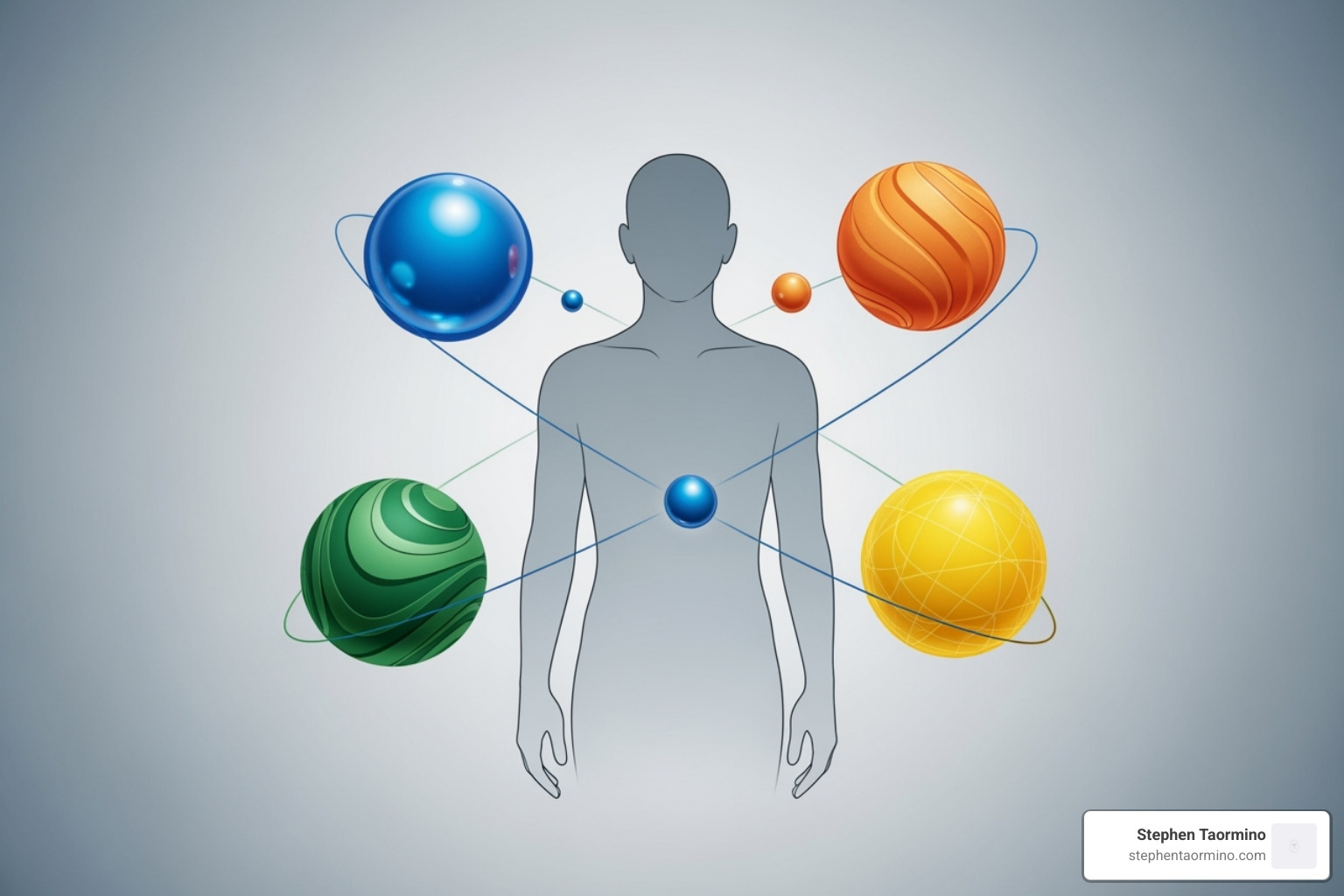
Consumer behavior is driven by four interconnected factors that marketers must consider:
- Personal Factors: An individual’s unique characteristics, such as age, lifestyle, income, and personality. A busy parent values convenience, while a college student may prioritize budget-friendly options.
- Social Factors: The influence of people around us, including family, friends, and reference groups (both those we belong to and those we aspire to join). Social proof is a powerful manifestation of this.
- Cultural Factors: The broad values, beliefs, and unspoken rules of the society we live in. Culture shapes what we consider normal, desirable, or appropriate in our purchasing habits.
- Psychological Factors: Internal mental processes like motivation, perception, learning from past experiences, and existing beliefs. These determine how we interpret information and what drives us to act.
By aligning messaging with these natural influences, marketing becomes more effective and ethical. You can find a comprehensive overview of these factors influencing customer behavior.
The Interplay of Influences
Personal factors like life stage and occupation create a framework for our needs, while social factors like family and reference groups shape our tastes and brand preferences. Cultural factors provide the invisible backdrop for our values, and psychological factors are the internal engine of decision-making.
Motivation drives us to satisfy a need, while perception filters how we see the world and interpret marketing messages. We like to believe our decisions are logical, but in reality, emotions often drive the initial choice, and we use rational thought to justify it later. The most effective marketing appeals to both, creating an emotional connection and providing logical reasons to support the purchase. Learn more about the difference between rational and emotional decision-making.
Foundational Behavioral Theories in Marketing
Several theories provide practical frameworks for understanding consumer behavior:
-
Maslow’s Hierarchy of Needs: This theory suggests we are motivated to fulfill basic needs (like safety) before moving on to higher-level needs (like esteem or self-actualization). Marketers can position products to satisfy different levels of this hierarchy. For example, a car can be sold for its safety features (a basic need) or as a status symbol (an esteem need). Explore Maslow’s hierarchy explained.
-
Theory of Planned Behavior: This theory states that our actions are guided by our intentions, which are shaped by our attitude toward the behavior, what we think others expect of us (subjective norms), and whether we feel capable of performing the action (perceived behavioral control). Marketers can influence all three to encourage a purchase.
-
Cognitive Dissonance: This is the post-purchase anxiety or regret a consumer might feel after a major decision. Smart marketers proactively address this by sending reassuring follow-up messages, reinforcing the wisdom of the choice, and providing helpful content. Understanding cognitive dissonance helps build long-term trust and reduce returns.
Applying Human Behavior Insights to Your Marketing Strategy
The real power of human behavior marketing comes from applying these psychological insights to create campaigns that genuinely connect with people. This is how we move from theory to tangible results.
Applying Human Behavior Marketing to Segmentation
Effective marketing starts with understanding your audience. While demographics (age, gender, income) tell you who your customers are, they don’t explain why they buy. That’s where psychographics come in. Psychographics explore qualitative traits like lifestyle, values, interests, and attitudes.
| Demographics | Psychographics |
|---|---|
| Age | Lifestyle |
| Gender | Values |
| Income | Interests |
| Location | Opinions |
| Education | Personality traits |
| Ethnicity | Attitudes |
Combining both allows you to create detailed buyer personas that feel like real people. Instead of targeting a generic demographic, you can connect with “Sarah, the busy mom who values authenticity and needs products that make her feel confident.” This deeper understanding is explored in the difference between demographics and psychographics.
Tailoring Campaigns and Improving Product Positioning
With rich buyer personas, you can tailor every aspect of your marketing. Personalization goes beyond using a first name; it’s about delivering custom messaging that addresses specific needs and motivations. If one segment values security, your messaging should focus on reliability. If another is driven by status, you emphasize exclusivity.
This allows you to address pain points with precision and highlight the benefits that matter most to each persona. Your product positioning becomes a strategic narrative that creates a distinct and desirable image in the minds of your target customers. This is especially crucial for optimizing B2B marketing strategies where decision-making is more complex.
Identifying Buying Behaviors and Trends

Consumers exhibit different buying behaviors depending on the situation, and each requires a different approach:
- Habitual Buying: Low-involvement, routine purchases like coffee or milk. Marketing focuses on brand loyalty and accessibility.
- Complex Buying: High-involvement, significant purchases like a car or a house. Marketing must provide extensive information and build trust.
- Variety-Seeking Buying: Customers enjoy trying new things in a familiar category. Marketing can use novelty and promotions to attract them.
To stay ahead of trends, use analytics tools and market research (surveys, focus groups) to understand the complete customer journey. A deeper look at these patterns can be found in this guide to types of buying behaviors.
The Role of Human Behavior Marketing in Customer Retention
The sale is the start of the relationship, not the end. Human behavior marketing is critical for retention. Use post-purchase reinforcement—like follow-up emails with helpful tips—to reduce cognitive dissonance and solidify customer satisfaction.
Building a community through forums or social groups taps into the need for belonging. Loyalty programs leverage reciprocity and loss aversion, giving customers a reason to stay engaged. By personalizing the entire customer lifecycle, you turn buyers into loyal advocates. This is key to boosting email marketing ROI for retention.
The Ethics of Persuasion in Marketing
While human behavior marketing techniques are powerful, they carry significant responsibility. Understanding how to influence behavior is a double-edged sword: it can create genuine value or exploit vulnerabilities. The difference lies in your intent and execution.
As marketers, we must choose whether to help people make better decisions or manipulate them for our own gain. This isn’t just an ethical question; it’s a business imperative. Trust is the foundation of sustainable growth, while manipulation leads to backlash and a damaged reputation.
Drawing the Line: Persuasion vs. Manipulation
Persuasion is about empowering people to make informed decisions that benefit them. It involves presenting your message in a compelling way while providing real value. For example, using social proof to recommend relevant products is helpful persuasion.
Manipulation, on the other hand, exploits psychological weaknesses to push people toward choices that primarily benefit the company, often at the customer’s expense. This includes using dark patterns—deceptive user interfaces that trick users into subscribing or make it difficult to cancel.
The key difference is transparency and genuine value. Are you helping customers understand why your product is a good fit, or are you tricking them? Building long-term trust should always be the primary goal. Avoiding manipulative tactics isn’t just morally right; it’s strategically smart.
Ethical Considerations for Marketers
As stewards of consumer trust, we have unique responsibilities:
- Data Privacy: Respect the personal information customers share. Be transparent about how you collect and use data, going beyond legal compliance to treat it with respect.
- Vulnerable Audiences: Take extra care when marketing to children, the elderly, or other groups who may be more susceptible to influence. Avoid exploiting cognitive limitations.
- Honesty in Advertising: Ensure all claims are truthful and presented in a way that doesn’t mislead. The overall impression you create matters as much as the literal facts.
- Corporate Social Responsibility: Consider the broader impact of your marketing. Strive to encourage behaviors that are good for society, not just your bottom line.
Truly effective marketing builds lasting relationships. When we use our understanding of human behavior to create genuine value, everyone wins.
Conclusion: Driving Growth by Understanding People
Human behavior marketing is not about clever tricks; it’s about genuine empathy and authentic connection. The most successful marketing makes consumers feel understood, valued, and confident in their decisions. This is achieved by marketers who take the time to understand the “why” behind people’s choices.
When we grasp how our audience thinks and feels, we move beyond guesswork and create strategies that resonate with real human desires. The psychological principles of reciprocity, social proof, and scarcity are not tools for manipulation. Used ethically, they help people recognize value and make choices that truly benefit them.
Sustainable growth is built on trust, not short-term wins. By aligning your marketing with natural human tendencies, you create experiences that feel effortless and authentic, turning customers into loyal advocates.
Your Next Steps Forward
Start by applying one or two of these principles to your current challenges. Test them ethically, measure the results, and gradually incorporate more as you build confidence. Understanding people makes us better marketers and business leaders, enabling us to build stronger products, provide better service, and foster genuine relationships.
This approach is the foundation for sustainable business growth through marketing. The future belongs to businesses that understand people—make sure yours is one of them.
Ready to take your understanding to the next level? Explore our comprehensive guide to behavioral economics marketing techniques to apply these powerful insights across your organization.