German
  English
  Spanish
  French


Why Your Panel Discussion Moderator Introduction Sets the Stage for Success
Your panel discussion moderator introduction is the single most critical moment in your session. It’s the gateway that determines whether your audience leans in with rapt attention or leans back, ready to scroll through their emails. In the first 60 seconds, a powerful psychological contract is formed. Attendees subconsciously decide whether they are about to witness a dynamic exchange of valuable ideas or simply endure another forgettable conference room monologue.
The stakes are incredibly high. While research indicates that a staggering 95% of annual meetings feature panel discussions, the 2014 Panel Report revealed a sobering truth: it’s a coin toss whether they deliver any real value. The variable that most often tips the scales from mediocre to memorable is the moderator’s ability to establish credibility, frame the conversation, and ignite curiosity from the very first sentence.
This introduction is far more than administrative housekeeping; it’s a strategic act of audience engagement. The way you frame each panelist directly influences their perceived authority, shapes which perspectives the audience will trust, and sets the energetic tone for the entire event. A great introduction is the foundation upon which a great discussion is built.
As Steve Taormino, I’ve dedicated over 25 years to dissecting the science of connection, helping organizations forge powerful bonds through strategic communication and marketing psychology. My work in mastering panel discussion moderator introduction techniques has consistently shown me that the most effective moderators are students of human behavior. They understand that first impressions are indelible, attention is a finite currency, and an audience needs a compelling reason to invest their time. They don’t just introduce people; they introduce ideas and relevance.
Core Principles for an Unforgettable panel discussion moderator introduction
To ensure your introduction lands with impact, internalize these core principles:
- Serve the Audience, Not Egos: Every word you speak should be in service of the attendees. Your goal isn’t to read a panelist’s entire resume but to tell the audience precisely why this person’s presence is a gift to them, right here, right now.
- Brevity is Strength: In an age of information overload, concise is kind. Aim for two to three powerful sentences per panelist. This forces you to distill their essence down to what truly matters for the topic at hand.
- Relevance Over Accomplishments: A long list of awards is less compelling than a single, sharp statement of relevance. Instead of “Dr. Smith has published 50 papers,” try “Dr. Smith’s groundbreaking research on this very topic is the reason we can even have this conversation today.”
- Credibility Through Specificity: Establish authority by highlighting a unique perspective or a specific, relevant achievement. What makes this person’s viewpoint indispensable? What experience do they have that no one else in the room possesses?
- Consistency Creates Fairness: A skilled moderator is an impartial guide. Ensure each panelist receives a similarly styled introduction of roughly equal length. This prevents any perception of bias and establishes a level playing field for the discussion.
- Practice for Perfection: The simple act of correctly pronouncing every panelist’s name is a fundamental sign of respect that builds immediate trust. Practice them until they are second nature. Stumbling over a name is the fastest way to signal a lack of preparation.
By mastering these elements, you transform a simple introduction from a procedural formality into your most powerful tool for capturing attention and setting the stage for a truly successful panel discussion. For more guidance on the mechanics of moderating, see these best practices for moderating a panel discussion, learn how to moderate a panel discussion from start to finish, and prepare with these essential questions to ask when moderating a panel.
The Foundation: Why Introductions Matter and Who Delivers Them
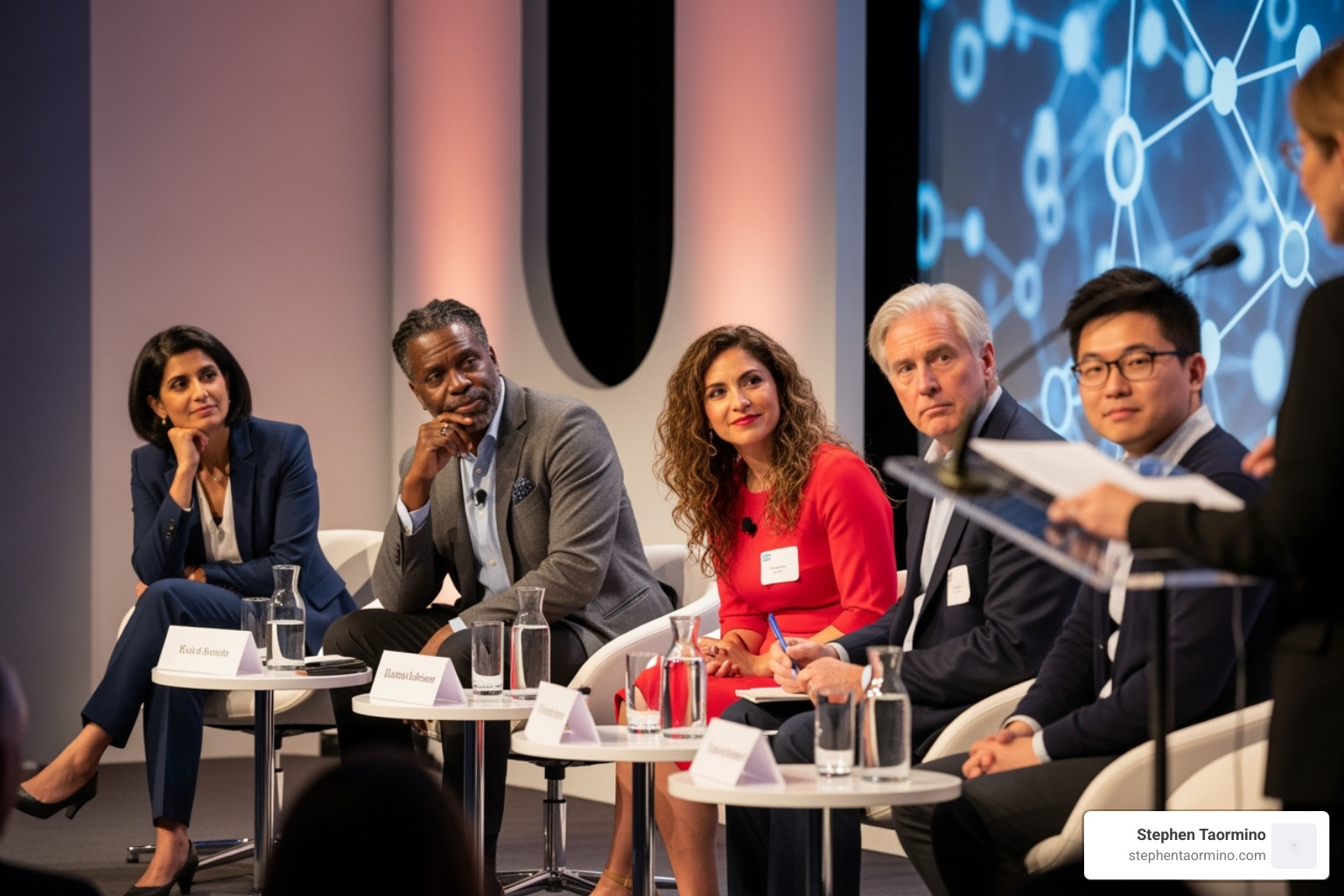
Every successful panel discussion moderator introduction is built on a single, non-negotiable principle: we are here to serve the audience, not the panelists’ egos. This might sound blunt, but it is the bedrock of effective moderation. When I stand before a room of professionals who have invested their valuable time and money to be there, my primary duty is not to flatter the experts on stage. It is to build a bridge of relevance between those experts and every person in the audience. My job is to make the audience understand precisely why they should hang on every word.
From a psychological perspective, the audience is asking a silent, critical question: “Why should I care what this person has to say?” A weak or generic introduction fails to answer this, leaving a vacuum of doubt. A strong introduction, however, answers it instantly and decisively. It sets the stage by framing the conversation, builds credibility for the panelists and the event, and, most importantly, manages expectations by promising tangible value.
The introduction is one of the few elements of a live panel that a moderator can script and control completely. While the conversation itself will be spontaneous and dynamic, these opening moments are your opportunity to architect the experience. Nailing the introduction is how you earn the right to the audience’s attention for the remainder of the session.
For a broader look at orchestrating these events, explore our comprehensive guide on panel discussions.
The Three Approaches to Panelist Introductions
There is no single “correct” way to handle introductions; the right method depends entirely on your event’s context, audience, and goals. Over decades of moderating and coaching, I’ve identified three primary approaches, each with distinct advantages and risks.
1. Moderator-Led Introductions (The Classic Approach) This is the traditional and, in most cases, the most effective method. When I introduce the panelists myself, I retain complete control over the session’s pacing, tone, and focus. I can ensure each introduction is concise, consistent, and, crucially, custom to the audience’s specific interests. It allows me to be the strategic host, weaving a narrative that connects each panelist’s expertise to the central theme of the discussion. The preparation is more intensive—it requires thorough research and often a pre-event call with the panelists—but the payoff is a seamless, professional, and highly effective opening.
2. Panelist Self-Introductions (The Conversational Approach) Allowing panelists to introduce themselves can create a wonderfully authentic and relaxed atmosphere. It can break down the formal barrier between the stage and the audience, making the experts feel more accessible. However, this approach is fraught with peril. Without firm guidance, you risk one panelist delivering a humble 30-second summary while another starts on a five-minute autobiographical journey. If you choose this path, you must provide strict, clear guidelines beforehand. For example: “Please take 45 seconds to share your name, your current role, and one surprising insight you’ve had about today’s topic.”
3. No Formal Introductions (The High-Trust Approach) This may seem like a radical choice, but in the right context, it’s brilliant. I’ve used this for internal company meetings or at highly specialized conferences where every person in the room is intimately familiar with the speakers’ work. In these scenarios, a lengthy introduction can feel redundant and drain the room’s energy. A simple, confident opening like, “We’re thrilled to be joined by Maria, David, and Dr. Evans to dive straight into our topic,” signals that you respect the audience’s existing knowledge and are eager to get to the substance. The risk, of course, is misjudging the room’s familiarity and leaving attendees confused about who is who and why they are there.
| Approach | Pros | Cons |
|---|---|---|
| Moderator-led | Complete control over length and consistency; professional flow; custom to audience needs. | Can feel formal; requires significant preparation time; moderator must research each panelist thoroughly. |
| Self-introductions | Authentic and conversational; panelists share what they find most relevant; creates immediate engagement. | High risk of inconsistent length and focus; some panelists may ramble or undersell themselves; requires strict guidelines. |
| No formal introductions | Maximizes time for discussion; works well with famous or internal panelists; maintains high energy. | May leave audience confused about credentials; assumes universal prior knowledge; can feel abrupt or unprepared if misapplied. |
Making the Right Choice for Your Panel
How do you select the best approach? Your decision should be a strategic one, based on a clear-eyed assessment of several key factors.
- Audience Familiarity: Is this an internal meeting with the C-suite, or a public conference with attendees from 50 different industries? The less familiar the audience is with the panelists, the more crucial a strong, moderator-led introduction becomes.
- Panelist Fame and Relevance: Consider the panelists’ public profiles. If you have a celebrity on stage, the introduction isn’t about listing their famous projects; it’s about connecting their broad fame to the specific topic. For example, “While you know him as a world-renowned chef, today he’s here to share the business leadership lessons he learned building a global restaurant empire.”
- Formality of the Event: The context dictates the tone. A formal academic or corporate presentation demands the polish of moderator-led introductions. A casual community town hall or a creative industry meetup might thrive on the warmth of self-introductions. A fireside chat style conversation inherently calls for a more relaxed approach than a structured formal presentation.
- Time Constraints: This is a simple but critical calculation. If you have a 45-minute slot, you cannot afford to spend 10 minutes on introductions. In such cases, even a moderator-led intro must be ruthlessly efficient. A good rule of thumb is to allocate no more than 5-10% of your total time to the opening and introductions.
The ultimate goal is to match your introduction style to the specific needs of your audience and the strategic objectives of your event. When you get that alignment right, you’re not just starting a session—you’re launching a successful experience.