English
  Spanish
  French
  German


Digital marketing strategies: Unlock 4 Key Wins
Why Digital Marketing Strategies Are the Foundation of Business Growth
Digital marketing strategies are the high-level plans that guide your business toward its goals by leveraging online channels to connect with your target audience. An effective strategy is built on clear goals, a deep understanding of your audience, smart budget allocation, and key metrics to track performance.
In today’s landscape, a documented strategy is essential. Without one, marketing efforts are often disconnected and ineffective. Research shows that companies with defined digital marketing strategies can drive nearly three times higher revenue growth than those without.
The challenge isn’t a lack of tactics, but the absence of a cohesive plan. Running ads and posting on social media without a central strategy is like spinning your wheels. This is where marketing psychology becomes critical. The most successful strategies focus on human behavior—understanding what motivates people to click, subscribe, and buy.
As Steve Taormino, President & CEO of CC&A Strategic Media, I’ve spent over 25 years helping organizations develop digital marketing strategies rooted in marketing psychology. My work focuses on building authentic connections that drive sustainable growth, because true success comes from genuinely understanding and serving your audience. For a deeper dive into the behavioral principles behind these strategies, explore our Marketing Psychology Insights.
The Foundation: What is a Digital Marketing Strategy?
A digital marketing strategy is your business’s master plan for achieving its goals online. It’s a purposeful roadmap that connects every action—from the content you create to the channels you use—to your larger objectives. A well-crafted strategy integrates three media types: owned media (your website, blog), paid media (PPC ads, sponsored posts), and earned media (customer reviews, press mentions). The magic happens when these work together: owned content attracts visitors, paid efforts amplify reach, and earned media builds trust. You can learn more about how these fit into your business in our guide to the digital business model framework.
Understanding Strategy vs. Tactics and Campaigns
Many businesses confuse strategy with tactics. It’s crucial to understand the hierarchy:
- Strategy is the why—your big-picture vision and goals. Example: “Become the top resource for local small businesses.”
- Tactics are the how—the specific methods you use. Examples: SEO, content marketing, and email newsletters.
- Campaigns are the execution—time-bound initiatives that bundle tactics to hit a specific objective, like a three-month lead generation campaign.
This structure ensures every action is aligned, resources are used efficiently, and your team works toward a common goal.
The Psychology of Connection: Why Strategy Matters
Digital marketing strategies are about connecting with people. The most effective strategies are built on understanding human behavior, not on gimmicks. When you understand your audience’s motivations and challenges, you can create messages that resonate deeply.
This is the power of marketing psychology. It’s not about manipulation; it’s about empathy. By solving real problems and delivering consistent value, you build trust and loyalty that lasts far beyond a single transaction. This human-centered approach is what separates businesses that simply exist online from those that truly thrive. Explore these principles further in our Marketing Psychology Insights.
The Blueprint: Core Components of a Winning Strategy
A winning digital marketing strategy needs a solid blueprint to keep your efforts aligned and measurable. This framework rests on four essential pillars: clear goals, deep audience understanding, smart budget allocation, and precise key performance indicators (KPIs).
1. Defining Your Goals and Objectives
Your goals are the North Star for your digital marketing strategies. Instead of vague wishes like “get more customers,” use the SMART framework (Specific, Measurable, Achievable, Relevant, Time-bound) to set clear targets. For example, a goal could be “generate 500 qualified leads per quarter” or “increase e-commerce sales by 15% year-over-year.” This specificity informs every decision, from your content calendar to your ad spend, and empowers your team to drive business results with purpose.
2. Identifying Your Target Audience
Your strategy only works if it connects with real people. Go beyond basic demographics and dig into psychographics—their motivations, pain points, and behaviors. Creating detailed buyer personas helps you understand what keeps your audience up at night and where they spend their time online. This deep understanding allows you to tailor your messaging so it truly resonates, speaking directly to people who feel seen and understood. This is where behavioral economics marketing techniques become invaluable.
3. Allocating Your Budget and Resources
Your budget is the fuel for your strategy, and smart allocation determines profitability. For startups, cost-effective tactics like SEO and content marketing are often best, as they can deliver leads at 62% lower costs than traditional methods. As a business grows, the budget can expand to include more aggressive paid campaigns. The goal isn’t to spend the most, but to spend wisely on channels that deliver the best return for your specific goals. This mindset is key to increase digital marketing ROI.
4. Pinpointing Your Key Performance Indicators (KPIs)
You can’t improve what you don’t measure. KPIs are the vital signs of your marketing health, tying directly back to your goals. Key metrics to track include:
- Conversion Rate: Percentage of users who complete a desired action.
- Cost Per Lead (CPL): How much it costs to acquire a new lead.
- Customer Lifetime Value (CLV): Total projected revenue from a single customer.
- Return on Ad Spend (ROAS): Revenue generated for every dollar spent on ads.
Tracking these KPIs enables a continuous cycle of measurement and optimization, allowing you to make data-driven adjustments and ensure your marketing evolves. Learn more with our Marketing ROI Best Practices.
The Engine: Key Channels for Your Digital Marketing Strategies
Once your strategic foundation is set, it’s time to choose the engines that will drive it forward. The smartest digital marketing strategies blend paid and organic channels. Paid marketing (PPC, social ads) offers immediate visibility, but the traffic stops when you stop paying. Organic marketing (SEO, content) takes longer to build momentum but creates sustainable, long-term value and trust.
Search Engine Optimization (SEO): The Long-Term Growth Driver
SEO is the practice of improving your website’s visibility in search results to attract organic traffic. Since 53% of all website traffic comes from organic search, it’s a critical long-term play. Effective SEO involves:
- Keyword Research: Understanding the terms your audience uses to search.
- On-Page SEO: Creating high-quality content optimized for relevant keywords.
- Technical SEO: Ensuring your site is fast, mobile-friendly, and easily crawled by search engines.
SEO builds lasting brand visibility and is a cornerstone of any effective strategy.
Content Marketing: Building Trust and Authority
Content marketing is about providing value before asking for a sale. By creating and sharing useful information—like blog posts, videos, and guides—you attract and engage your target audience. This approach works hand-in-hand with other channels, fueling SEO and social media while generating leads. Content marketing delivers three times more leads at 62% lower costs than traditional methods, making it essential for building trust and establishing industry thought leadership.
Social Media Marketing (SMM): Engaging Your Community
With 4.9 billion users worldwide, social media is where conversations happen. SMM is about building a genuine community, not just broadcasting messages. Success comes from choosing the right platforms for your audience (e.g., LinkedIn for B2B, Instagram for visual brands) and focusing on engagement. A positive brand experience on social media makes consumers 71% more likely to recommend it to others, highlighting its power for word-of-mouth marketing. We help businesses steer this space with services like social media management Las Vegas.
Email Marketing: Nurturing Leads and Driving Conversions
Email remains a powerhouse channel for nurturing relationships and driving action. By using segmentation, personalization, and automation, you can deliver custom messages that resonate with subscribers. The ROI is undeniable: email marketing delivers an average of $42 for every $1 spent. It’s a direct line to your audience and a crucial tool to boost email marketing ROI.
Pay-Per-Click (PPC) Advertising: Gaining Immediate Visibility
When you need results now, PPC advertising delivers. By paying for ad placement on search engines and social media, you can gain immediate visibility and traffic. PPC offers precise control through audience targeting, retargeting (showing ads to past visitors), and A/B testing to optimize performance. With an average conversion rate of 3.75%, PPC is an effective way to launch products, run promotions, and test new messaging. Our work as a Las Vegas PPC company helps businesses achieve profitable growth through paid ads.
Execution and Evolution: Putting Your Strategy into Action
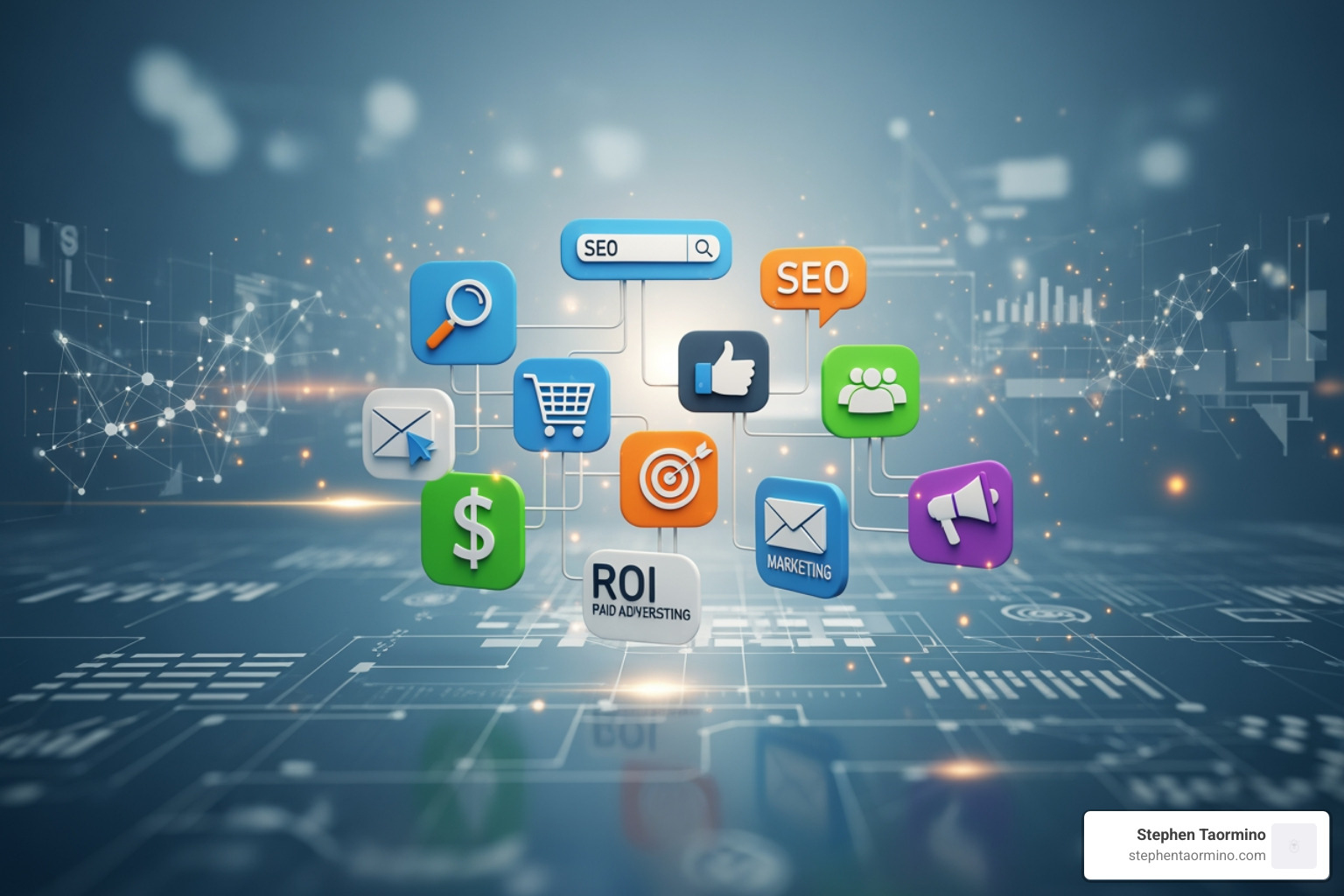
Developing digital marketing strategies is the first step; executing and adapting them is where success is won. The digital landscape is constantly changing, so your approach must be flexible, data-driven, and always evolving.
How to Choose the Right Mix for Your Business
There is no one-size-fits-all marketing mix. The right approach depends on your business, audience, and goals. Startups often lean on cost-effective organic strategies like SEO and content, while small businesses can thrive with local SEO and community-focused social media. The B2B vs. B2C distinction is also key; B2B marketing often involves longer sales cycles and relationship-building on platforms like LinkedIn, whereas B2C can focus on visual platforms and emotional connections. For more on this, see our guide to B2B marketing strategies to optimize sales conversions. The best approach is multi-channel, creating a seamless customer journey across platforms.
Essential Skills and Tools for Modern Marketers
Modern marketing demands a blend of skills and the right tools. The job market for marketers is growing, with the U.S. Bureau of Labor Statistics projecting a 6% increase for marketing managers through 2032. Key skills include:
- Data Analysis: To interpret metrics and find actionable insights.
- Copywriting: To craft compelling messages that drive action.
- Communication & Creativity: To convey ideas and cut through the noise.
- Adaptability: To stay relevant as technology and behaviors shift.
Essential tools include SEO platforms, analytics software, social media schedulers, and email marketing services. AI tools are also becoming crucial for optimizing campaigns, but they work best when amplifying human creativity, not replacing it.
The Future of Digital Marketing: AI, Voice, and Beyond
The future of digital marketing strategies is being shaped by new technologies. Artificial Intelligence (AI) is personalizing marketing at scale and optimizing ad spend. Voice search is changing how people find information, requiring optimization for conversational queries. Augmented Reality (AR) offers immersive product experiences, and a growing focus on data privacy is making trust and transparency more important than ever. Successful strategies must be agile enough to incorporate these innovations while remaining grounded in human psychology. This commitment is central to our approach to digital marketing innovation.
Frequently Asked Questions about Digital Marketing Strategies
Here are answers to some of the most common questions about building and refining digital marketing strategies.
How long does it take to see results from digital marketing strategies?
The timeline for results depends on the channel. PPC advertising can generate traffic and conversions within hours, but the results stop when you stop paying. SEO and content marketing are long-term investments, typically taking three to six months or more to show significant, compounding results. However, this organic traffic is sustainable. The best approach is to combine quick-win tactics like PPC with long-term drivers like SEO to achieve both immediate and lasting growth.
How much should I budget for digital marketing?
There’s no single answer, but your budget should be guided by your business goals, industry benchmarks, and company stage. Startups may need to invest a higher percentage of revenue to gain traction, while established companies might allocate 5-10% of revenue. A practical approach is to start small, measure rigorously, and scale what works. Focus on channels that deliver a strong return and increase your investment there. Thinking in terms of investment and return, rather than cost, is key to increasing digital marketing ROI.
Which digital marketing channel is the most effective?
There is no single “best” channel. The most effective channel for your business depends entirely on your audience, goals, and resources. A B2B company will likely find more value on LinkedIn, while a B2C brand might thrive on Instagram. The most powerful approach is an integrated strategy where multiple channels work together. For example, combining email with social media can increase customer acquisition by 400%. An integrated strategy meets customers at different points in their journey, creating a stronger and more consistent brand experience.
Conclusion: Transform Your Business with a Purpose-Driven Strategy
We’ve explored how effective digital marketing strategies are more than just a collection of tactics—they are a cohesive plan built on clear goals, deep audience understanding, smart budgeting, and measurable results. From the long-term growth of SEO and content marketing to the immediate impact of PPC, the real power lies in an integrated approach where all channels work in harmony.

But what matters most is the person behind the screen. The role of marketing psychology is key to connecting with audiences on a deeper level, a principle that informs the work of experts like Stephen Taormino. When we root our strategies in genuine human understanding, we build trust, loyalty, and sustainable growth.
This human-centered approach is what separates fleeting campaigns from lasting success. It’s about empathy and serving your audience in ways that genuinely help. The businesses that thrive are those with purpose-driven digital marketing strategies that create meaningful connections and deliver real value.
Ready to develop a strategy that connects authentically with your audience and drives business growth? Unlock your team’s potential with our marketing workshops and find how marketing psychology can transform your approach to achieving your goals.