
How to moderate a panel discussion script: #1 Success Guide
From Chaos to Control: Why Every Great Panel Starts with a Script
Knowing how to moderate a panel discussion script transforms nervous energy into confident leadership and turns rambling conversations into focused, valuable exchanges. Whether you’re facing a room of industry experts or managing a virtual discussion, having the right framework is the difference between a forgettable session and one that sparks real change.
Here’s what you need to moderate panel discussions effectively:
Essential Script Components:
- Timed segments (5 min intro, 35 min discussion, 15 min Q&A, 5 min closing)
- Prepared questions custom to each panelist’s expertise
- Moderator notes with phonetic name pronunciations
- Transition phrases to keep conversations flowing
- Backup questions for audience Q&A sessions
Key Success Factors:
- Research your topic and panelists thoroughly
- Brief panelists before the event
- Keep introductions to 1–2 sentences per person
- Maintain 3–4 minute response times per panelist
- Stay neutral and facilitate rather than participate
The difference between a successful panel and a painful one often comes down to preparation. With the right script and approach, you can create an experience that serves your audience while showcasing your panelists’ expertise.
I’m Steve Taormino, and over 25+ years of strategic communications work, I’ve seen how understanding human behavior and marketing psychology directly applies to how to moderate a panel discussion script effectively. My approach focuses on creating authentic connections that drive real business outcomes, which is exactly what great panel moderation achieves.
Quick how to moderate a panel discussion script terms:
- best practices for moderating a panel discussion
- moderated panel discussion
- questions to ask when moderating a panel
The Blueprint: Why a Panel Discussion Script is Your Secret Weapon
Think of how to moderate a panel discussion script as your GPS for navigating what could otherwise become a conversational traffic jam. A well-crafted script or run of show is what makes a great audience experience possible. It keeps talented panelists in harmony while allowing room for the spontaneous moments that make discussions memorable.
Script vs. Run of Show: What’s Right for You?
When we say “script,” we’re not talking about memorizing every word. For most panels, a rigid approach kills the natural flow. The key is knowing which approach fits your situation:
| Feature | Word-for-Word Script | Run of Show / Talking Points |
|---|---|---|
| Control Level | High – every word is planned | Moderate – guides conversation, allows flexibility |
| Spontaneity | Low – can feel rehearsed | High – encourages natural dialogue |
| Best For | High-stakes events, regulated industries, legal review, multi-lingual events with simultaneous translation | Most typical panel discussions, fostering lively and informative exchanges |
| Moderator’s Role | Primarily reading and cueing | Facilitating, listening, guiding, and improvising |
| Preparation | Intensive writing and review | Focus on key questions, timings, and transitions |
Most of the time, a run-of-show is the best approach. It keeps you present and responsive. The sweet spot is preparing thoroughly but speaking naturally.
Essential Components of Your Panel Discussion Script
Whether you choose a detailed script or a flexible run-of-show, these elements are non-negotiable:
- Timestamps: Keep you on track without making the discussion feel rushed.
- Clearly Defined Segments: Introduction, main discussion, interactive elements, audience Q&A, and closing.
- Panelist Names with Phonetic Spellings: Mispronouncing a name kills credibility instantly.
- Curated Questions: Tailor questions to each panelist’s specific expertise to help them shine.
- Moderator Notes: Personal reminders like transition phrases or potential follow-up questions.
- A/V Cues: Keep your production team in sync (e.g., switching slides, rolling video).
- Backup Questions: Save you when the audience Q&A section gets quiet.
- Housekeeping Announcements: Reminders for networking, hashtags, etc.
Structuring the Flow: Blocking Out Your Time
Time management is everything. How well you respect everyone’s time, including the audience’s, separates professional moderators from amateurs.
For a standard 60-minute panel, here’s a structure that works:
- 5-Minute Introduction: Welcome everyone, set expectations, and introduce panelists concisely.
- 35-Minute Main Discussion: This is where your prepared questions spark dialogue. Aim for 3-4 minute responses per panelist per question.
- 15-Minute Audience Q&A: This is often the most valuable part for attendees, so don’t shortchange it.
- 5-Minute Closing: Summarize key takeaways and provide clear next steps.
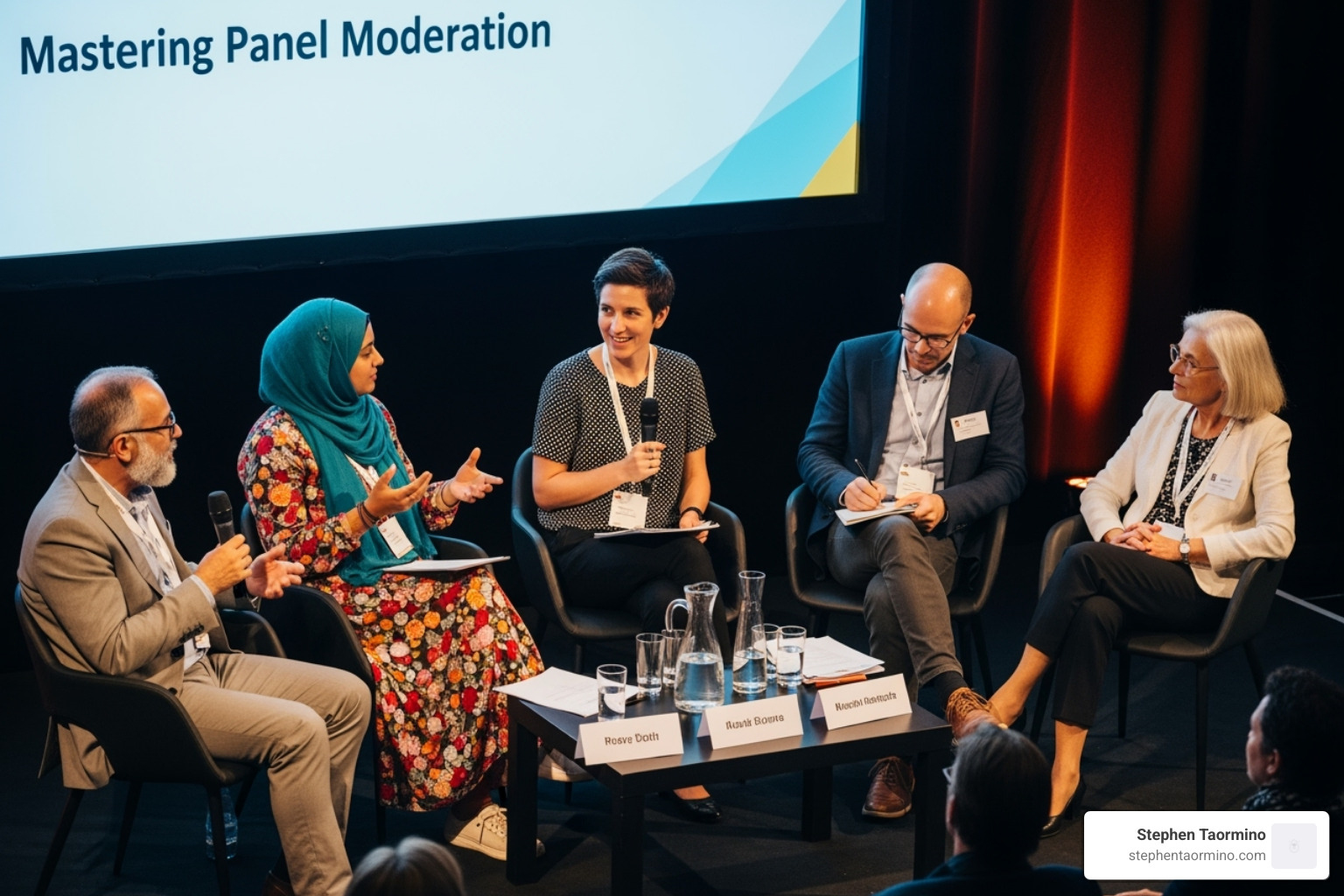
This timing isn’t set in stone. Some experts suggest most panels should last around 90 minutes, giving you more room for deeper exploration. The key is working backward from your total time to ensure every segment serves your audience.
Pre-Show Prep: Setting the Stage for Success
The magic of a seamless panel discussion happens long before anyone steps on stage. This behind-the-scenes preparation is where you transform potential chaos into controlled excellence. The more thoroughly you prepare, the more effortless the live discussion will appear.
Mastering Your Domain: Researching the Topic and Audience
Your primary mission is to serve the audience. To do this, you need to become a temporary expert on the topic and the people in the room.
- Dive into the subject matter. Go beyond surface-level knowledge by reading recent articles, industry reports, and podcasts. Pay attention to emerging trends and key debates. This allows you to ask smarter questions and clarify jargon for the audience.
- Understand your audience. Who are they? What are their pain points and expectations? Are they beginners or seasoned pros? The answers shape everything from your language to the depth of your questions. Consider pre-event surveys or checking LinkedIn to gather insights.
This approach taps into marketing psychology principles that help create authentic connections with your audience.
Assembling Your All-Stars: Knowing Your Panelists
Your panelists are the stars, so getting to know them is essential. Go beyond their official bios by digging into their recent work, publications, and social media presence. Understand their unique perspectives and communication styles.
The pre-panel call is non-negotiable. Schedule a 30-minute call a few days before the event to:
- Build rapport and trust. A friendly connection beforehand translates into smoother interactions on stage.
- Align on goals. Share the run of show and the types of questions you’ll explore. This helps panelists prepare thoughtful responses.
- Confirm details. Get their current titles and, crucially, the correct pronunciation of their names.
- Set expectations. Let them know that 3–4 minute responses work best to maintain engagement and ensure equal speaking time.
Crafting the Conversation: How to Prepare Engaging Questions
Your questions drive the discussion. They should spark curiosity, encourage storytelling, and reveal insights.
- Avoid yes-or-no questions. They kill momentum. Focus on “why” and “how” questions that invite detailed responses.
- Customize your questions. Craft specific questions that leverage each panelist’s unique expertise. This makes them shine and provides more value than generic questions.
- Plan your opening and closing questions. Your first question sets the tone, and your last one should leave the audience with actionable takeaways.
- Prepare backup questions. Have thoughtful questions ready for the Q&A segment to prevent awkward silences.
- Encourage dialogue. Plan follow-ups that connect responses, such as, “That’s a fascinating perspective—how does that align with your experience?” This creates a conversation, not a series of monologues.
Showtime: Executing the Perfect Panel Discussion
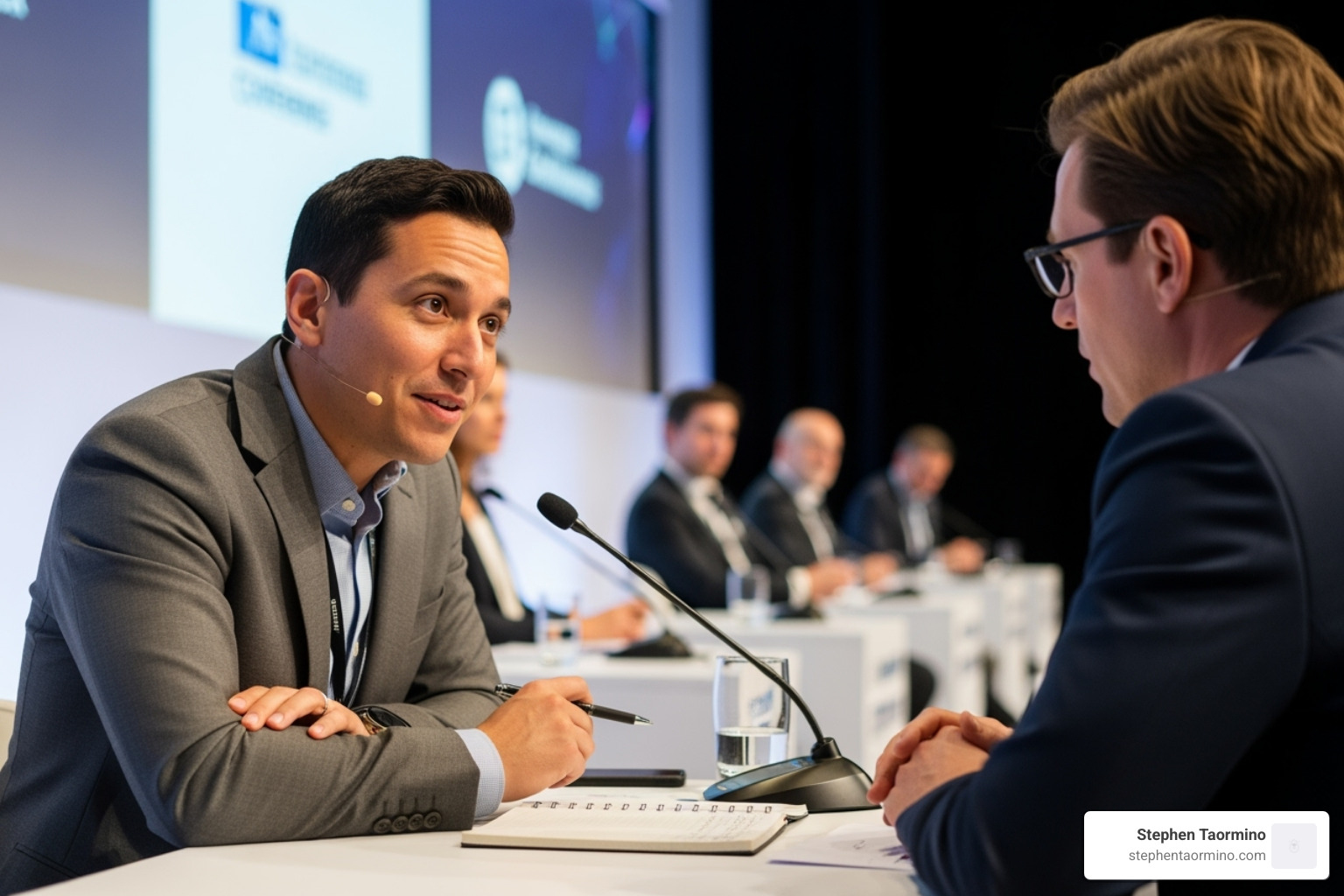
This is your moment. All the preparation comes together here. You’ve done the work; now it’s time to trust your script and let the conversation flow.
The Opening Act: Introducing Panelists and Setting the Tone
Your first five minutes are critical for grabbing the audience’s attention. This is when how to moderate a panel discussion script becomes your lifeline.
- Start with warmth. Thank the audience for their time.
- Introduce yourself briefly. Establish your credibility as the guide for the conversation.
- State the panel’s value. Tell the audience what they will learn. For example, “By the end of our hour, you’ll walk away with three specific strategies for…”
- Introduce panelists with relevance. Skip long bios. Explain why each person is perfect for this conversation. “Sarah’s team increased customer retention by 40% using the techniques we’re discussing today.”
- Set ground rules. Let people know when and how the Q&A will happen.
The Main Event: Managing Flow and Fostering Debate
Your job is to be the best facilitator on stage. Watch the clock, but don’t be a slave to it. If a panelist is rambling, politely interject at their next breath. “That’s fascinating, and I want to build on that by asking Maria…”
To manage dominant personalities, redirect with appreciation. “Great insight, John. How does that land with you, Sarah?” Never shut someone down harshly.
Don’t be afraid of respectful disagreement; it makes for a memorable panel. Fan the flames safely: “Sarah, you seem to see this differently. Help us understand why.” Your body language is also a powerful tool—lean toward a quiet panelist to signal it’s their turn.
Engaging the Crowd: Mastering Audience Interaction and Q&A
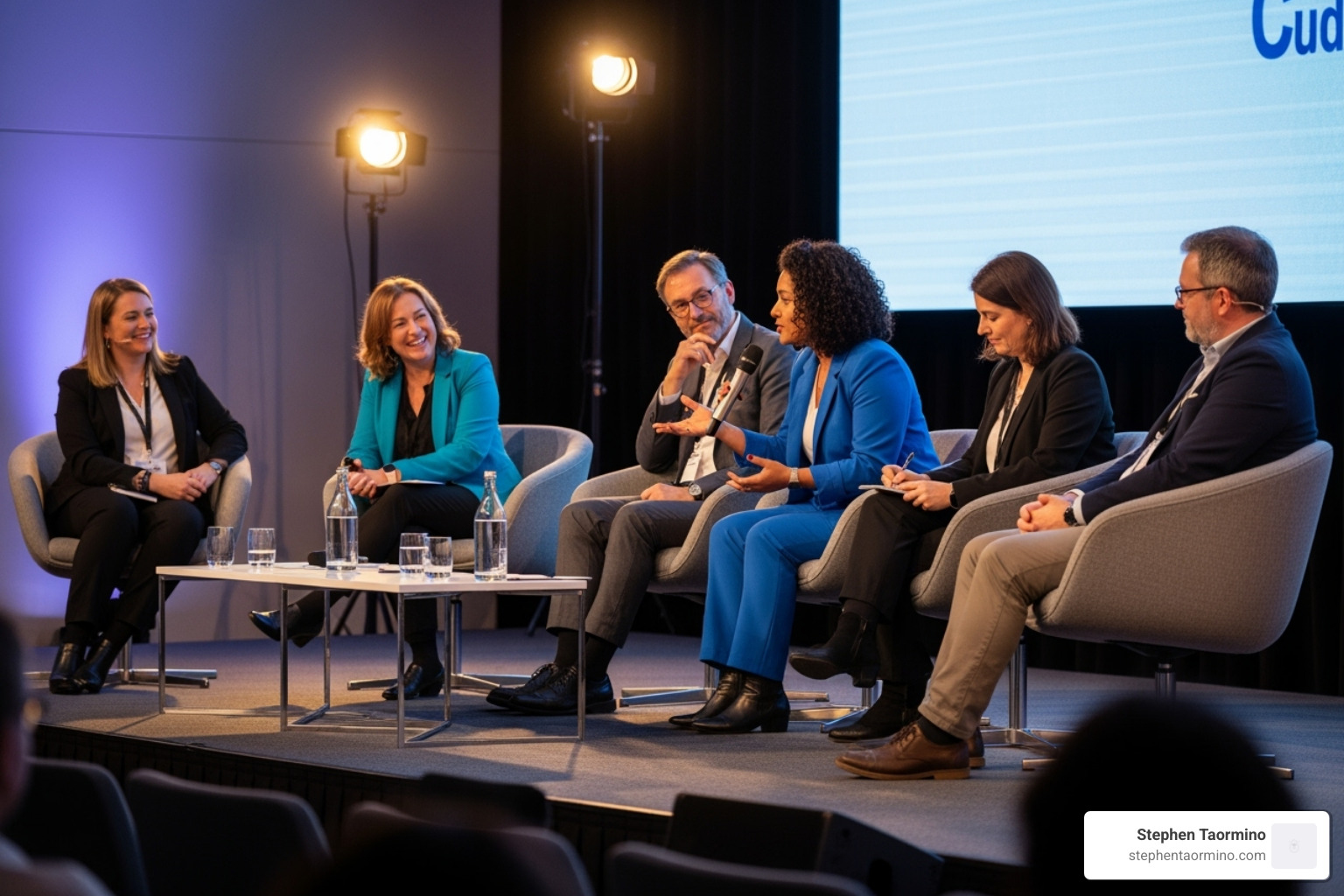
The Q&A segment separates good moderators from great ones. Set clear expectations: “Please state your name and your question in about 30 seconds.” Always repeat the question into your microphone for everyone to hear.
Handle audience members who give comments instead of questions with grace: “Thanks for that perspective. What’s your specific question for our panel?” For virtual events, use Q&A platforms that let audiences upvote questions. Always have backup questions ready to avoid dead air.
Research shows that testimonials and lived experiences resonate deeply with audiences, so encourage panelists to share specific stories.
The Grand Finale: Summarizing and Closing with Impact
Don’t let your panel fizzle out. A strong closing crystallizes the insights.
- Ask for one final takeaway. Give each panelist a final moment to share a key action item.
- Summarize the big themes. Briefly recap the two or three golden nuggets that emerged.
- Thank everyone genuinely. Thank your panelists, the audience, and the organizers.
- End with a call to action. Tell people where they can continue the conversation or connect with the panelists.
Pro-Level Moderation: Common Mistakes and Tech Tools
This section addresses advanced techniques and common pitfalls to help you moderate like a seasoned professional. Awareness of these mistakes transforms good moderators into great ones.
Common Mistakes to Avoid When You Moderate a Panel Discussion Script

The moderator’s job is to be the guide, not the hero. Avoid these common traps:
- Moderator Starring: Talking as much as the panelists or answering questions yourself. Your role is to facilitate, not showcase your own expertise.
- Time Management Disasters: Running out of time for Q&A or an abrupt ending. Stick to your timed segments and transition decisively.
- Letting Panelists Monopolize: Allowing one person to dominate the conversation. Politely interject and redirect to another panelist to ensure balanced participation.
- Awkward Q&A Silence: Not having backup questions ready when the audience is shy.
- Lengthy Introductions: Reading a panelist’s entire resume. Keep it to two sentences focused on their relevance to the topic.
- Failing to Intervene: Letting the discussion drift too far off-topic. Acknowledge the point and firmly steer the conversation back to the main theme.
Leveraging Technology to Improve the Experience
Technology can lift your panel, especially in virtual and hybrid settings. Choose tools that improve, not complicate, the experience.
- Stable Internet: For virtual events, ensure you and your panelists have a stable, wired connection if possible (at least 5 Mbps upload speed).
- Interactive Tools: Use polling and Q&A platforms (like those in webinar software) to turn passive viewers into active participants.
- Visual Elements: Use slides with key stats, poll results, or charts to break up the talking-head format and re-engage the audience.
- Backstage Support: For virtual events, have a team member manage the chat, handle tech issues, and queue up questions so you can focus on moderating.
- Hybrid Event Awareness: Acknowledge both the in-person and virtual audiences. Repeat questions from the room for online attendees and ensure camera angles work for everyone.
Frequently Asked Questions about Moderating a Panel
Here are answers to common questions about panel moderation, based on decades of real-world experience.
How many panelists are ideal for a discussion?
The magic number for how to moderate a panel discussion script effectively is 3-5 panelists. This range provides diverse perspectives without becoming a crowded stage where no one gets enough time to speak.
- Fewer than three feels more like an interview and lacks the dynamic interaction between experts.
- More than five makes it difficult to manage time, and each panelist’s speaking time becomes too short to offer deep insights.
Match the number of panelists to your total time. A 45-minute panel with five experts will feel rushed.
What’s the best way to handle a panelist who talks too much?
The key is polite, firm interruption at a natural breathing point. Wait for them to take a breath, then jump in with a phrase that acknowledges their point while redirecting the conversation.
Try these phrases:
- “Thank you, that’s a powerful insight. I want to build on that and ask [Other Panelist]…”
- “That’s a great point, and to keep us on track, I’d love to get [Other Panelist]’s view on this.”
If they consistently ignore gentle cues, be more direct but still respectful: “I need to pause you there, [Name], to make sure we have time to hear from everyone.”
Should I give the questions to the panelists beforehand?
Yes, absolutely. Sharing your core questions or key themes ahead of time is one of the most important best practices for moderating a panel discussion. It allows panelists to prepare thoughtful, data-backed responses instead of being put on the spot.
This doesn’t mean scripting every word, which kills spontaneity. It means providing a framework so they can gather relevant examples and statistics. This leads to a much higher-quality discussion and delivers more value to your audience. The pre-panel briefing call is the perfect time to do this.
Conclusion: Take the Stage with Confidence
You’ve got this. Mastery of how to moderate a panel discussion script isn’t about perfection—it’s about preparation meeting the moment. When your behind-the-scenes work is done, your audience sees only a smooth, engaging conversation that feels effortless. They leave with new insights and actionable ideas.
Your role as moderator is simple: open up the collective wisdom on stage. You are the key that opens the door to meaningful dialogue and the bridge that connects expert knowledge to audience needs.
Every great moderator started out a little nervous but well-prepared. The difference between good and great often comes down to understanding human behavior. When you know how people think, connect, and act, you transform from someone asking questions into someone facilitating real change.
My approach to communication has always centered on one core belief: understanding how people think, connect, and act is the key to open uping potential. This applies to business growth, marketing strategy, and facilitating a compelling panel discussion. It all comes back to human connection.
The blueprint is in your hands. Now it’s time to step onto that stage with the confidence that you’re equipped to guide a conversation that will genuinely serve your audience.
For more expert insights on communication and marketing psychology, explore our video resources.