
Why B2C Marketing Strategies Are Your Key to Consumer Connection
B2C marketing strategies are the frameworks and tactics businesses use to connect directly with individual consumers, not other companies. Unlike B2B marketing, which focuses on logic and long sales cycles, B2C marketing operates in the world of emotion, impulse, and instant gratification. Here’s what works:
- Emotional storytelling that resonates with personal values and aspirations
- Personalized experiences across email, social media, and mobile channels
- Social proof through user-generated content and influencer partnerships
- Seamless omnichannel journeys from findy to purchase
- Data-driven optimization to understand and predict consumer behavior
- Loyalty programs that turn one-time buyers into brand advocates
The modern B2C landscape is more complex than ever. Nearly 80% of B2C marketers are maintaining or increasing their budgets in 2025, but they’re facing significant challenges: consumers trust brands less with their personal data, poor data quality hinders personalization efforts, and rapid lifestyle changes make it difficult to keep messaging relevant.
Yet opportunity abounds. More than 2 in 5 Americans now use TikTok as a search engine. Automated email and SMS flows generate up to 30x more revenue per recipient than traditional campaigns. And consumers aren’t just willing to engage—they’re expecting personalized experiences that make them feel seen and understood.
The secret? Psychology drives behavior. Consumers make purchase decisions based on emotion 3,000 times faster than rational thought. They’re motivated by desires to feel special, save time, improve their status, or align with their values. Understanding these human drivers is what separates mediocre marketing from campaigns that truly resonate.
This guide will walk you through proven B2C marketing strategies—from foundational SEO and content marketing to advanced personalization and emerging AI trends. You’ll learn how to build emotional connections, leverage the right channels, overcome modern challenges, and measure what matters.
As Steve Taormino, I’ve spent over 25 years helping organizations worldwide understand the psychology behind consumer behavior and transform that knowledge into B2C marketing strategies that drive measurable growth. I’ve positioned my firm as a leader in marketing psychology because I believe that understanding why people buy is just as important as knowing what to sell them.
Let’s open up the strategies that will help you cut through the noise and build lasting relationships with your customers.
Understanding the B2C Landscape: B2C vs. B2B Marketing
In the vast world of marketing, understanding your audience is paramount. This is where the fundamental differences between B2B (business-to-business) and B2C (business-to-consumer) marketing strategies come into play. While both aim to drive sales, their approaches, target audiences, and underlying psychological triggers are distinct.

Our B2C marketing strategies target individual consumers who are looking for products or services to meet personal needs, wants, or desires. This audience is often driven by emotional factors, seeking instant gratification, and looking for personal value. Think about buying a new smartphone, a pair of shoes, or signing up for a streaming service – these decisions are typically made by one person, often quickly, and are heavily influenced by how the product makes them feel. Psychological studies show that emotional triggers stimulate customers’ minds 3,000 times faster than rational thinking. Consumers are often “microsecond buyers” making impulse decisions.
In contrast, B2B marketing focuses on selling to other businesses or organizations. The B2B audience consists of multiple stakeholders within a company, and their purchasing decisions are typically driven by logic, return on investment (ROI), efficiency, and long-term value. The decision-making process is often collective, involves several meetings, and can span weeks or even months. A B2B sale might involve purchasing new software for an entire department, office supplies for a corporation, or machinery for a factory. These are high-value transactions with longer sales cycles, where trust and relationships are built over time. Indeed, the average B2B sales cycle takes around 84 days to convert a lead.
The sales cycles also differ significantly. B2C sales cycles are typically much shorter, sometimes even instantaneous, especially for lower-priced items or those purchased on impulse. We’re talking about that immediate “add to cart” click. B2B sales, on the other hand, are characterized by a multi-step process involving research, proposals, negotiations, and multiple approvals. This impacts how we craft our marketing messages and choose our channels.
Key Differences at a Glance
To illustrate these distinctions more clearly, let’s look at a comparative table:
| Feature | B2C Marketing | B2B Marketing |
|---|---|---|
| Target Audience | Individual consumers | Organizations, businesses, decision-makers |
| Sales Cycle | Short, often impulse-driven | Long, multi-step, complex |
| Decision Driver | Emotion, personal desire, status, instant gratification | Logic, ROI, efficiency, problem-solving, long-term value |
| Marketing Message | Benefit-oriented, appeals to feelings, personal value | Feature-driven, appeals to logic, business needs, measurable results |
| Customer Relationship | Brand loyalty, retention, broad appeal | Strategic partnership, trust, long-term relationship |
Core B2C Marketing Strategies to Drive Growth
With a clear understanding of the B2C landscape, we can now dig into the core B2C marketing strategies that drive growth. Our goal is to create a seamless omnichannel experience for our customers, mapping out their journey from initial awareness to loyal advocacy. This means ensuring a consistent and engaging presence across all touchpoints, from search engines to social media, and from personalized emails to in-store experiences.
Content Marketing and SEO: The Foundation of Findy
Content marketing is the bedrock of any effective B2C strategy. It’s how we educate, entertain, and build trust with our audience, positioning our brand as an expert and a valuable resource. Whether it’s a blog post, a video, or an infographic, our content aims to address consumer pain points, highlight product benefits, and encourage action. In fact, 76% of B2C marketers use content as a core strategy for their digital marketing efforts.
Closely tied to content is Search Engine Optimization (SEO). SEO is crucial because search engines are how most people find websites and products. Optimizing our content for search engines means that when a potential customer searches for something related to our product, we appear prominently in the results. This involves thorough keyword research to understand what our customers are searching for and what their intent is behind those searches. For example, if a customer is searching for “best running shoes for flat feet,” our content should address that specific need.
For e-commerce B2C brands, it’s particularly important to add product structured data to our product pages. This includes information like high-quality images, detailed descriptions, price, shipping details, and offers. This structured data helps us rank in enriched search results, making our products more visible and appealing. For instance, a toothpaste brand might effectively use structured data, allowing its products to show up prominently in Google’s popular products widget with customer reviews and return policies clearly displayed. This makes our products not only findable but also trustworthy right from the search results page.
Blogging and video content play significant roles. While blogs provide in-depth information, video is an incredibly engaging format, especially for younger generations. Over 75% of Gen Z and millennials are open to receiving AI videos from brands, highlighting the appetite for dynamic and personalized visual content. Brand storytelling, weaving narratives around our products and values, helps to forge emotional connections that resonate deeply with consumers.
Social Media and Influencer Marketing: Building Community and Trust
Social media has become an indispensable channel for B2C brands, serving as a powerful platform for building communities and fostering trust. More than 3.2 billion people are active on social media globally, and 51% of Gen Z mainly use social media to look up brands and new products. Our social media strategy involves creating visually appealing and engaging content, actively interacting with our audience, and leveraging branded hashtags to encourage user participation.
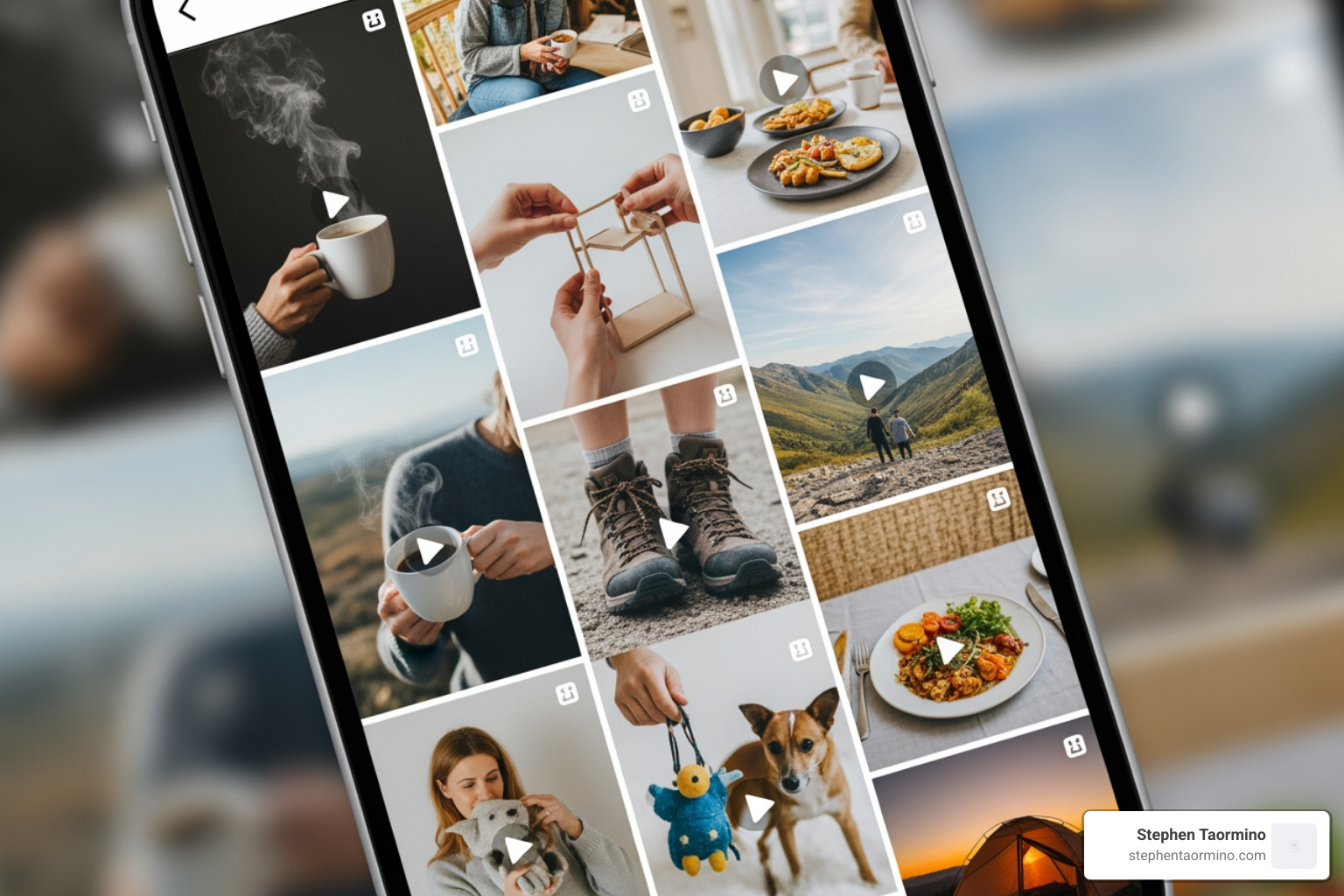
One of the most powerful aspects of social media is User-Generated Content (UGC). When customers share their experiences with our products, it acts as authentic social proof that resonates far more deeply than traditional advertising. Brands can encourage UGC by creating unique hashtags or running contests. Apple’s #ShotOnIphone campaign is a prime example of leveraging UGC to showcase product quality and engage users.
Influencer marketing has also emerged as a highly effective strategy. Partnering with influencers who align with our brand values and have an engaged following can significantly boost our reach and credibility. Consumers trust recommendations from influencers – 69% of them, to be precise. A popular fitness apparel brand, for example, has built a vast network of brand ambassadors and athletes who are popular influencers in the fitness world. Their paid social ads, often featuring these influencers, have yielded an impressive 6.6x return on ad spend, with 40% of their sales coming from Instagram.
Platforms like TikTok are particularly potent. More than 2 in 5 Americans use TikTok as a search engine, and nearly 1 in 10 Gen Z consumers are more likely to rely on TikTok than Google. Brands that understand this dynamic can achieve viral success. A popular fast-casual restaurant’s #LidFlip and #GuacDance challenges, for instance, generated over 240 and 430 million views respectively, showcasing the power of interactive, user-driven campaigns on the platform. This kind of community engagement and social commerce directly contributes to brand loyalty and sales.
Personalization and Direct Communication: Speaking to the Individual
In a world saturated with marketing messages, personalization is no longer a luxury—it’s an expectation. Consumers crave experiences that make them feel seen and understood. As Steve Taormino, I emphasize that understanding human behavior means recognizing that people want to be treated as individuals, not just transactions. This is why personalization is a cornerstone of effective B2C marketing strategies.
Personalization extends beyond simply using a customer’s first name in an email. It involves tailoring content, product recommendations, and offers based on their past behavior, preferences, and demographics. Automated email and SMS marketing flows are instrumental here. Automated flows, such as abandoned cart reminders or post-purchase messages, generate up to 30x more revenue per recipient than generic campaigns because they are timely and highly relevant. For example, when a customer abandons a cart on a shoe brand’s website, they receive an email reminding them of the product and highlighting its benefits, a simple yet effective strategy.
Segmentation allows us to group our audience based on shared characteristics, enabling us to send highly targeted messages. This could be based on purchase history, browsing behavior, location, or even predicted future actions. Marketing automation tools empower us to scale these personalized interactions, ensuring that every customer receives the right message at the right time through the right channel. Research shows that 74% of marketers state that personalizing their email content increases engagement, and 80% of consumers are more likely to buy from a business that offers personalized experiences.
However, we must also acknowledge the challenges. Consumers are less trusting with their personal data (22.83% of marketers cite this as a challenge), and poor data quality (18.07%) can hinder effective personalization. Rapid lifestyle changes (17.95%) also demand constant adaptation. Overcoming these requires a commitment to data integrity and transparent communication about how customer data is used to improve their experience.
Building Loyalty and Measuring Success
Once we’ve attracted and converted customers, our focus shifts to retention. In the B2C world, repeat purchases and turning customers into passionate brand advocates are crucial for long-term success. We understand that a loyal customer is not just a customer; they are a walking, talking advertisement for our brand.
Advanced B2C Marketing Strategies for Customer Retention
Brand loyalty is incredibly important in B2C marketing. Loyal customers not only make repeat purchases but also refer new customers, provide valuable feedback, and are more forgiving if something goes wrong. We foster this loyalty through several advanced B2C marketing strategies:
Loyalty programs are a classic example. These programs reward customers for their continued engagement, often through points, discounts, or exclusive access. An athleisure and lingerie brand, for example, offers a tiered loyalty program that clearly outlines how many points are needed to earn specific rewards, making the value proposition transparent and motivating.
Gamification, another powerful tool, integrates game-like elements into our marketing efforts. This could involve challenges, badges, or leaderboards that make interacting with our brand fun and rewarding, creating an emotional connection that fosters deeper loyalty.
Creating exclusive communities, whether online forums or special events for loyal customers, can also strengthen brand ties. These communities provide a sense of belonging and make customers feel valued. Finally, the post-purchase experience is critical. Following up with educational content, excellent customer service, and personalized offers ensures that the customer’s journey continues long after the initial sale, changing them into advocates.
Leveraging Data to Optimize and Overcome Challenges
To effectively build loyalty and refine our B2C marketing strategies, we must diligently measure our success and leverage data. We believe in continuous optimization, which means constantly analyzing performance and adapting our approach.
Key B2C Metrics we track include:
- Customer Acquisition Cost (CAC): How much it costs to acquire a new customer.
- Customer Lifetime Value (CLV): The total revenue we can expect from a customer over their relationship with us.
- Conversion Rate: The percentage of visitors who complete a desired action (e.g., make a purchase).
- Website Traffic: The volume of visitors to our site.
- Social Media Engagement: Likes, shares, comments, and other interactions on our social channels.
- Net Promoter Score (NPS): A measure of customer loyalty and willingness to recommend our brand.
Data analytics tools like Google Analytics are indispensable for tracking these metrics, understanding customer behavior, and identifying areas for improvement. Over two-thirds of marketers believe speed is the key benefit of adopting data-driven marketing. We know that 92.3% of companies have databases for customer information, and 90.7% segment their data to better engage their audience.
Leveraging this data helps us overcome challenges such as poor data quality and consumer privacy concerns. By ensuring our data is clean and accurate, and by being transparent about data usage, we can build trust while still delivering personalized experiences. Data-driven marketing also allows us to be more agile in our product design and development, directly addressing consumer problems and pain points, minimizing the risk of product failure.
The Future of B2C: Emerging Trends and Adapting for 2025
The B2C landscape is constantly evolving, and staying ahead means embracing emerging trends and adapting our B2C marketing strategies. We anticipate a future where technology and human connection intertwine even more closely.

Artificial Intelligence (AI) is rapidly changing marketing. AI tools can analyze massive volumes of customer data in real-time, spot patterns, and predict behavior, enabling hyper-targeted and personalized experiences at scale. One of the most exciting applications of AI is content repurposing. We can use AI to transform existing content, turning blog posts into video scripts, transcribing podcasts into articles, or creating visuals for social media from long-form text. This efficiency allows us to reach diverse audiences across multiple channels with minimal effort. The good news? Over 75% of Gen Z and millennials are open to receiving AI videos from brands, indicating a readiness for this innovative content.
Value-driven marketing and social responsibility are also becoming paramount. Consumers, especially Gen Z and millennials, are increasingly making purchasing decisions based on a brand’s values. Almost 56% of B2C marketers plan on addressing social issues in their marketing in 2025, and 57% found it effective in the last year. This means authentically demonstrating a commitment to social causes and sustainability, not just performative allyship. For instance, sustainable footwear brands often detail their practices on their website and release an annual sustainability report, building trust and aligning with consumer values.
Augmented Reality (AR) is another trend set to improve the customer experience. AR allows consumers to virtually “try on” products or visualize them in their own environment before making a purchase. This reduces uncertainty and improves engagement. An online eyewear retailer, for example, has gained significant exposure from its virtual try-on features, allowing customers to see how glasses look on their face from the comfort of their home. This immersive technology bridges the gap between online and offline shopping, addressing a common reason consumers prefer brick-and-mortar stores.
Frequently Asked Questions about B2C Marketing Strategies
As we steer the complexities of B2C marketing, certain questions frequently arise. Let’s address some of the most common ones to provide further clarity.
How can a startup decide between a B2B or B2C marketing approach?
For a startup, choosing the right marketing approach is foundational. We recommend a structured evaluation:
- Define your target audience: Clearly identify who you are trying to serve. Are they businesses (e.g., a SaaS tool for project management) or individual consumers (e.g., a new coffee brand)? A SaaS startup selling collaboration tools might focus on businesses, while a new skincare line would target individual consumers.
- Analyze demographics and needs: Understand the specific pain points, motivations, and purchasing behaviors of your chosen audience. B2B customers prioritize ROI and efficiency, while B2C customers are driven by personal needs, emotions, and convenience.
- Identify your unique value proposition: How does your product or service uniquely solve problems or fulfill desires for this specific audience? For B2B, it might be cost savings or increased productivity. For B2C, it could be personal enjoyment, health benefits, or convenience.
- Select appropriate marketing channels: Where does your target audience spend their time? B2B often relies on LinkedIn, email marketing, and industry events. B2C thrives on social media, influencer marketing, and e-commerce platforms.
- Start small and test: Launch pilot campaigns for both approaches if there’s ambiguity. Gather data, learn from the results, and iterate. This allows for flexibility and reduces risk.
- Consider hybrid models: Sometimes, a blend is possible from the start. A startup selling meal kits, for example, could target individual consumers for weekly subscriptions while also pitching corporate packages to offices.
How can a business effectively blend B2B and B2C marketing?
Blending B2B and B2C marketing is a sophisticated strategy that can open up new revenue streams and expand market reach. Many successful tech companies offer enterprise solutions to B2B buyers while also appealing to B2C consumers with their own line of products. The key is to identify areas of audience overlap and adapt your messaging and channels accordingly.
Here’s how we recommend blending these approaches:
- Identify Audience Overlap: Look for ways your product or service can serve both individuals and organizations. A wearable fitness tech company might target individual consumers with emotional, health-focused messaging while also collaborating with fitness centers or wellness programs for bulk purchases.
- Adapt Messaging: While the core product might be the same, the benefits you highlight will differ. For B2B, emphasize ROI, scalability, and operational efficiency. For B2C, focus on personal benefits, convenience, and emotional appeal.
- Leverage Universal Tactics: Many marketing tactics are effective across both domains:
- Content Marketing: Create educational content that serves B2B needs (e.g., whitepapers on industry trends) and engaging content for B2C (e.g., how-to videos, lifestyle blogs).
- SEO: Optimize for keywords relevant to both B2B decision-makers and B2C consumers.
- Social Media Marketing: Maintain a professional presence for B2B engagement (e.g., LinkedIn) and a more personal, engaging presence for B2C (e.g., Instagram, TikTok).
- Email Marketing: Segment your lists to send custom newsletters, product updates, or promotions to each audience type.
- Influencer Marketing: Partner with industry experts for B2B credibility and lifestyle influencers for B2C reach.
Blending these strategies allows a business to maximize its market potential by addressing the distinct needs and motivations of both corporate and individual buyers.
What is the most important element for building an emotional connection in B2C?
Building an emotional connection in B2C marketing is paramount because, as we’ve discussed, emotions drive purchasing decisions much faster than logic. From our perspective in marketing psychology, the most important element for building this connection is authenticity combined with empathetic storytelling.
Here’s why:
- Authenticity: Consumers are savvier than ever. They can spot inauthenticity a mile away. A brand’s values, promises, and actions must align. If you preach sustainability, your supply chain needs to reflect that. This genuine approach fosters trust, which is the bedrock of any strong emotional connection.
- Empathetic Storytelling: This involves understanding our customers’ deepest pain points, aspirations, and desires, and then crafting narratives that resonate with those experiences. It’s about showing, not just telling, how our product or service fits into their lives and solves their problems in a meaningful way. We need to focus on the “what’s in it for me” from the customer’s perspective, not just rattling off features.
- Aligning with Customer Values: When our brand’s values echo those of our target audience, it creates a powerful bond. Whether it’s a commitment to social justice, environmental sustainability, or supporting local communities, aligning with these values makes customers feel like they are part of something bigger than just a transaction.
- Empathetic Communication: This extends to every interaction. Treating customers like people, not just transactions, and responding to their needs with genuine understanding, builds rapport and reinforces the emotional connection.
By being authentic, telling compelling stories that tap into core human emotions, and consistently communicating with empathy, we can transform casual buyers into loyal advocates who feel a genuine bond with our brand.
Conclusion
We’ve explored the dynamic world of B2C marketing strategies, uncovering the crucial differences from B2B, delving into core tactics like content, social media, and personalization, and examining the importance of loyalty and data-driven optimization. We’ve also peered into the future, anticipating the impact of AI, value-driven marketing, and AR.
The overarching lesson is clear: successful B2C marketing places the customer at its heart. It’s about understanding human behavior, anticipating needs, and crafting experiences that resonate on an emotional level. In a landscape where consumers are empowered and expectations are higher than ever, continuous adaptation, authentic storytelling, and a deep understanding of marketing psychology are not just advantageous—they are essential.
As Steve Taormino, I believe that by focusing on why people connect, act, and buy, we can open up the full potential of any marketing effort. Our expertise lies in changing these psychological insights into actionable B2C marketing strategies that deliver tangible results and build lasting relationships.
To master the art of connecting with your audience, explore our expert-led marketing webinars.