
Conference Panel: Master 2025 Success
Beyond the Snoozefest: Why Conference Panels Matter More Than Ever
A conference panel brings together 3-5 subject matter experts and a moderator to discuss a specific topic in front of an audience, creating an interactive forum for debate and insights. But let’s be honest—most are a snoozefest. The difference between a memorable highlight and a forgotten session isn’t luck; it’s strategy.
Core Components of Successful Panels:
- Compelling Topic – Specific, focused themes that address real challenges
- Diverse Panelists – Mix of expertise, backgrounds, and perspectives
- Skilled Moderator – Facilitates discussion without dominating
- Engaged Audience – Active participation through Q&A and interaction
- Strategic Format – Structured approach lasting 60-90 minutes
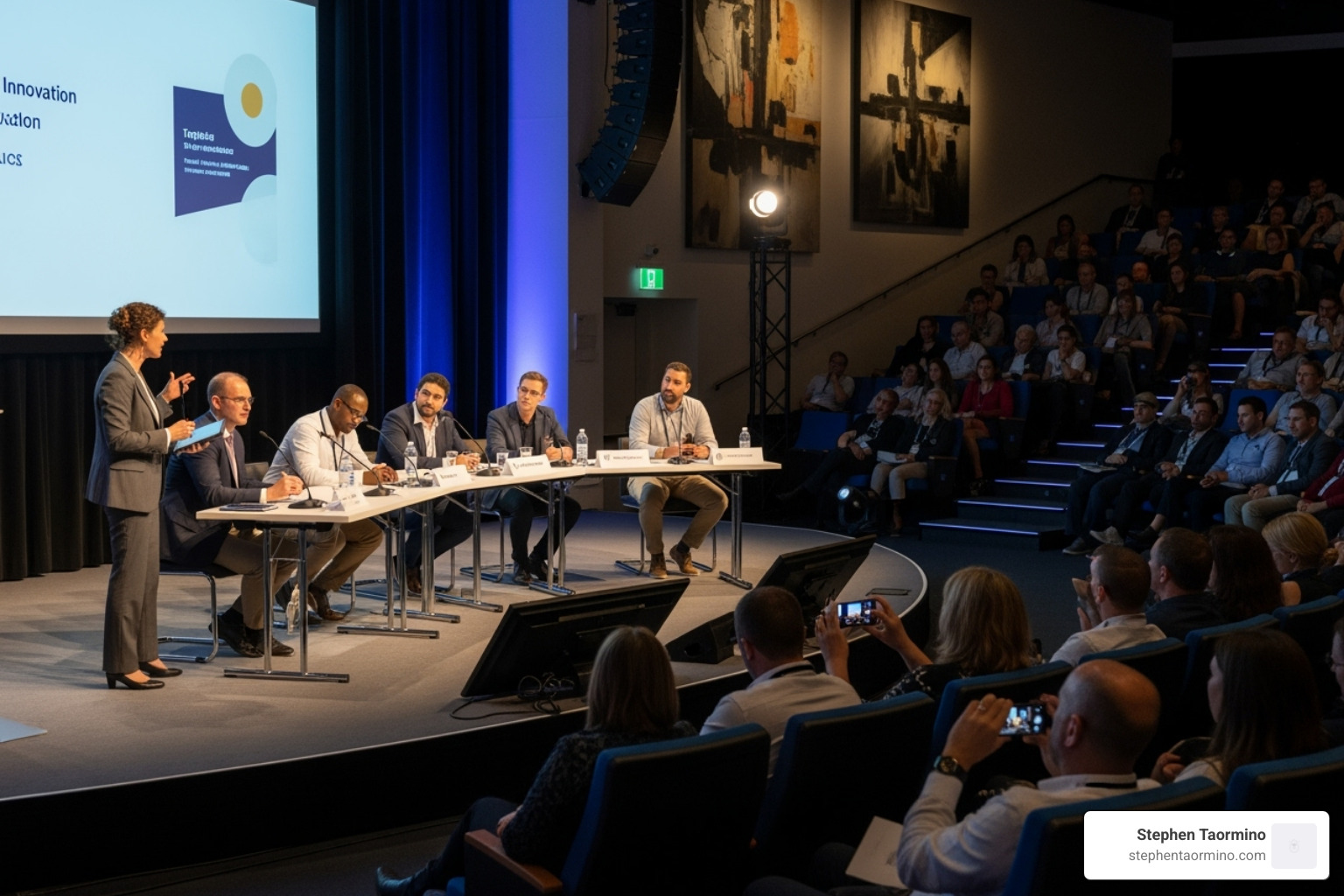
Great panels require deliberate planning. When done right, they benefit everyone: attendees gain diverse perspectives, panelists build thought leadership, and organizers create memorable events. In today’s world of virtual and hybrid events, audiences expect interactive, valuable content, making impactful panel discussions a critical skill.
I’m Steve Taormino. Through my work in strategic communications and marketing psychology, I’ve seen how masterfully crafted conference panel discussions can transform events. The best panels tap into what audiences truly need, not just what organizers think they want to hear.
The Blueprint for a Successful Conference Panel
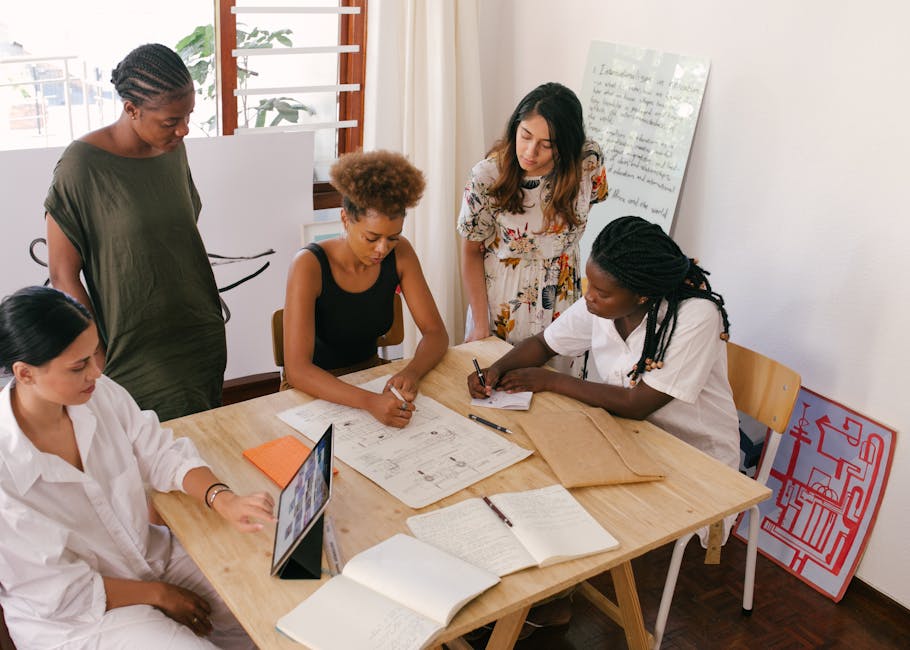
Think of planning a conference panel like assembling a dream team. Every successful panel starts with a clear blueprint that addresses the why, who, and how.
Topic Selection: The Foundation of Everything
Most organizers trip up here by choosing broad, safe topics that appeal to no one. Instead of “The Future of Marketing,” get specific and spicy. Try “How to Recover from Social Media PR Disasters.” One is a yawn; the other makes you lean in. Your topic should solve a real problem your audience faces. If a simple presentation serves your purpose better, don’t force a panel format.
Finding and Selecting Your Perfect Panelists
Once you have a compelling topic, assemble your voices. The sweet spot is 3 to 5 experts plus a moderator. You’re not just looking for impressive titles; you need passionate communicators who can engage an audience.
- Expertise & Passion: Look for people with real-world experience and compelling stories. Panelists who have steerd actual challenges will always outshine those who only know theory. Their passion for the topic will be contagious.
- Diverse Perspectives: Mix experience levels, backgrounds, and viewpoints to prevent an echo chamber. This intellectual diversity—mixing an academic, a startup founder, and a corporate executive, for example—creates the natural tension that makes discussions engaging.
- Vetting: Don’t rely on resumes. Have conversations to assess communication style and watch videos of their previous speaking engagements to gauge stage presence.
The Moderator: Your Director and Audience Advocate
If panelists are the stars, the moderator is the director. A skilled moderator facilitates brilliance in others, rather than competing for the spotlight. They are the audience’s advocate, pushing for direct answers and ensuring the conversation serves attendee needs. Great moderators keep time, guide conversations without dominating, and aren’t afraid to politely interrupt to keep things on track. Most importantly, they encourage healthy, respectful disagreement, which often produces the most valuable insights. To lift your discussions, learn more about professional moderation techniques.
Solving the ‘Manel’ Problem
Let’s address the elephant in the room. The term “manel”—referring to all-male panels—has become increasingly prominent. Organizations are taking active steps to ensure their panels reflect the diversity of their industries and audiences. This isn’t just about optics; it’s about better discussions. Intentionally seeking diverse voices, including women, people of color, and individuals from underrepresented groups, leads to richer, more nuanced conversations.
Know Your Audience
Before finalizing anything, understand who is in the audience. What are their challenges? What insights would make their time worthwhile? Use pre-event surveys or social media to gather this information, as it will shape everything from your topic to your questions.
Designing the Experience: Formats, Flow, and Flair
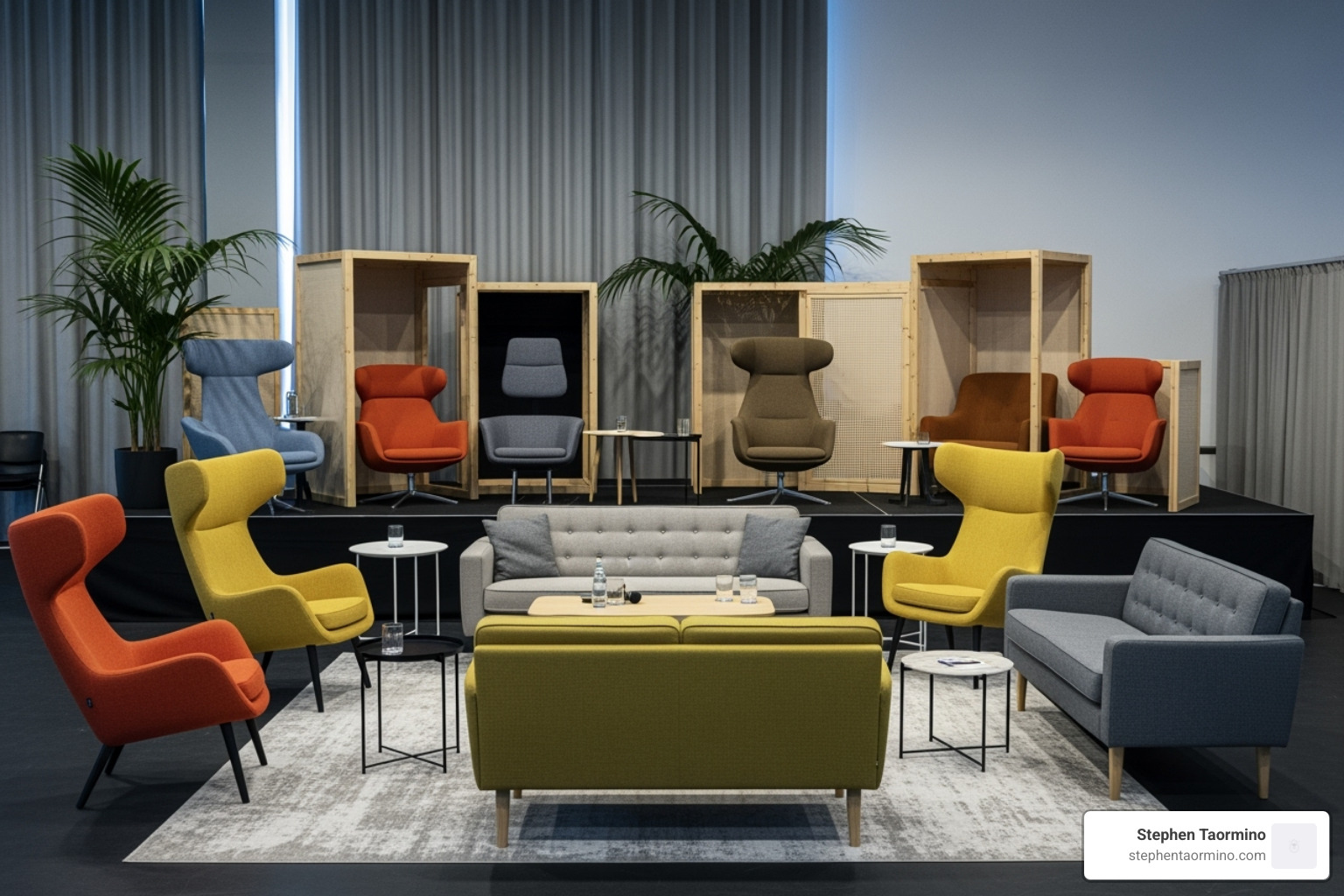
Once you’ve assembled your dream team, the creative work begins. This is where you transform a basic conference panel into a memorable experience.
Choosing Your Panel Format: Finding the Right Rhythm
The format you choose can make or break the experience. Match it to your topic and audience.
- Structured panels are great for deep dives, giving each expert uninterrupted time to present before a group Q&A.
- Open-style panels thrive on spontaneous interaction, with conversation flowing naturally between the moderator, panelists, and audience.
- Q&A-style panels put the audience in the driver’s seat, focusing the entire session on their questions.
- Initial remarks panels offer a hybrid approach, where each panelist gives a brief opening statement to set the stage before a broader discussion.
Here’s how these formats compare in practice:
| Format | Objective | Audience Interaction | Best Use Case |
|---|---|---|---|
| Structured | In-depth presentation of individual views | Limited during presentations, dedicated Q&A after | Complex topics requiring detailed individual insights |
| Open Style | Foster dynamic discussion and debate | Encouraged throughout, often spontaneous Q&A | Engaging, controversial, or evolving topics |
| Q&A Style | Address specific audience questions | Primary focus, often pre-submitted or live Q&A | Panels driven by audience curiosity, problem-solving |
| Initial Remarks | Provide broad overview from diverse angles | After initial remarks, typically extensive Q&A | Setting context, exploring multiple facets of a topic |
Getting the Timing Right
The sweet spot for panel discussions is 60 to 90 minutes. Plan for about 60 minutes of core discussion, followed by 20-30 minutes of audience Q&A. This allows for depth without causing audience fatigue.
Essential Steps for Planning Your Conference Panel
Seamless panels require thoughtful preparation to create a framework for spontaneous brilliance.
- Define clear objectives: Know what you want the panel to achieve. Are you solving a problem, inspiring action, or debating approaches?
- Communicate pre-panel: Share a run-of-show and key questions with panelists so they arrive prepared. This isn’t about scripting, but about readiness.
- Create a detailed run-of-show: Include timing for introductions, discussion points, Q&A, and closing remarks. This is your moderator’s roadmap.
- Prepare engaging questions: Ask questions that invite stories, challenge assumptions, and encourage panelists to build on each other’s ideas.
- Conduct a technical rehearsal: Test all microphones, projectors, and virtual platforms to prevent disasters and ensure panelists are comfortable.
- Plan the staging: Arrange seating to encourage conversation. Ensure everyone has easy access to water and microphones.
How to Make Your Panel Discussion Memorable
Transform a good panel into an unforgettable one with a little flair.
- Use creative elements: Throwable microphones for Q&A or interactive polls for virtual events add energy.
- Make storytelling your superpower: Encourage panelists to share personal anecdotes and real-world examples. Stories stick with people.
- Use humor strategically: A well-timed joke can relax the audience and make complex topics more digestible.
- Start with a great icebreaker: Try asking, “What’s a common misconception about [your topic] that you’d love to debunk right now?” This signals an engaging discussion ahead.
Understanding audience motivation helps design interactions that naturally draw people in. The goal is to create an experience that changes how they think.
Engaging the Audience & Mastering the Virtual Stage
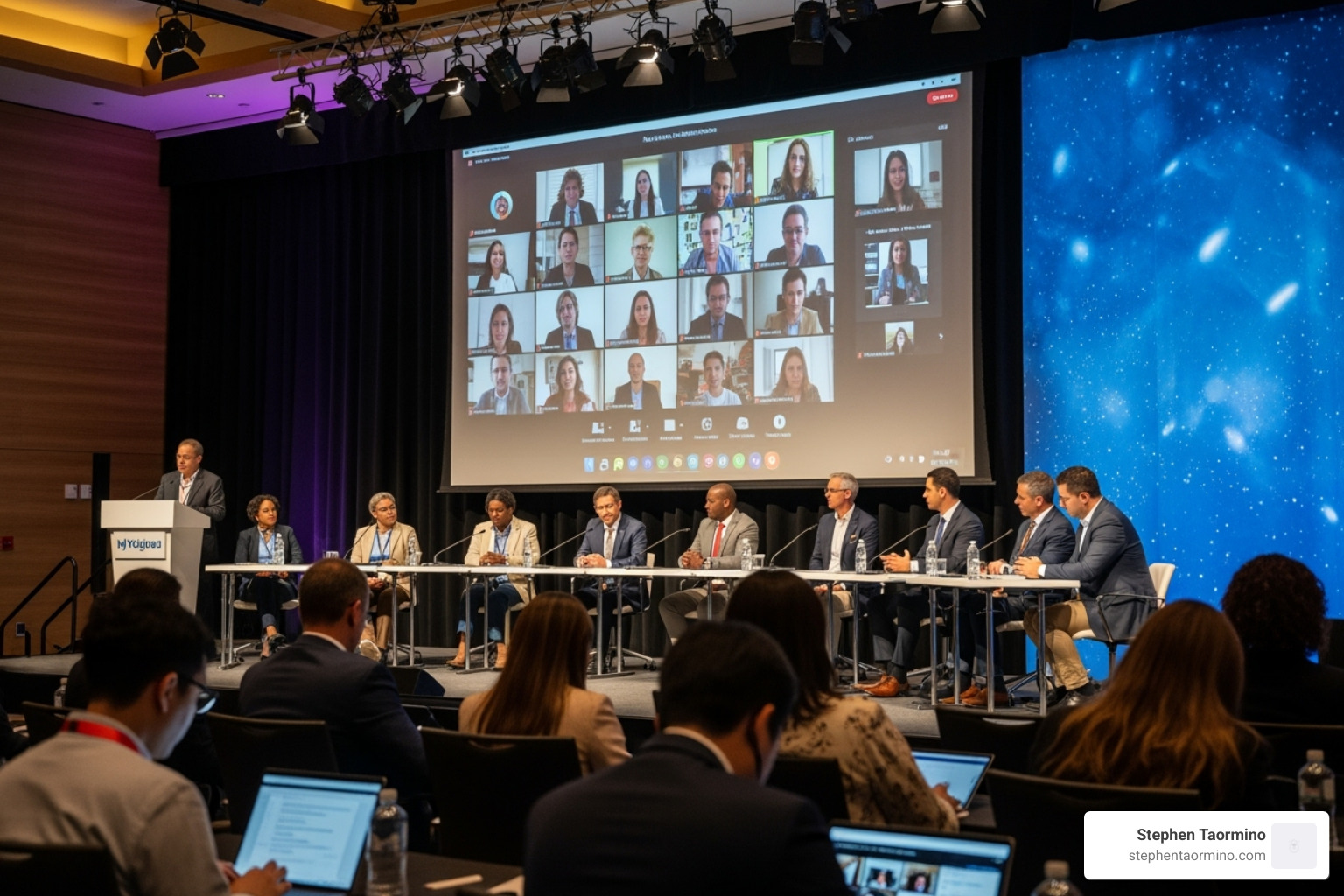
Modern conference panels are conversations, not performances. The challenge is that today’s audiences are more distracted than ever, especially in virtual settings. But when we genuinely engage people, they participate and remember.
Creating Connection Before, During, and After
Engagement starts long before the panel begins.
- Pre-event: Open the conversation early. Invite attendees to submit questions via event apps or social media. This makes them feel heard and invested.
- During the event: Weave interaction throughout the discussion instead of saving Q&A for the end. Run quick polls and feed the results directly into the conversation.
- Post-event: Keep the conversation going. Use dedicated hashtags or create discussion threads on LinkedIn to connect panelists and attendees.
The Virtual Reality: New Opportunities and Pitfalls
Virtual and hybrid events offer new opportunities for panels but come with the challenge of Zoom fatigue. Without physical cues, it’s harder to read the room. However, virtual formats can offer more control and creativity when planned correctly.
Unique Considerations for Virtual and Hybrid Panels
Virtual panels require a different playbook.
- Moderator Control: Use the platform’s tools to manage speaking time, mute background noise, and keep energy high.
- Reading the Virtual Room: Actively monitor the chat and use polls as temperature checks to gauge engagement.
- Keeping Attendees Engaged: Make them active participants. Run polls every 10-15 minutes and acknowledge their contributions by name.
- Technical Support: This is non-negotiable. Test everything—internet connections, cameras, and audio. One glitch can derail the entire panel.
- Hybrid Integration: Ensure both in-person and virtual audiences feel equally valued. Have dedicated staff manage online questions and create moments that bridge the two experiences.
Technology to Improve Your Panel Discussion
The right tech creates opportunities for deeper engagement.
- Live Polling Software: Transforms passive listeners into active participants by asking for their input in real-time.
- Q&A Platforms: Allow attendees to submit and upvote questions, ensuring the most relevant topics are addressed.
- Social Media Integration: A well-chosen hashtag extends the conversation beyond the event, generating real-time feedback.
- Event Apps: Centralize all engagement features—polling, Q&A, networking—in one place for a seamless experience.
- Virtual Breakout Rooms: Offer intimate follow-up conversations with panelists on specific topics after the main session.
The technology exists to create truly engaging conference panel experiences. The question is whether we are willing to use it.
Frequently Asked Questions about Conference Panels
Planning a conference panel often raises similar questions. Here are concise answers to the most common ones.
What is the ideal number of panelists for a discussion?
The magic number is 3 to 5 experts plus one moderator. Fewer than three can feel like an interview, while more than five creates chaos, limiting speaking time for each person. This range allows for a genuine diversity of opinion without becoming unwieldy, ensuring each expert gets adequate airtime.
How long should a conference panel be?
An effective conference panel should run 60 to 90 minutes. The best structure is a 60-minute moderated discussion followed by 20-30 minutes of audience Q&A. This timing provides enough depth to explore topics meaningfully while respecting audience attention spans and ensuring their most pressing questions get answered.
What is the single biggest mistake organizers make with panels?
Without a doubt, the biggest mistake is choosing topics that are too broad or vague. Vague topics like “The Future of Marketing” lead to unfocused, generic discussions that fail to provide actionable insights. Audiences leave feeling they gained little practical value. The solution is to choose “spicy,” specific topics that address a real, concrete challenge your audience faces. A focused topic leads to a more valuable conversation for everyone.
Conclusion: Assembling an Unforgettable Experience
The journey from a boring conference panel to an unforgettable experience is about masterful planning and understanding what makes people engage.
We’ve covered the essential building blocks: compelling topics, diverse panelists, and skilled moderators. We’ve explored designing interactive formats, the importance of meticulous planning, and the challenges of connecting in a virtual world.
The true power of an exceptional panel lies in its ripple effects. When done right, attendees walk away with actionable insights, panelists lift their thought leadership, and organizers deliver high-value experiences that build a loyal following.
My work in marketing psychology confirms that the best panels tap into our fundamental human needs: to learn, connect, and to be heard. By designing with these drivers in mind, we transform passive observers into active participants.
Every conference panel holds untapped potential. With a strategic approach grounded in human behavior and authentic communication, you can create experiences that become the highlight of any event. It’s about more than sharing information; it’s about fostering the confidence and connections that drive success.
The blueprint is here. Now it’s time to put it into action.
Continue your learning journey with our expert videos.