French
  English
  Spanish
  German


Customer Engagement Tools: 7 Amazing Picks
Why Customer Engagement Tools Are Critical to Your Business Success
Customer engagement tools are software solutions that help businesses interact with, support, and build relationships with their customers. By unifying conversations from email, live chat, social media, and more, these platforms allow you to deliver personalized experiences, automate communications, and measure satisfaction across the entire customer journey.
In short, these tools help you:
- Unify conversations into a single platform
- Automate responses with AI and intelligent routing
- Personalize interactions based on customer data
- Gather feedback through surveys and sentiment analysis
- Build loyalty with rewards and community features
- Empower customers with self-service options
- Track performance with key engagement metrics
The stakes are high. Companies with strong omnichannel customer engagement retain 89% of their customers, while those without retain just 33%. This gap highlights the difference between building a loyal base and constantly replacing lost customers.
Today’s customers expect seamless, personal experiences across every touchpoint. The right customer engagement tools help you meet these expectations at scale, streamlining channels and making every interaction feel valued. They don’t just improve efficiency; they shape how your brand listens, responds, and earns trust.
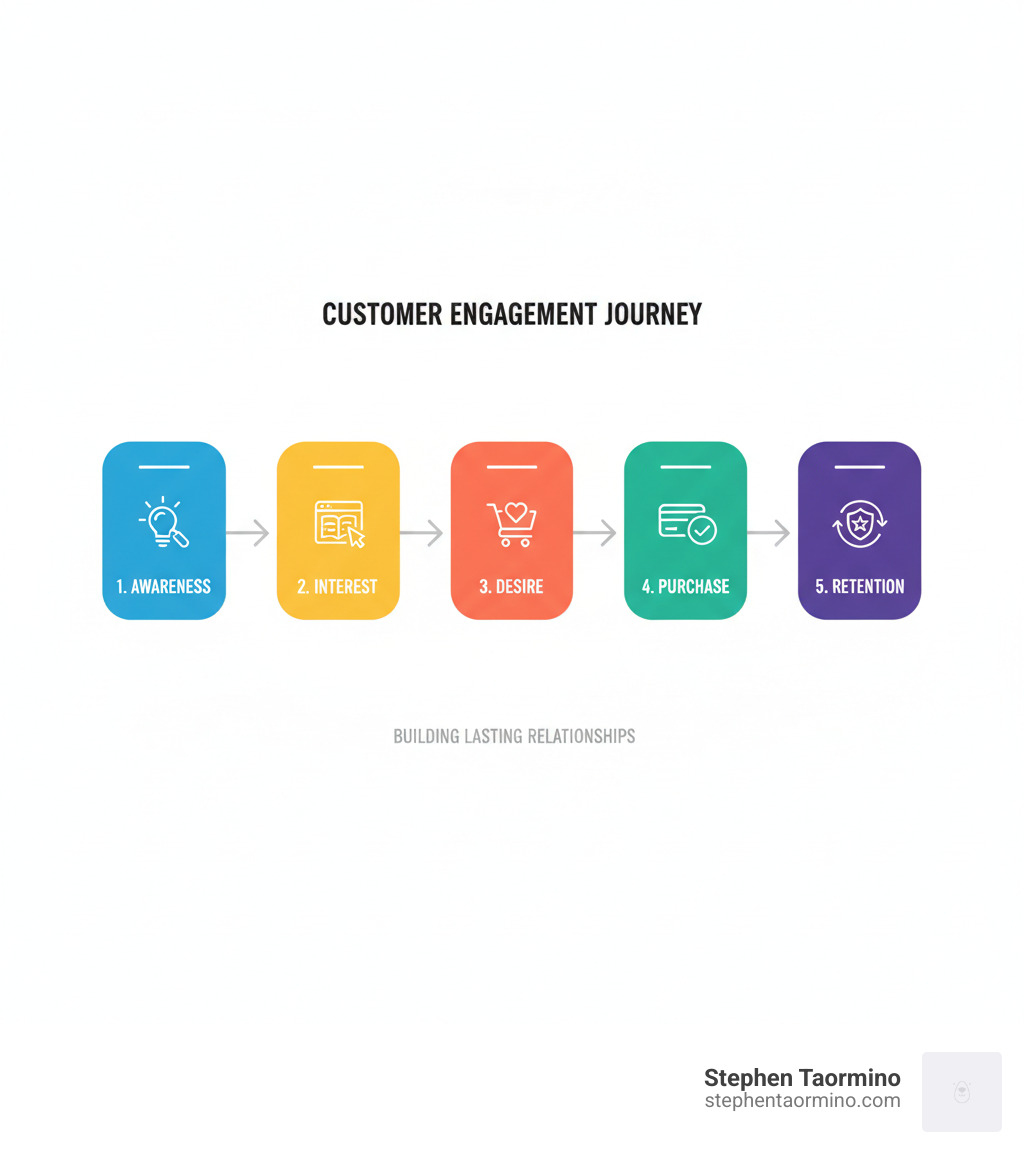
The Customer Engagement Journey
The journey doesn’t end at the sale. It extends through retention and advocacy, turning satisfied customers into vocal promoters. I’m Steve Taormino, and for over 25 years, I’ve helped organizations use marketing psychology and digital tools to build these stronger customer relationships. My work focuses on changing simple interactions into meaningful connections that drive sustainable growth.
Why Customer Engagement Platforms are Essential for Modern Business
In today’s market, a great product isn’t enough. Customers expect to be known, understood, and valued in every interaction. This is where customer engagement tools become essential for survival.
Customer loyalty is fragile; a single disappointing experience can cause a customer to switch brands. The critical moment is often not in your advertising but in the service interaction where trust is either built or broken. Managing thousands of these moments daily requires systems that can scale without losing the human touch.
The data is clear: companies with robust omnichannel engagement retain 89% of their customers, compared to just 33% for those without. This level of retention is a direct result of using the right platforms to create seamless experiences that drive Business Growth Through Marketing.
These tools allow businesses to listen at scale, respond with context, and build genuine connections. By understanding not just what customers do but why they do it, we can apply Marketing Psychology Insights to bridge the gap between efficiency and empathy. This means automating routine tasks while personalizing the interactions that matter most.
Customers now expect you to remember their history and preferences without being asked. They want help on their terms, at any time, on any channel. Customer engagement tools make this possible by unifying every conversation into a single, coherent view. Delivering this consistency builds trust, which in turn fosters loyalty. When customers feel heard, they spend more, forgive mistakes, and recommend you to others.
In a crowded market, your competitive advantage often comes down to the customer experience. These platforms also deliver a measurable improved ROI by streamlining operations, reducing response times, and increasing agent productivity. When your team spends less time searching for information and more time solving problems, satisfaction and customer retention improve, directly impacting your bottom line.
Core Features to Look for in Top-Tier Platforms
When evaluating customer engagement tools, focus on core features that directly improve your ability to connect with customers. A top-tier platform should unify conversations, data, and teams to create a seamless experience.
-
Unified Customer View: This is the foundation. Your team must instantly see a customer’s full history—purchases, conversations, and preferences—in one place. This single view eliminates repetition and provides the context needed for personalized service, powering an effective Customer Engagement Analytics Platform.
-
Omnichannel Communication: Customers should be able to switch between email, live chat, social media, and SMS without the conversation resetting. The context must carry over, creating a single, continuous dialogue.
-
Intelligent Automation: The right platform automatically routes inquiries, triggers proactive messages based on user behavior, and handles routine tasks. This frees up your team to focus on high-impact conversations that require a human touch.
-
AI and Machine Learning: Modern platforms use AI to detect customer intent, suggest responses, and summarize conversations. AI acts as a copilot for your agents, helping them work faster and smarter while maintaining a human connection.
-
Robust Reporting and Analytics: Turn interactions into actionable insights. Track key metrics like response times, satisfaction scores, and retention from clear, understandable dashboards to continuously improve your strategy.
-
Seamless Integration Capabilities: Your engagement platform must connect with your CRM, marketing tools, and other business systems. This data flow is critical for creating a complete customer view and optimizing CRM Optimization Strategies for Sales Teams.
-
Data Security and Compliance: With regulations like GDPR and CCPA, the platform must have built-in tools for data access, redaction, and consent management. Protecting customer data is fundamental to maintaining trust.
7 Types of Amazing Customer Engagement Tools to Transform Your Strategy
The landscape of customer engagement tools is vast. To transform your strategy, understand the different types of tools and how they work together to create a cohesive experience. Here are seven key categories.
1. Omnichannel Communication Platforms
These platforms are the backbone of a seamless customer journey, unifying conversations from email, live chat, social media, and SMS into a single thread. The goal is to eliminate friction and ensure a customer never has to repeat their story. This consistency fosters trust and significantly improves customer satisfaction. In fact, companies with strong omnichannel strategies retain an average of 89% of their customers, compared to 33% for those without, according to recent studies.
2. AI-Powered Customer Service Solutions
AI-Driven Customer Engagement Solutions are changing the game by providing faster, more efficient, and personalized support. AI-powered chatbots and virtual agents can offer 24/7 support, answer common questions, and intelligently route complex inquiries to the right human agent. By automating routine tasks, AI frees up your team to handle more sensitive issues, boosting efficiency and deflection rates. These tools are a cornerstone of any modern Customer Engagement Automation Tool Guide.
3. Customer Feedback and Survey Tools
To truly engage customers, you must listen to them. These tools are designed to gather valuable insights into customer sentiment and satisfaction. By deploying surveys via email or in-app at key touchpoints, you can measure metrics like Net Promoter Score (NPS) and Customer Satisfaction (CSAT). More importantly, these tools help you analyze and act on feedback, closing the loop and showing customers they are heard.
4. In-App Messaging and Onboarding Guides
For software or app-based businesses, engaging users directly within the product is critical. In-app messaging tools use product tours, checklists, and tooltips to guide new users, announce features, and provide contextual help. This proactive education improves user adoption, reduces churn, and ensures customers get value from your product quickly.
5. Social Media Engagement Management Tools
Social media is a critical channel for brand interaction, with many customers using it to keep up with brands. These tools help you monitor brand mentions, manage comments and direct messages from a central dashboard, and participate in relevant conversations. By using these platforms, you can manage your brand’s reputation, build a loyal community, and engage with customers in real-time. This is also a key part of many B2B Marketing Strategies to Optimize Sales Conversions.
6. Customer Advocacy & Loyalty Program Software
The ultimate goal is to turn satisfied customers into brand advocates. Loyalty software helps nurture these relationships by using gamification, points, and rewards to incentivize desired behaviors like repeat purchases or referrals. These programs encourage user-generated content (reviews, testimonials) and significantly increase customer lifetime value (LTV), which is vital for Building High-Performing Teams focused on customer relationships.
7. Self-Service & Knowledge Base Platforms
Empowering customers to solve their own problems is a powerful form of engagement. Self-service platforms provide comprehensive, searchable help centers, FAQ pages, and community forums where users can find answers independently. Our research shows 70% of customers expect a self-service option. By making information accessible, these tools help reduce support ticket volume and improve customer satisfaction, contributing to better Organizational Communication Improvement.

How to Choose the Right Customer Engagement Technology
Selecting the right customer engagement tools requires a clear strategy. The best platform isn’t the one with the most features; it’s the one that aligns with your specific business goals and can grow with you.
-
Define Your Objectives: Before looking at demos, clarify your primary goal. Are you trying to reduce churn, generate leads, or improve onboarding? Your objective will determine which features are most important, forming the foundation of your Digital Transformation Strategy.
-
Prioritize Integration: Your engagement platform must communicate seamlessly with your CRM, marketing automation software, and other systems. Deep, real-time data flow prevents information silos and is crucial for effective CRM Optimization Strategies for Sales Teams.
-
Plan for Scalability: Choose a platform that can handle your future growth. Cloud-based solutions typically offer the flexibility to scale your usage up or down. Ensure the vendor can support businesses significantly larger than yours.
-
Ensure Data Security: With regulations like GDPR and CCPA, data privacy is non-negotiable. The platform must provide robust tools for data access, consent tracking, and redaction. This is a core part of any Data Transformation Strategy and is essential for maintaining customer trust.
-
Focus on Usability: The most powerful platform is useless if your team finds it difficult to use. Look for an intuitive interface and check for available training resources to ensure smooth adoption.
-
Evaluate Vendor Support: When issues arise, you’ll need responsive support. Review service level agreements (SLAs), support hours, and user community forums before committing.
-
Calculate the Total Cost of Ownership (TCO): Look beyond the sticker price. Factor in implementation, training, maintenance, and potential per-interaction costs for AI features to understand the true investment.
Frequently Asked Questions about Customer Engagement Tools
Here are answers to the most common questions businesses have when exploring customer engagement tools.
What is the difference between a CRM and a customer engagement platform?
While the lines can seem blurry, their core purposes are different. A CRM is your memory—a database that stores customer data, purchase history, and contact information. It’s built for record-keeping. A customer engagement platform is your voice—a system designed for real-time, omnichannel conversations. It uses CRM data to power personalized, intelligent interactions. The two are complementary, with the engagement platform bringing the CRM’s data to life.
How do you measure the ROI of customer engagement tools?
Investing in these tools should drive measurable business results. Key metrics to track include:
- Customer Retention Rate: An increase in retention directly impacts recurring revenue.
- Customer Lifetime Value (LTV): Engaged customers spend more over time. A fully engaged customer can represent a 23% premium in revenue and profitability.
- NPS and CSAT Scores: These satisfaction metrics are leading indicators of loyalty and future spending.
- Operational Efficiency: Track improvements in resolution time, first-contact resolution, and agent productivity. These reduce operational costs.
- Self-Service Deflection Rates: Every customer who finds their own answer is a direct labor cost saving.
For a deeper dive, our guide to Marketing ROI Measurement Tools can help build a comprehensive framework.
What are the emerging trends in customer engagement?
The landscape is constantly evolving. Key trends to watch include:
- Generative AI: Moving beyond simple chatbots, AI now crafts personalized messages and journeys. It acts as a copilot for agents, but requires human governance.
- Proactive and Predictive Engagement: Instead of waiting for problems, businesses are using AI to anticipate customer needs and offer solutions preemptively.
- Conversational Commerce: Customers can now browse, ask questions, and buy directly within messaging apps, streamlining the path to purchase.
- Sustained Interactions: The model is shifting from isolated support tickets to continuous, ongoing conversations that maintain context across all touchpoints.
- Ethical AI and Trust: Transparency about how customer data is used is becoming critical for maintaining the trust that makes engagement possible.
These trends point to a more intelligent, personal, and integrated future for customer interactions, a key theme in current Digital Marketing Industry Trends.
Conclusion: Building Relationships That Drive Growth
In a marketplace where loyalty is earned with every interaction, the right customer engagement tools are essential. We’ve covered seven key categories, from omnichannel platforms that unify conversations to AI solutions that scale support. While each tool serves a distinct purpose, they all work toward a single goal: creating customer experiences that are seamless, personal, and caring.
This represents a strategic shift from viewing customers as transactions to building lasting relationships. It’s an approach grounded in marketing psychology, where understanding human behavior becomes a competitive advantage. When implemented thoughtfully, these tools build trust and transform satisfied customers into loyal advocates.
At CC&A Strategic Media, we combine the right technology with a deep understanding of human behavior to drive sustainable growth. The goal is to remember that behind every interaction is a person, and to honor their choice to engage with your brand by providing an experience worth remembering.
Ready to transform how you connect with your customers? Explore our Customer Engagement Solutions to see how we can help you implement these strategies and build relationships that drive real, measurable growth.