French
  English
  Spanish
  German


Open uping Group Potential: The Core Skills for Facilitators
To effectively guide any group, strong skills for facilitators are crucial. A skilled facilitator helps teams make better decisions faster, boosting efficiency by ensuring everyone feels heard and that important goals are met.
Here are the essential skills for effective facilitation:
- Active Listening: Truly understanding what participants say and mean.
- Clear Communication: Explaining tasks and ideas simply and effectively.
- Time Management: Keeping discussions on track and within schedule.
- Adaptability: Adjusting to unexpected changes and group needs.
- Neutrality: Guiding the process without taking sides or pushing personal opinions.
- Group Dynamics Management: Encouraging participation and handling challenging behaviors.
- Questioning Techniques: Asking the right questions to spark deeper thinking and discussion.
A facilitator is a guide, not a hero. Their job is to help the group do its best work, moving past common issues like groupthink and team politics. This means creating a safe space where ideas flow freely and collaboration leads to clear, actionable results.
I’m Steve Taormino. With over 25 years of experience in marketing psychology and leadership development, I specialize in understanding the human behavior and communication skills foundational to great facilitation. I’ve seen how the right guidance can help groups open up their full potential.
The Facilitator’s Blueprint: Role, Mindset, and Impact
The journey to mastering the essential skills for facilitators begins with understanding the core role and adopting the right mindset. A facilitator is the architect of productive collaboration, empowering groups to achieve their best.
Understanding the Core Role of a Facilitator
At its heart, facilitation is the art of managing group sessions and the science of understanding group dynamics. The core role is to guide a team through a process, helping them avoid common pitfalls like groupthink or endless discussions. We are a process guide, designing a safe and inclusive environment where every voice is heard and actionable outcomes are achieved.
Unlike a traditional leader or trainer, a facilitator operates on the “Ask vs. Tell” principle, encouraging the group to find its own solutions. We empower participants and steer alongside the group, not from the front.
| Feature | Facilitator | Traditional Leader |
|---|---|---|
| Primary Focus | Process, empowering the group, collective wisdom | Outcome, making decisions, individual authority |
| Role | Guide, neutral, orchestrator of conversation | Director, decision-maker, steers from the front |
| Influence | Minimizes influence on content, fosters self-findy | Provides guidance, makes choices, inspires followers |
| Goal | Group ownership, sustainable solutions | Achieving specific objectives, short-term efficiency |
This approach cultivates an environment where collaboration and effective communication can flourish. For deeper insights into developing this kind of leadership, explore our guide on (/corporate-leadership-development-programs/).
Adopting the Essential Facilitator Mindset
A facilitator’s mindset is their most potent tool. It shapes every interaction and determines the success of a session. Key elements include:
- Be a Guide, Not the Hero: Focus on helping the team do their best work, not showcasing your own brilliance. Your role is to enable the group’s collective wisdom.
- Neutrality and Impartiality: Avoid personal biases and focus strictly on the process. Give equal attention to every participant and empower the group to suggest changes.
- Authenticity and Trust: Approach situations with genuine care. Being true to yourself and the group builds the rapport needed for participants to feel safe sharing their ideas.
- Patience: Group dynamics can be complex and slow. Resist showing frustration and allow the group the space to think and process at their own pace.
- Positivity and Enthusiasm: Your energy influences the room’s atmosphere. A positive attitude helps maintain focus and keeps energy levels high, creating an engaging environment.
- Emotional Intelligence (EQ): This vital skill allows you to regulate your own emotions, empathize with participants, and build strong rapport. Being aware of the group’s emotional state helps you steer sensitive situations with grace. These dynamics are also vital for (/building-high-performing-teams/).
Core Communication and Observation Skills for Facilitators
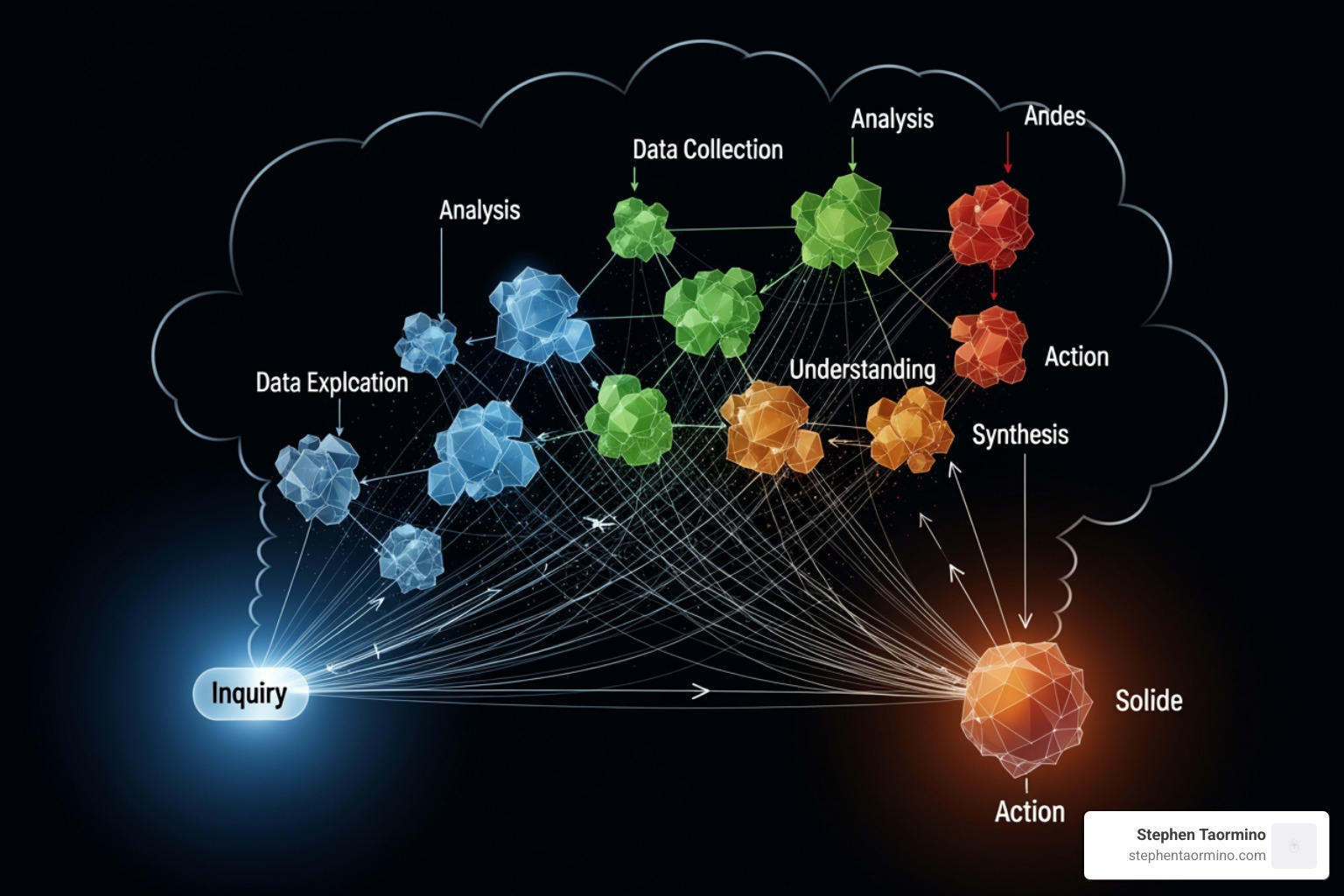
Once you’ve adopted the right mindset, mastering communication and observation is the next crucial step in honing your skills for facilitators. These abilities allow you to understand a group’s needs and share information in a way that sparks engagement.
The Superpower of Active Listening and Observation
Active listening is a facilitator’s superpower. It’s not just hearing words but tuning into tone, body language, and underlying emotions to grasp what’s truly being said—and what isn’t. This means being fully present, avoiding interruptions, and using techniques like paraphrasing to confirm understanding. Pausing to allow for silence can also give people valuable space to think.
Hand-in-hand with listening are your observation skills. As a facilitator, you must constantly read the room by paying attention to non-verbal cues like posture, glances, and shifts in energy. These signals reveal engagement levels, hidden concerns, or discomfort, allowing you to adjust your approach and maintain a climate of trust and psychological safety.
Mastering Clear Communication and Questioning
One of the most common facilitation pitfalls is the “Curse of Knowledge”—assuming what’s clear to you is clear to everyone. To avoid confusion when giving instructions, use the ‘What, Why, How’ framework:
- What: Clearly state the task.
- Why: Explain its purpose and relevance to the overall goals.
- How: Detail the step-by-step process.
This simple structure, combined with jargon-free language, ensures everyone is on the same page. For more on this, see our guide to (/effective-communication-skills/).
Strategic questioning is another powerful tool. It guides discussions and empowers the group to generate their own solutions. Key question types include:
- Open-ended Questions: Spark broad thinking (e.g., “What factors contributed to this?”).
- Probing Questions: Go deeper into a specific point (e.g., “Can you tell me more about that?”).
- Clarifying Questions: Ensure mutual understanding (e.g., “So, are you saying that…?”).
- Reflective Questions: Prompt critical thinking about experiences (e.g., “How did you react when that happened?”).
Mastering these techniques is central to the professional standards outlined in the IAF Core Competencies.
Mastering Group Dynamics and Process Management

Effective facilitation requires a robust set of skills for facilitators in managing both the process and the complex dynamics of a group. This means being both an architect who designs the session and a conductor who reads the energy of the room.
Essential Process Management Skills for Facilitators
Strong process management creates clarity and forward momentum. It starts long before the session with clear objectives and a well-structured agenda.
- Time Management: Use time-boxing to set fixed durations for activities, creating healthy urgency. Build in buffer time and be prepared to tactfully redirect off-topic conversations.
- Preventing Circular Discussions: To avoid going in circles, use structured methods. Techniques like “Together alone” (individual brainstorming before sharing) and “Note & Vote” (private idea generation followed by a group vote) ensure all voices are heard and prevent the loudest from dominating.
- Establishing Ground Rules: Co-create agreements with the group at the start, such as “one person speaks at a time” or “respect multiple perspectives.” This fosters mutual respect and shared accountability.
Navigating Complex Group Dynamics
Managing diverse personalities requires emotional intelligence. To ensure balanced participation, gently invite quieter members to share their thoughts and use techniques like pair-sharing before opening up to the larger group. To manage dominant personalities, you might thank them for their enthusiasm while asking them to help encourage others to speak.
To counter team politics and groupthink, structured methods are key. Anonymous voting and individual brainstorming reduce the pressure to conform to senior leaders or a perceived majority. These techniques are crucial for fostering authentic, independent thinking. For more on this, the article on Inclusive Facilitation for Social Change offers valuable perspectives.
For decision-making, use practical techniques like:
- Dot Voting: Quickly prioritize ideas visually.
- Fist to Five: A fast consensus-checking method.
- Multi-voting: Narrow down a long list of options through successive voting rounds.
Handling Conflict and Challenging Participants
Conflict is an opportunity for growth, not a problem to be avoided. A facilitator’s job is to turn tension into productive dialogue. By remaining calm, you set the tone for the group. Acknowledge emotions and guide the parties toward common ground.
When dealing with challenging behaviors, blend firmness with empathy. Often, disruptive behavior stems from feeling unheard. Try having a private conversation to understand their concerns, or use redirection to guide the conversation back to the agenda. Reminding the group of the ground rules you established together can also be effective. Your goal is to maintain a positive, solution-focused environment where the group can stay focused on its shared objectives.
Adapting Your Skills for Modern Facilitation
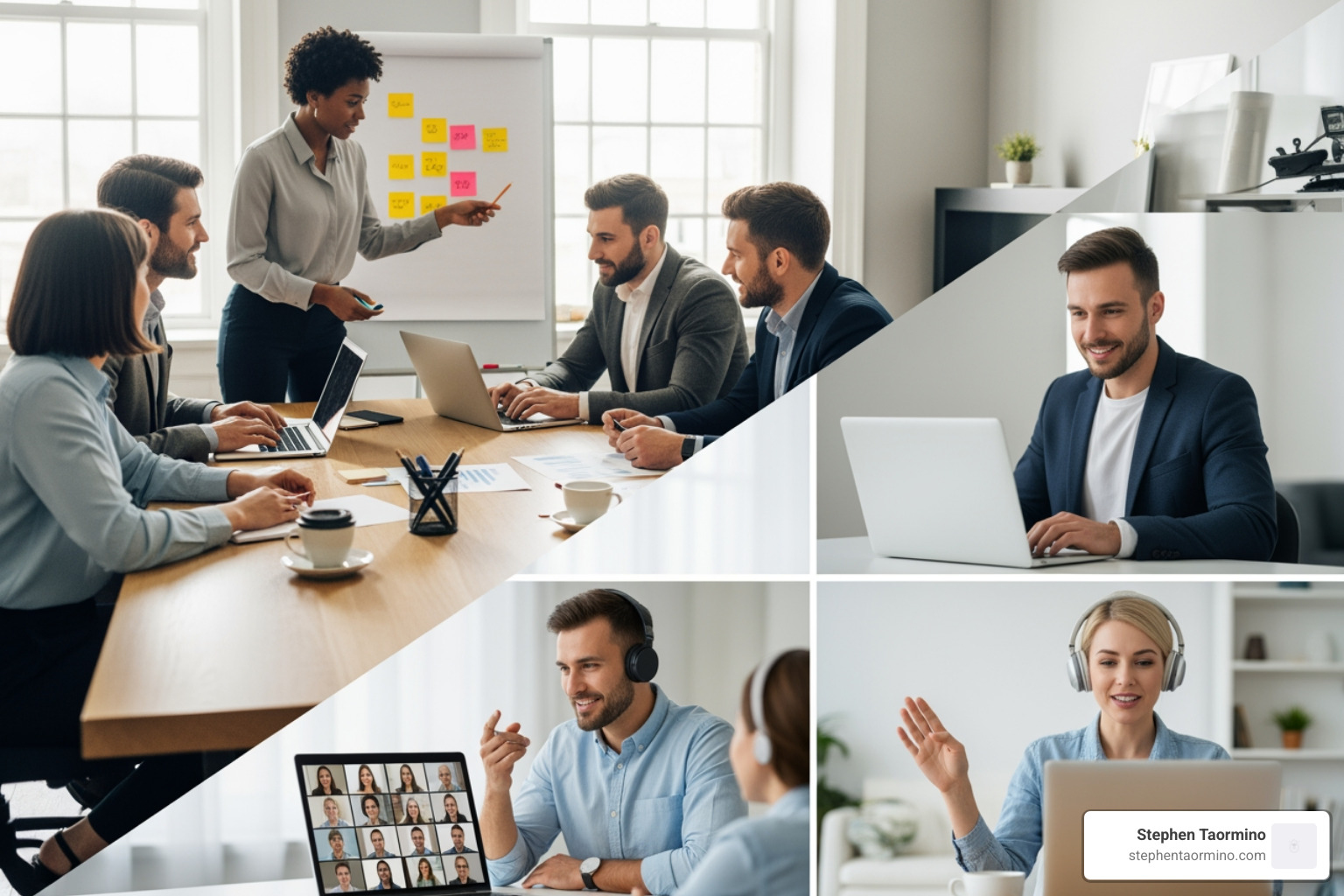
Modern collaboration demands a flexible and tech-savvy set of skills for facilitators. Being adaptable and culturally aware is no longer a bonus—it’s essential.
Developing Advanced Skills for Facilitators in Virtual Settings
With remote work here to stay, virtual facilitation is a critical skill. Success in this environment requires:
- Mastery of Virtual Platforms: Become proficient with features in tools like Zoom or Microsoft Teams, including breakout rooms, polls, screen sharing, and virtual whiteboards.
- Proficiency with Digital Collaboration Tools: Use platforms like Miro, Mural, or Google Docs to enable real-time brainstorming and decision-making, regardless of location.
- Fostering Remote Engagement: Actively use virtual icebreakers, chat features, and polls to keep participants involved. Breakout rooms are excellent for smaller, more inclusive discussions. Be prepared to troubleshoot tech issues quickly to maintain momentum.
Technology can bridge distances and enable powerful teamwork. To learn more about how technology is changing the workplace, explore our guide on (/digital-transformation-technology/).
Enhancing Engagement with Visual and Adaptive Techniques
Visuals make complex ideas easier to grasp. Use visual facilitation techniques like drawing diagrams on whiteboards (physical or virtual) or using simple metaphors to clarify concepts and maintain focus.
In our global world, cultural sensitivity and inclusivity are also must-have skills. This means understanding that communication styles and decision-making processes vary across cultures. Adapt your approach to be inclusive, use respectful language, and ensure every voice has a chance to contribute.
Finally, flexibility is paramount. Even the best plans can go awry. Be prepared to read the room, handle unexpected issues, and adapt the agenda to meet the group’s needs. Your primary job is to serve the group, not to rigidly stick to a plan.
Frequently Asked Questions about Facilitation Skills
What are the most important skills for a beginner facilitator to focus on?
For beginners developing their skills for facilitators, it’s best to build a strong foundation. Prioritize these three core competencies:
- Active Listening: Go beyond hearing words to understand the underlying meaning and emotion. This builds trust and helps you grasp the real issues.
- Clear Communication: Explain tasks and objectives simply. Use the “What, Why, How” framework to ensure everyone is on the same page.
- Time Management: Keep discussions on track and respect everyone’s time. This demonstrates professionalism and ensures you meet your objectives.
Mastering these skills will help you build confidence and make an impact from your very first session.
How can I practice and improve my facilitation skills over time?
Improving your skills for facilitators is a continuous journey of practice and reflection. Here are a few practical ways to grow:
- Seek Opportunities: Volunteer to facilitate meetings or workshops in any setting to gain hands-on experience.
- Ask for Feedback: After a session, ask participants for constructive criticism on what went well and what could be improved.
- Observe Experienced Facilitators: Watch how skilled facilitators manage group dynamics, communicate, and adapt their approach.
- Commit to Continuous Learning: Read books and articles, and consider joining a professional community like the Facilitator Club to expand your toolkit.
- Practice Reflection: After each session, assess your own performance. Identify what worked, what was challenging, and how you could do better next time.
What distinguishes an excellent facilitator from a good one?
While a good facilitator manages a process, an excellent facilitator transforms it. The key distinctions lie in a few advanced skills for facilitators:
- Deep Empathy and Emotional Intelligence: They don’t just recognize emotions; they respond skillfully, creating profound psychological safety that encourages openness.
- Seamless Adaptability: They anticipate issues and fluidly adjust their approach, agenda, and activities while keeping the session’s goals intact.
- Inspiring Trust and Creativity: They foster an environment so safe that participants feel empowered to share innovative ideas and challenge assumptions constructively.
An excellent facilitator guides with such grace that the group feels it arrived at the solutions on its own, open uping a deeper level of collective wisdom and collaboration.
Conclusion
The journey to mastering the skills for facilitators is a rewarding, ongoing process. Each session you lead is an opportunity to build your capacity to open up a team’s true potential.
We’ve covered the essentials: adopting a “guide, not the hero” mindset, mastering communication and observation, and skillfully managing group dynamics. In our modern world, adapting these skills for virtual settings and practicing cultural sensitivity is crucial for success. What makes facilitation so powerful is its foundation in understanding human behavior—how people think, connect, and act.
My experience in marketing psychology and leadership development has shown me that the best facilitators don’t just follow a script; they create an environment where every voice matters. They understand that the group holds the answers, and their job is to help them find those answers together.
Whether you’re just starting out or looking to refine your expertise, practice, feedback, and reflection are your best tools for growth. By fostering meaningful relationships and leveraging collective wisdom, you can drive real business growth and help teams achieve their common goals.
If you’re ready to take your facilitation expertise to the next level and transform how your groups collaborate, we invite you to explore our comprehensive (/group-facilitation-training/). It’s time to become the architect of extraordinary group potential.