French
  English
  Spanish
  German


Workshop Facilitator: #1 Definitive, Productive Guide
Why the Workshop Facilitator Role Matters More Than Ever
A workshop facilitator is a neutral process expert who guides groups through structured activities to achieve specific outcomes without imposing their own agenda. They are the “guide on the side,” not the “sage on the stage.”
We’ve all been in meetings that talk in circles, where loud voices dominate and nothing gets decided. When collaboration works, however, it’s transformative. The difference is often a skilled facilitator.
Quick Answer: What Does a Workshop Facilitator Do?
- Plans and designs workshops around specific goals.
- Guides group discussions while remaining neutral.
- Manages time, energy, and group dynamics.
- Asks powerful questions to deepen thinking.
- Synthesizes ideas and helps teams reach decisions.
- Creates a safe environment where all voices are heard.
- Drives action by defining concrete next steps.
The demand for this expertise is surging, with searches for “facilitation” nearly doubling since 2019. This reflects a growing recognition that productive collaboration requires intentional design and guidance.
A facilitator’s job isn’t to be the smartest person in the room, but to ensure the right conversations happen, everyone contributes, and the group leaves with clarity and commitment. They are process experts, not content experts—a distinction that makes all the difference.
This guide covers what a workshop facilitator does, why the role is essential, and how you can develop these skills.
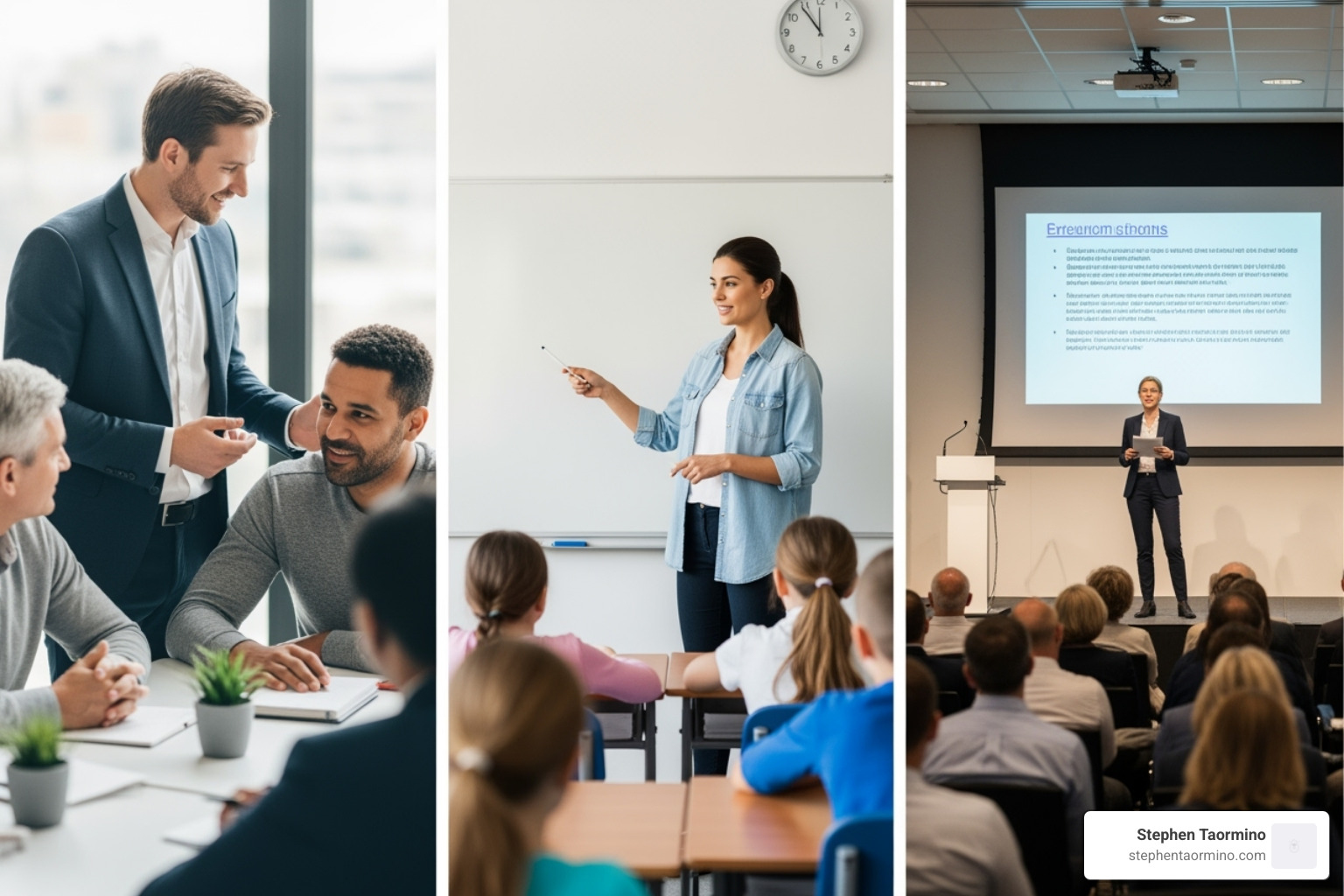
I’m Steve Taormino, President & CEO of CC&A Strategic Media. For over 25 years, I’ve seen how a skilled workshop facilitator can open up a team’s collective intelligence and turn uncertainty into action. My work in marketing psychology and human behavior has shown me that the right process is key to transformative results, and I’m passionate about sharing those insights with you.
The Essence of Facilitation: Understanding the Role and Core Principles

At its heart, facilitation is about making collaboration easier. A skilled workshop facilitator creates the conditions where diverse perspectives converge, quieter voices are heard, and a group’s collective intelligence can surface. They achieve this by focusing on process—the how of working together—rather than getting caught up in the content.
From a marketing psychology perspective, people thrive in environments where they feel psychologically safe and see a clear path forward. A facilitator leverages this by designing experiences that honor these human realities to drive meaningful outcomes.
Primary Role and Core Principles of a Workshop Facilitator
A facilitator’s primary role is to be a process expert, not a content expert. Their expertise lies in guiding how the group interacts, not in knowing the subject matter. This requires content neutrality—the ability to guide discussions without advocating for a particular solution. This impartiality builds trust and makes them acceptable to all members.
Key responsibilities and principles include:
- Creating a Safe Environment: This is foundational. People won’t share bold ideas if they fear judgment. Facilitators cultivate psychological safety by setting ground rules, honoring all contributions, and leading with curiosity.
- Guiding the Process: The facilitator is a “guide on the side,” not a “sage on the stage.” They design and manage the agenda, mediate different viewpoints, and synthesize key points to help the group see connections.
- Fostering Group Ownership: The best solutions come from the group itself. Facilitators empower teams to own the problem, the process, and the solution, ensuring full participation and commitment.
- Ensuring Inclusivity: A core principle is to honor all voices. Facilitators use structured activities to ensure everyone contributes, preventing louder voices from dominating the conversation.
- Driving Toward Goals: They keep discussions focused on objectives, help define concrete next steps, and ensure the workshop produces tangible outcomes, not just good conversation.
Key Skills of a Great Facilitator
Great facilitation is less about personality and more about a specific blend of skills:
- Active Listening & Empathy: Truly hearing what is said (and not said) and being genuinely curious about different perspectives.
- Neutrality & Objectivity: The ability to remain unbiased, which is crucial for building trust and navigating sensitive topics.
- Asking Powerful Questions: The art of crafting questions that challenge assumptions and encourage deeper thinking.
- Synthesizing Ideas: Spotting patterns and themes across disparate comments to help the group build on each other’s thinking.
- Adaptability & Time Management: Keeping the session on track while being flexible enough to adjust when a conversation is particularly fruitful or when energy drops.
- Self-Awareness & Confidence: Understanding their own impact on the group and projecting confidence in the process, which helps participants feel secure.
Effective facilitation is a cornerstone of organizational communication improvement, as it models and reinforces clear, transparent, and inclusive dialogue.
The Strategic Advantage: Why and When You Need a Facilitator
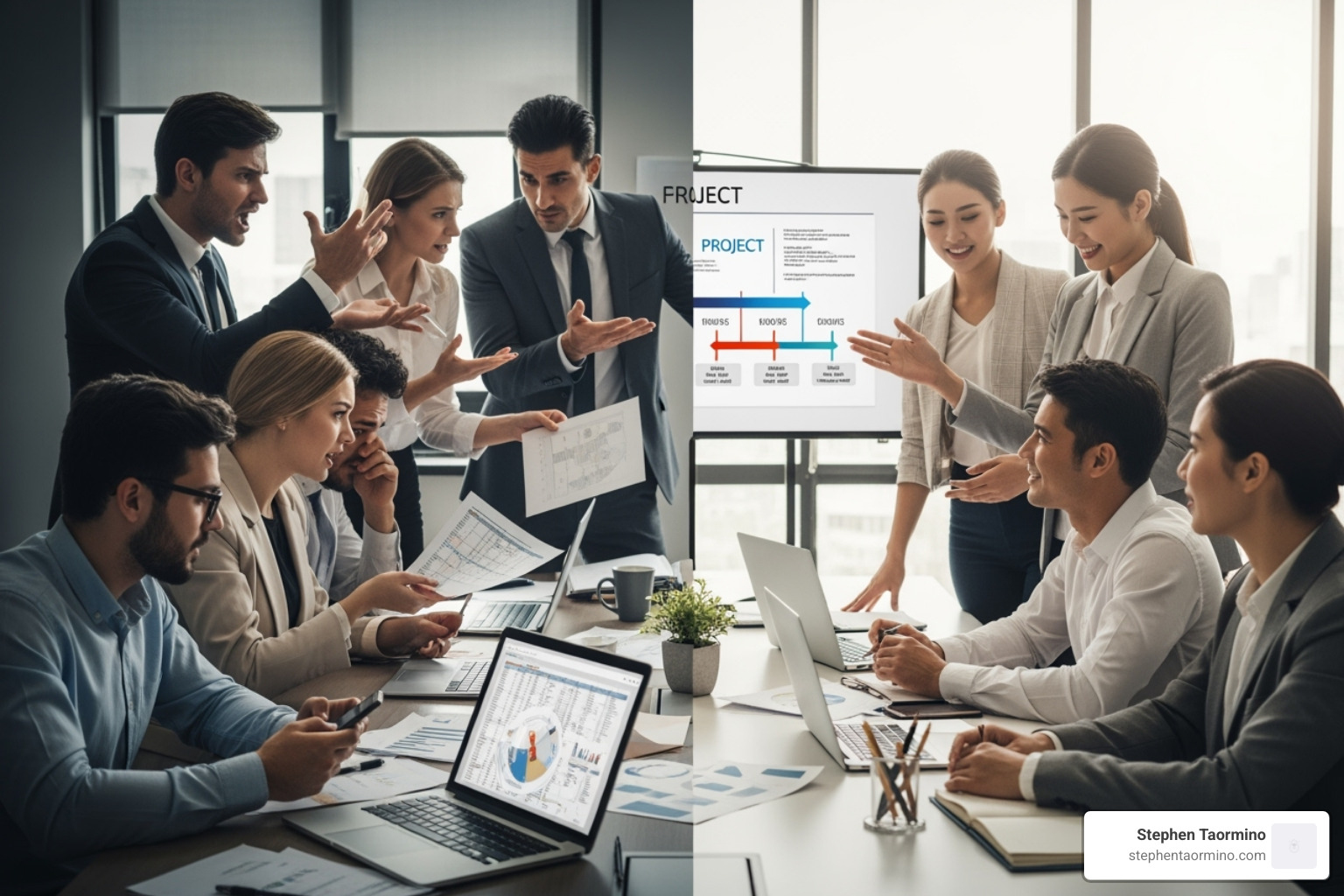
Do we really need to hire a workshop facilitator? When you consider the cost of unproductive meetings—in wasted hours, poor decisions, and decreased morale—the business case becomes clear. A skilled facilitator transforms a frustrating session into a productive one by creating structure, ensuring fairness, and keeping everyone focused on outcomes. The ROI isn’t just about time saved; it’s about the quality of decisions, the alignment achieved, and the momentum created.
The Importance of a Facilitator in Productive Strategy Workshops
A professional workshop facilitator provides value that goes far beyond just keeping a meeting on track.
- Eliminating Bias: A neutral, external facilitator doesn’t have a stake in the outcome. Their objectivity allows for honest conversations that are often impossible when internal politics are at play.
- Open uping Collective Intelligence: Facilitators use proven techniques to draw out ideas from everyone in the room, not just the loudest or most senior voices. They ensure you benefit from the full brainpower of your team.
- Driving Decisions and Action: How many meetings end with no clear next steps? Facilitators are masters at moving groups from discussion to decision. They structure conversations to produce concrete outcomes, assign accountability, and create momentum.
- Ensuring True Alignment: A facilitator’s job is to ensure the team reaches genuine consensus, not just passive agreement. This alignment is critical for successful strategy execution and is a key part of building high-performing teams.
Internal vs. External Facilitator: Making the Right Choice
Should you use an internal team member or hire an outside professional? The choice has significant implications.
An internal facilitator knows your company culture and is a cost-effective option for routine meetings. However, maintaining true objectivity is difficult. They have existing relationships, potential biases, and may lack the authority to challenge senior leaders. Peers may also be less candid with a colleague.
An external facilitator brings complete impartiality. They can ask the tough questions and challenge assumptions without fear of internal repercussions. They also offer specialized process expertise and a deep toolkit of techniques developed across many industries. While there is a cost, the investment often pays for itself through better and faster decisions in high-stakes situations.
Rule of thumb: Use an internal facilitator for routine, low-stakes topics. For strategic planning, sensitive issues, or when you need breakthrough thinking, an external facilitator almost always delivers superior results.
When is a Facilitator Necessary (and When Are They Not?)
Knowing when to bring in a facilitator can save you from both wasted money and missed opportunities.
A facilitator is essential when:
- The stakes are high: Strategic planning, major project kick-offs, or organizational restructuring.
- You have cross-functional teams: A neutral party can bridge departmental divides and focus the group on shared goals.
- There is existing conflict or sensitive topics: A facilitator creates a safe container for difficult conversations.
- You need innovation: Ideation and creative problem-solving sessions benefit from structured techniques to generate and refine ideas.
- Your meetings are all talk, no action: A facilitator will drive the group toward decisions and clear action plans.
You may not need a facilitator for:
- Simple information sharing or one-way presentations.
- Routine check-ins with small, highly aligned teams.
- When decisions have already been made and you are simply communicating them.
Knowing when to invest in facilitation is a critical leadership skill that directly contributes to leadership for business growth.
The Facilitator’s Toolkit: Designing and Executing Flawless Workshops
The craft of facilitation is where theory meets practice. A workshop facilitator acts as an architect and conductor, orchestrating an experience that keeps energy high and outcomes clear. The best workshops feel like purposeful collaboration, not work, because every detail has been thoughtfully designed.
How a Workshop Facilitator Designs for Optimal Outcomes
Great workshops are built on a solid foundation of planning, execution, and follow-through.
-
Before the Workshop: The process starts with defining clear, specific goals with stakeholders. What decision must be made? What problem must be solved? We conduct stakeholder interviews to understand the landscape and anticipate challenges. This informs the agenda design, where we create a logical flow that balances different types of thinking (e.g., idea generation and decision-making) and includes strategic breaks to maintain energy.
-
During the Workshop: We begin by setting clear expectations and ground rules. We use techniques like timeboxing to keep discussions focused and respect everyone’s time. A key focus is energy management—watching for signs of fatigue and using breaks or energizers to keep the group engaged. Strategic icebreakers are used not as fluff, but to build psychological safety and create an environment for honest contribution.
-
After the Workshop: The job isn’t done when the session ends. We summarize key outputs, decisions, and action items in a clear format. We help the group define concrete next steps with owners and deadlines to ensure the momentum continues. For more on this process, see our guide on How to Facilitate a Training Workshop.
Essential Tools and Techniques Every Facilitator Should Master
A skilled facilitator has a robust toolkit of techniques and materials.
Techniques:
- Brainstorming: Generating ideas without judgment. Variations like carousel brainstorming ensure all voices are heard.
- Dot-Voting: A quick, democratic way to prioritize ideas using stickers or digital dots.
- ‘Parking Lot’: A space to capture important but off-topic ideas to address later, keeping the main discussion on track.
- World Café: Small groups discuss a topic and then rotate, cross-pollinating ideas across the larger group.
Tools:
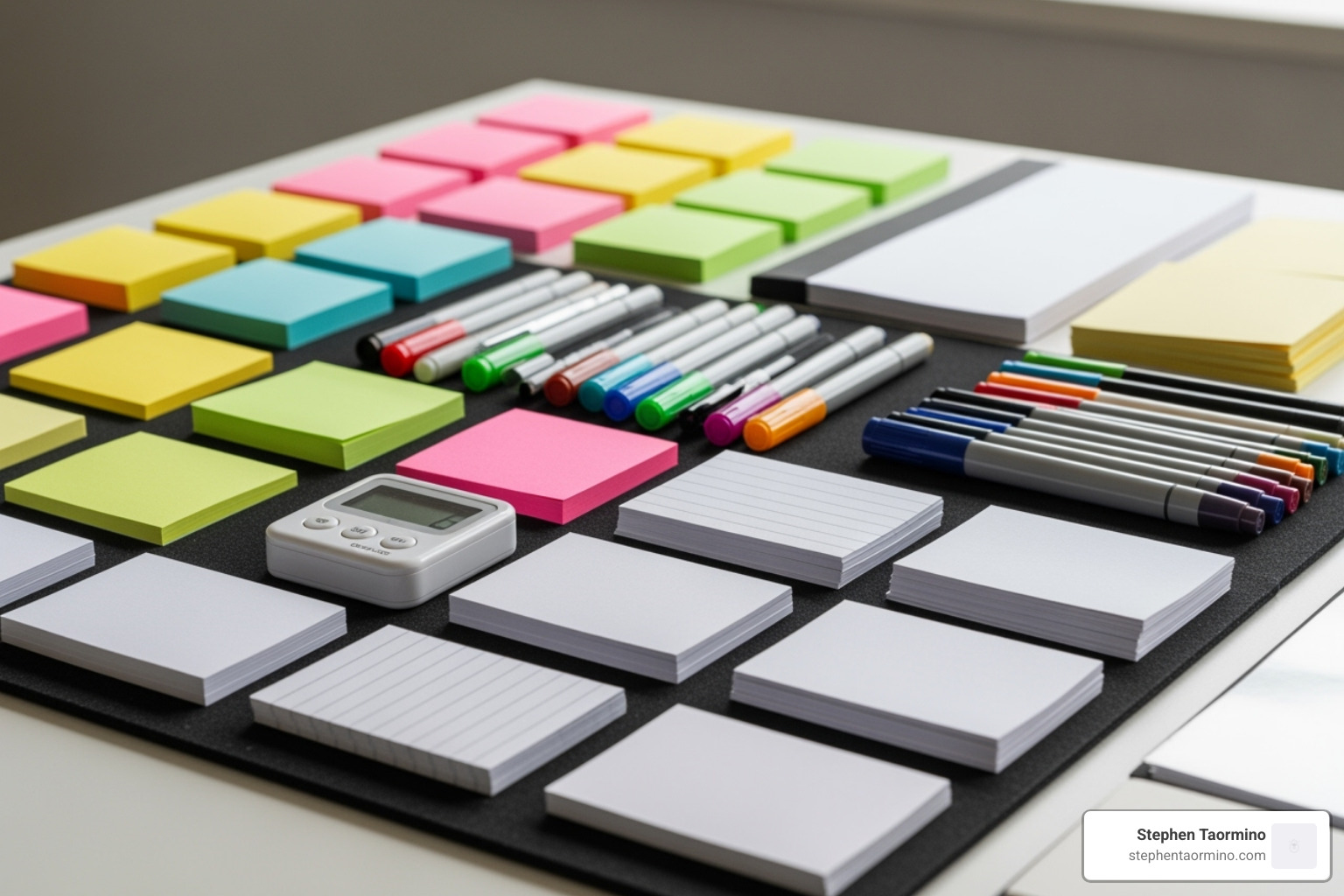
- Physical: High-quality sticky notes, markers, whiteboards, and flip charts are essential for making thinking visible.
- Digital: Online whiteboards are indispensable for remote collaboration. Video conferencing tools and digital agenda planners are also key.
Remote vs. In-Person Facilitation: Navigating the New Hybrid World
While the core principles of facilitation remain the same, the execution differs significantly between remote and in-person settings.
Remote facilitation requires mastering digital tools to combat challenges like ‘video call fatigue’ and maintaining engagement. Strategies include over-communication, frequent short breaks, and using virtual icebreakers. A reliable tech setup is non-negotiable.
In-person facilitation allows for easier reading of body language and fosters spontaneous interactions that build rapport. The energy of a physical room is often easier to sustain. However, the fundamentals of clear purpose, inclusive participation, and a focus on outcomes are universal.
Leading effectively in this hybrid world is a key skill taught in Digital Transformation Executive Training.
Building a Career as a Professional Workshop Facilitator

Becoming a workshop facilitator is often an unplanned journey. Many people find their talent for it after coming from fields like project management, HR, or design. It’s been called the “accidental profession” because it attracts people from diverse backgrounds who share a passion for making collaboration work.
Our own journey at CC&A Strategic Media mirrors this, evolving from a design company to an agency that leverages human behavior to drive business outcomes.
Career Paths and Opportunities for Professional Facilitators
The career landscape for a facilitator is refreshingly varied.
- Freelance/Solopreneur: This path offers autonomy and variety, allowing you to choose clients and projects across different industries. Building a strong network is key to success.
- In-house Facilitator: These roles, often in HR or L&D, allow you to gain a deep understanding of one organization’s culture and challenges. You become a trusted internal expert on collaboration and team effectiveness.
- Agency Facilitator: Working for a consultancy offers a mix of diverse projects with the support and resources of an organization.
- Related Roles: Facilitation skills are a superpower in many other jobs, including Project Manager, Scrum Master, UX Researcher, and Learning & Development Specialist. These skills are also central to our Leadership Development Consulting work.
How to Develop Your Skills and Become a Facilitator
While many facilitators have higher education, nearly 70% report learning mostly “by doing.” Experience is the best teacher.
- Start Small: In your current role, gently guide meetings that go off track. Ask a clarifying question or suggest a simple process to build your confidence.
- Co-facilitate: Offer to assist an experienced facilitator. It’s an invaluable apprenticeship where you can learn in a supported environment and get real-time feedback.
- Volunteer: Offer your skills to non-profits or community groups. The stakes are lower, providing a safe space to experiment and learn.
- Seek Feedback: After every session, ask for specific feedback. What worked well? What could have been better? This accelerates your learning.
- Build a Portfolio: Document the workshops you facilitate, including the challenge, your process, and the outcomes. This is more powerful than any resume.
Debunking Common Facilitation Myths
Several misconceptions stop talented people from pursuing facilitation.
-
Myth 1: You must be an extrovert.
Reality: Introverts often make exceptional facilitators. Their strengths in active listening, observation, and creating calm, safe spaces are invaluable. -
Myth 2: You must be the subject matter expert.
Reality: You are the process expert. Your job is to guide the group’s thinking, not to have all the content knowledge. In fact, not being an expert can help you ask naive questions that challenge hidden assumptions. -
Myth 3: You must have all the answers.
Reality: Your power lies in asking powerful questions that help the group find their own answers. It’s about empowering them, not being the hero. -
Myth 4: You need a certification.
Reality: Experience, a strong portfolio, and client testimonials matter far more than a certificate. The field values demonstrated capability over formal accreditation.
Frequently Asked Questions about Workshop Facilitation
Here are clear answers to some of the most common questions about the workshop facilitator role.
What is the main difference between a facilitator and a presenter?
The distinction is fundamental:
- A Presenter engages in a one-way flow of information. They are the content-focused subject matter expert who imparts knowledge to the group.
- A Facilitator orchestrates a two-way dialogue. They are the process-focused neutral guide who draws knowledge from the group, empowering them to find their own solutions.
How does a facilitator handle conflict or difficult participants?
Managing conflict is a critical skill. A facilitator approaches it calmly and strategically:
- Acknowledge the Tension: Calmly state that there’s a disagreement, validating the participants’ feelings without taking sides.
- Refer to Ground Rules: Gently remind the group of their agreed-upon norms for respectful discussion.
- Reframe with Neutral Language: Depersonalize the issue by rephrasing contentious statements into objective terms.
- Focus on Issues, Not Personalities: Consistently steer the conversation back to the topic at hand, away from personal attacks.
- Use a ‘Parking Lot’: For important but off-topic issues, note them in a visible place to be addressed later. This keeps the session on track while validating the concern.
How can a facilitator ensure everyone participates?
An effective workshop facilitator uses various strategies to encourage equitable participation:
- Use Structured Activities: Employ methods like a “round-robin” (where each person speaks in turn) or individual writing exercises before sharing. This ensures everyone has a chance to contribute.
- Break into Smaller Groups: People who are hesitant to speak in a large group often feel more comfortable in pairs or trios.
- Create a Safe Environment: From the start, cultivate a psychologically safe space where all contributions are respected and valued.
- Give Time to Think: Build in moments of silent reflection so participants can formulate their thoughts before speaking.
- Use Visual Tools: Sticky notes or online whiteboards allow people to contribute ideas simultaneously and, if needed, anonymously.
Conclusion
The workshop facilitator has evolved from a helpful role to a strategic necessity. In a world tired of unproductive meetings, skilled facilitation is the key to open uping a team’s collective intelligence and driving real progress.
The difference between a chaotic meeting that drains energy and a workshop that leaves a team aligned and energized is often the presence of a facilitator. This isn’t a mystical talent; it’s a learnable skill that blends process expertise with an understanding of human psychology.
At CC&A Strategic Media, our work is built on a deep understanding of marketing psychology and human behavior. We know what motivates people and drives them to take action. This insight is what transforms a well-run workshop into a catalyst for organizational change. We help teams build confidence, strengthen relationships, and develop leaders who can make a lasting impact.
Ready to see what your team can accomplish with the right guidance? Our expert-led Workshops are designed to drive real business growth by tapping into the collective intelligence of your people. Let’s transform your meetings into sessions that move your organization forward.