
Why Every Event Needs a Skilled Panel Discussion Moderator
A panel discussion moderator is the critical link between expert panelists and an engaged audience, changing disjointed presentations into a cohesive, valuable conversation. With 72% of audiences reporting issues with moderators, the impact of a poorly handled panel is clear.
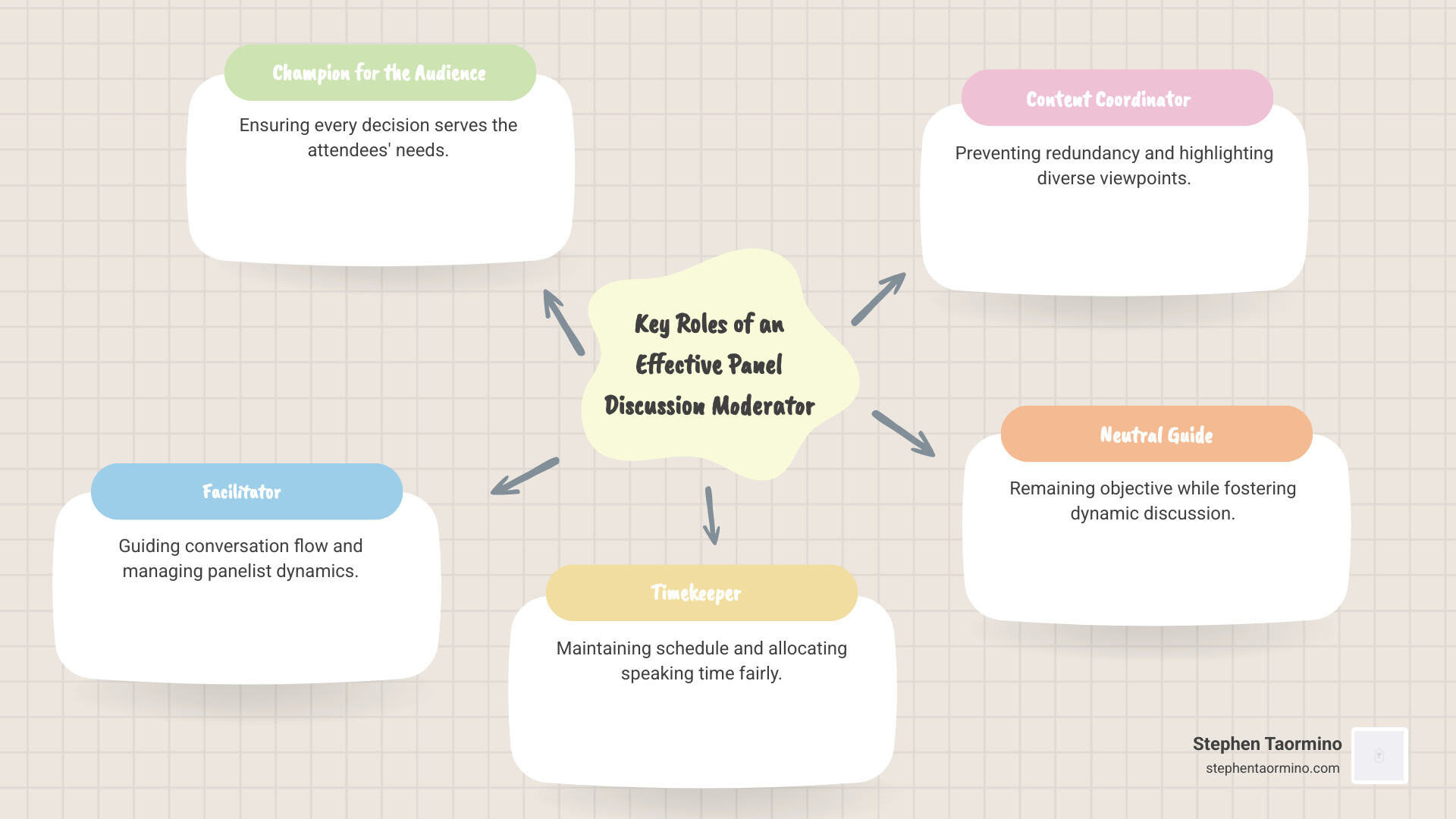
Key roles of an effective panel discussion moderator:
- Champion for the Audience: Ensuring every decision serves attendee needs.
- Facilitator: Guiding conversation flow and managing panelist dynamics.
- Timekeeper: Maintaining the schedule and allocating speaking time fairly.
- Content Coordinator: Preventing redundancy and highlighting diverse viewpoints.
- Neutral Guide: Remaining objective while fostering dynamic discussion.
A memorable panel depends on preparation, neutrality, and the ability to read the room. Great moderators listen actively, manage personalities, and create space for authentic dialogue that serves their audience.
I’m Steve Taormino, a professional speaker with over 25 years in strategic communications. I’ve moderated countless panels and coached executives on panel discussion moderator techniques that drive audience engagement. In this guide, seasoned professionals share their insider strategies for standing out as a moderator who lifts any event.
Panel discussion moderator terms simplified:
The Foundation: What Separates a Good Moderator from a Great One?
The difference between a good and great panel discussion moderator is understanding one truth: your job is to be the audience’s champion, not the star. Like a skilled conductor, your role is to bring out the best in each panelist to create a harmonious experience for the listeners. Great moderators are facilitators, not participants. We guide the conversation, resisting the urge to share our own insights.
The tone you set in the first few minutes is critical. Your energy, professionalism, and genuine curiosity ripple through the discussion, and both panelists and the audience feel it immediately.
Understanding Your Core Responsibilities and the Power of Neutrality
A successful panel discussion moderator juggles several key responsibilities. You must guide the conversation with a clear sense of direction while remaining flexible enough to explore valuable tangents. Effective time management is a powerful tool, ensuring every panelist gets a chance to speak and the audience receives a complete experience. This means being comfortable with gentle but firm redirections.
Balanced participation is where people skills shine. You must create space for both extroverted and reserved panelists to be heard. It’s also your job to be a translator, clarifying industry jargon to make expert knowledge accessible. By synthesizing key points as the discussion unfolds, you help the audience follow the narrative and connect different ideas.
True neutrality is the bedrock of your credibility. It means creating a safe space where diverse viewpoints can be explored without judgment. Avoid evaluative language like “That’s a great point,” which can signal your personal preferences and undermine objectivity. As moderation experts note, such comments can inadvertently show favoritism. Instead, focus on asking clarifying questions like, “Can you help us understand what that looks like in practice?” This keeps the focus on the panelists’ expertise.
Active listening is the backbone of this process. When we truly listen, we can identify the threads connecting different perspectives and help the audience see the bigger picture. Research shows how active listening transforms communication—a skill that is vital when managing multiple voices. This trust becomes the foundation for open, honest discussions where panelists share real perspectives, not just sanitized talking points.
Before the Curtain Rises: The Art of Meticulous Preparation
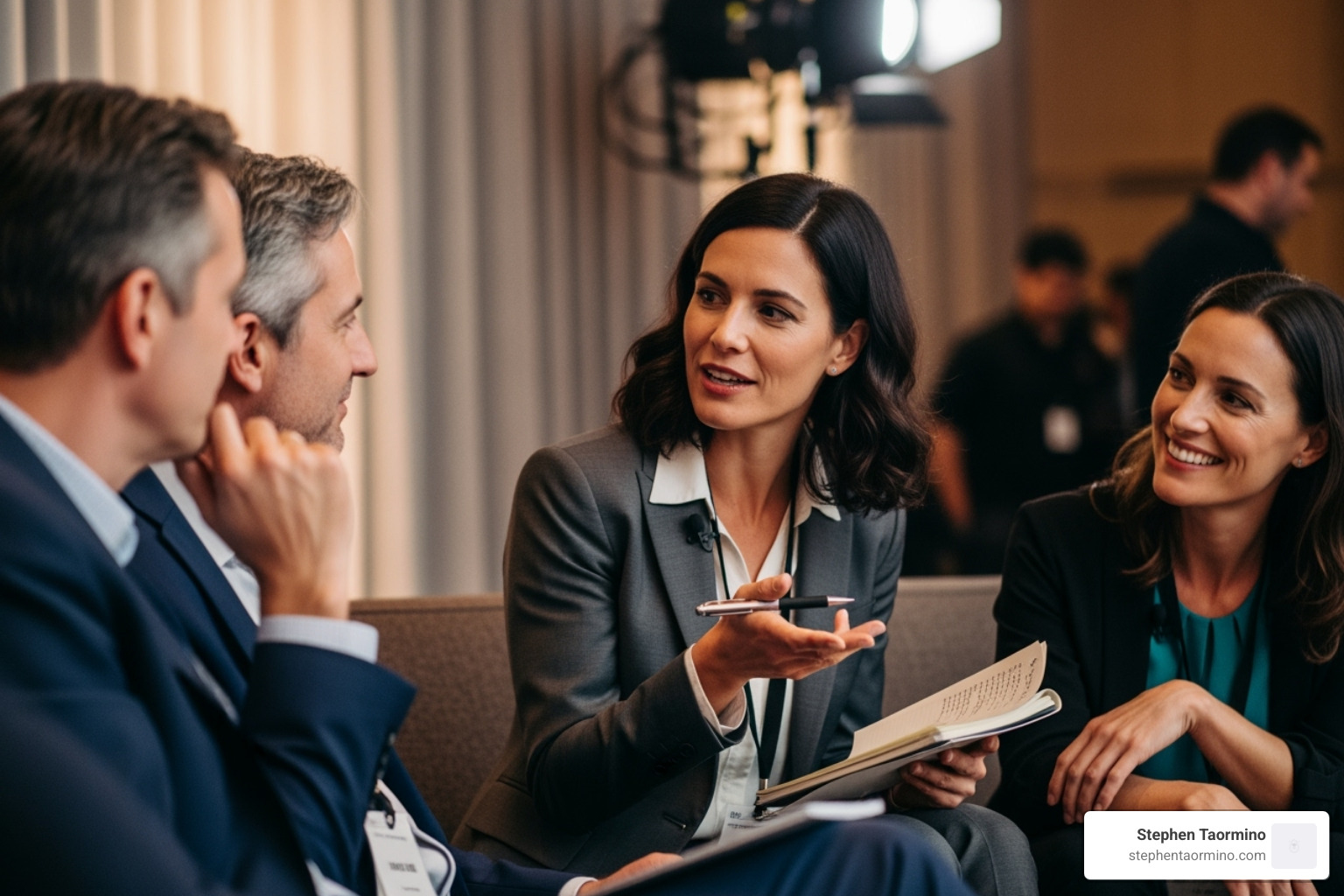
The success of a panel happens backstage, not under the spotlight. A panel discussion moderator who tries to “wing it” is setting everyone up for disappointment. Your goal should be “preparation, not rehearsal,” leaving room for the spontaneous moments that make panels memorable. Great preparation eliminates surprises, ensuring panelists know what to expect and you’ve crafted questions that matter. This groundwork transforms a series of mini-speeches into a flowing, engaging conversation.
Research: Your Most Powerful Tool
Deep research is your secret weapon as a panel discussion moderator. Go beyond the basics by reading industry reports and academic papers. Dive into recent podcast interviews with your panelists and review their LinkedIn activity to find insights that don’t appear in official bios. Understanding your audience’s perspective is equally crucial. What are their biggest challenges? What questions are they hoping to have answered? Collaborating with the meeting planner is also vital, as they can help align your approach with the event’s overall objectives.
How to Craft the Perfect Panel Questions
Crafting questions that spark real conversation is an art. Avoid simple yes/no questions, which are conversation killers. Instead, focus on open-ended questions that invite storytelling. For example, instead of asking, “Do you think AI will change marketing?” try, “What’s the most surprising way you’ve seen AI impact your marketing strategy?”
Tailoring questions to specific panelists shows you’ve done your homework and creates a natural flow. A well-structured panel follows a logical journey, from icebreakers to provocative questions and finally to a strong close. Always have follow-up questions ready, as they often lead to the most memorable moments.
Every moderator’s toolkit should include these five question types:
- Personal questions that reveal the human side of expertise.
- Thought-provoking questions that challenge assumptions.
- Open-ended questions that encourage elaboration.
- Follow-up questions that dig deeper into key points.
- Closing questions that provide actionable takeaways.
Briefing Your Panelists for Success
A pre-event briefing is non-negotiable. Schedule a call a few days before the panel to build rapport and set clear expectations. During this call, walk through the format and flow so there are no surprises. Explain how you’ll manage time and what your signals for wrapping up will be. Most panelists appreciate knowing that interruptions are for the sake of good moderation, not personal.
Set expectations around answer length—a great answer is typically 90 seconds to two minutes, not a five-minute keynote. Establish ground rules for audience Q&A and panelist-to-panelist questions. Confirming logistics like arrival times and technical requirements prevents last-minute headaches. This upfront investment transforms a group of individuals into a cohesive team, ready for an engaging conversation.
Showtime: How a Professional Panel Discussion Moderator Commands the Stage
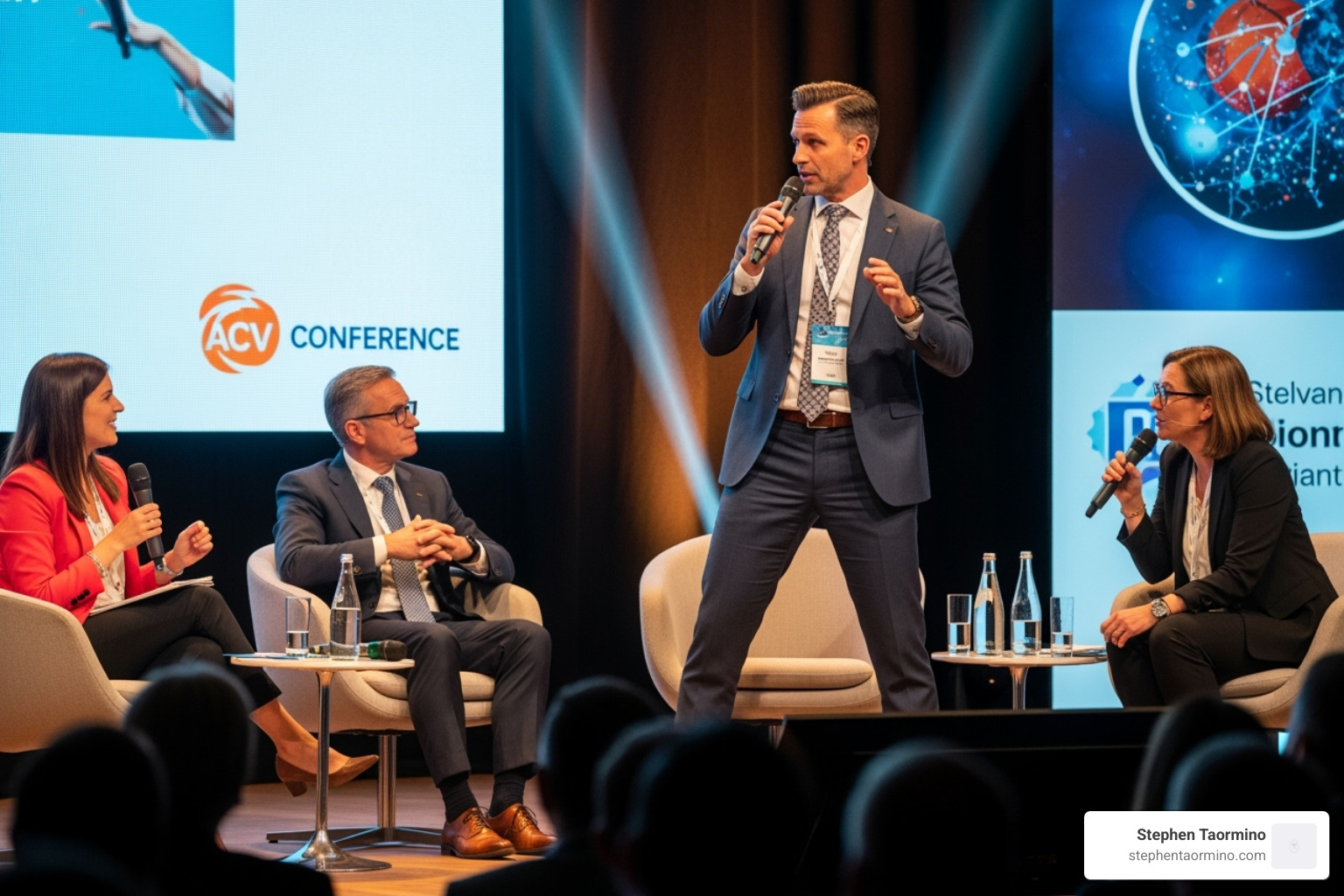
When the lights come up, a panel discussion moderator transitions from planner to conductor. This is where preparation pays off, allowing you to manage the live event with confidence. Success hinges on opening with impact, maintaining energy through skilled facilitation, managing the clock, and reading the room to encourage natural audience interaction. Handling different personalities gracefully is the real art, turning potential challenges into opportunities.
Opening and Closing the Discussion with Pizazz
The first five minutes are crucial. Craft a compelling introduction that hooks the audience immediately, perhaps with a surprising statistic or a relatable story. Clearly state the panel’s purpose and the value attendees will receive. When introducing panelists, be concise; focus on the expertise that is directly relevant to the discussion. A powerful closing is just as important. End with a summary that synthesizes the key takeaways and provides a clear call to action. Finally, offer a genuine thank you to the panelists, audience, and organizers.
Strategies for a Dynamic and Engaging Discussion
To facilitate a natural conversational flow, encourage panelists to interact with each other, not just with you. Use non-verbal cues, such as breaking eye contact after asking a question, to prompt them to address one another. Ask direct questions like, “Sarah, how does that align with your experience?” to foster panelist-to-panelist engagement.
Time management is a constant balancing act that should feel seamless to the audience. A non-negotiable rule is to dedicate at least 25% of the session to audience Q&A. Interactive tools like polls or digital Q&A platforms can improve engagement. For more tips, organizations like Toastmasters offer excellent guidance for moderating a panel discussion.
Managing Panelist Personalities and Audience Interaction
Every panel has its characters. To handle a dominant speaker, use polite redirection: “That’s a great point, and I’d love to get another perspective. Jennifer, what are your thoughts?” Encourage a quiet panelist by asking questions that play to their specific expertise. If the conversation veers off-topic, gently guide it back to the main theme.
When fielding audience questions, use a platform like Slido to crowdsource and prioritize the most relevant ones. Your goal is to create an environment where great ideas flourish and everyone feels they are part of a valuable experience.
Mastering the Modern Panel: Advanced Skills for Virtual and Co-Moderated Events
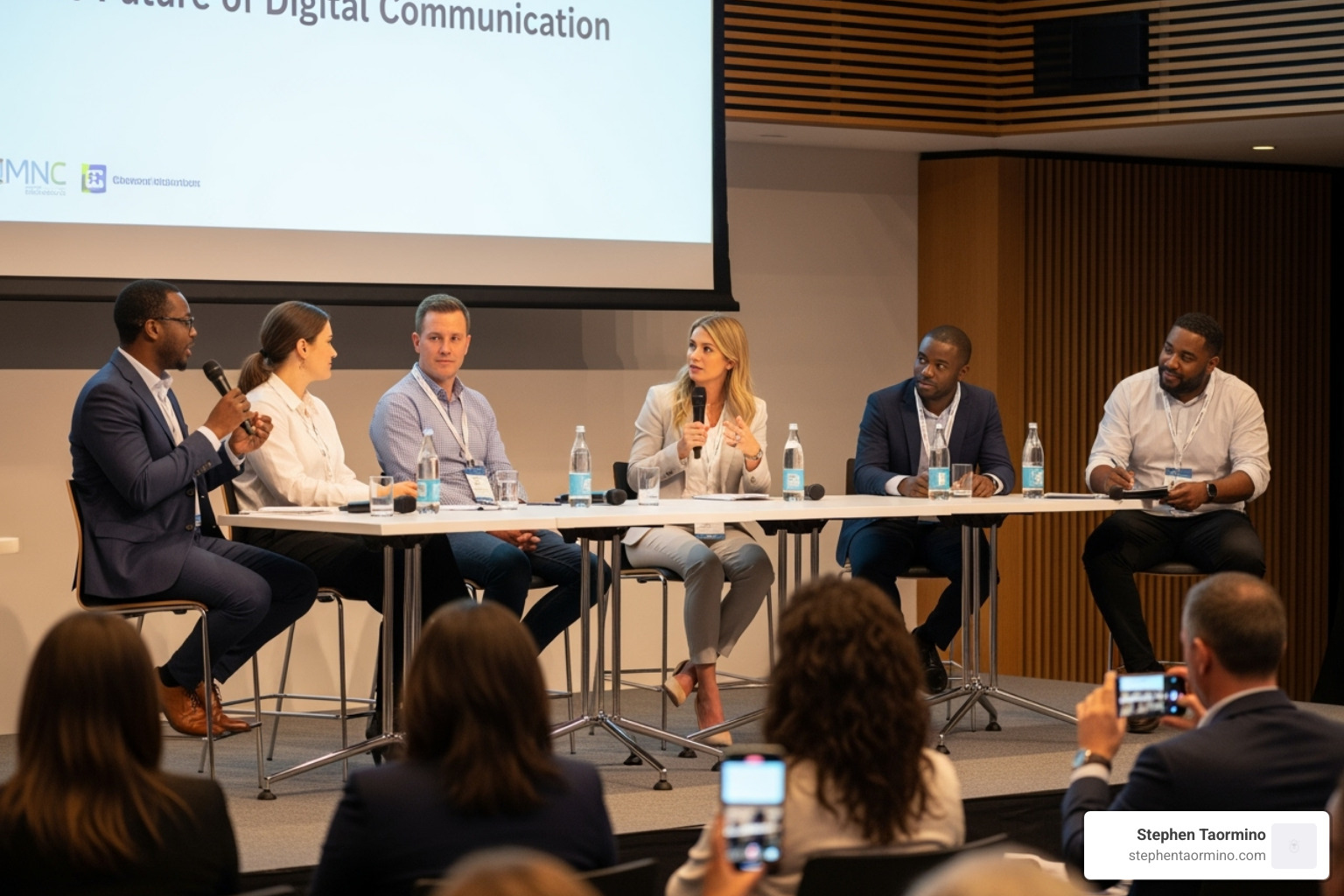
The event landscape has shifted, and today’s panel discussion moderator must steer virtual and hybrid formats. These modern panels require mastering digital body language, understanding online engagement patterns, and adapting facilitation for a screen. The goal is to create connection through pixels, orchestrating conversations across time zones while managing chat functions and polls. This builds on traditional moderation skills but demands new competencies.
Technical Considerations for the Virtual Panel Discussion Moderator
A successful virtual panel begins with solid technical fundamentals. A stable internet connection is your lifeline; we recommend at least 5 Mbps upload speed, which you can verify with an online speed test. Good lighting and audio are also critical. Audiences will tolerate poor video, but bad audio will cause them to tune out. Master your platform’s features—polls, chat, and Q&A tools—to drive engagement. Always coordinate with a tech support person and conduct a full test session to identify any issues before the live event.
The Pros and Cons of Co-Moderating
Co-moderating can bring a dynamic energy to a panel. When two moderators work in harmony, the synergy can be powerful, allowing one to manage time while the other tracks audience engagement. The benefits include fresh perspectives, increased energy, and a built-in backup for technical issues.
However, co-moderation requires significantly more planning. Success depends on detailed pre-event conversations to clarify roles, transitions, and intervention strategies. The moderator who isn’t speaking must remain actively engaged, observing panelist body language and audience reactions. Clear role definition prevents awkwardness and ensures a smooth, professional flow. When planned well, co-moderation lifts the entire experience; when planned poorly, it creates confusion.
Frequently Asked Questions about Panel Moderation
As a professional panel discussion moderator, I’m often asked the same questions by those looking to improve their skills. Here are the most common queries and my direct answers.
What is the single most important job of a panel discussion moderator?
Your primary job is to be the champion for the audience. Every decision, from the questions you ask to how you manage time, must serve the goal of delivering maximum value to attendees. You are the bridge between the experts and the audience. Your success is measured not by how smart you sound, but by the insights the audience gains.
How do you handle a panelist who talks too much?
The key is preparation and firm, polite intervention. During your pre-event briefing, inform panelists that you will be actively managing time to ensure balanced participation. This frames any future interruptions as professional, not personal.
In the moment, use a transition phrase: “That’s valuable insight, and I’d love to bring in [Next Panelist] for their perspective.” or “Thank you. In the interest of time, let’s move to our next question.” Non-verbal cues, like shifting your gaze to another panelist, can also signal the need to move on.
Should the moderator be an expert on the topic?
You don’t need to be the foremost expert—that’s the panelists’ role. However, you need a solid foundational knowledge of the topic. Your role requires you to understand the subject well enough to ask intelligent questions, follow the discussion, and know when to seek clarification for the audience. Your expertise is in facilitation, not the subject matter itself. Your skill lies in being an informed translator who can synthesize complex ideas into accessible insights.
Conclusion
Becoming an exceptional panel discussion moderator is an art developed through preparation, practice, and a deep understanding of group dynamics. The best moderators act as champions for their audience, maintain crucial neutrality, ask questions that spark real dialogue, and adapt to any event format. By focusing on these elements, you can transform a standard panel into a memorable and impactful conversation.
At Stephen Taormino, effective communication is at the heart of what we do. My background in marketing psychology and leadership development provides a unique perspective on effective moderation. Just as I help businesses open up their potential by understanding how people think and connect, a skilled moderator opens the potential within a conversation.
The role is fundamentally about leadership—guiding experts and audiences toward shared understanding. Every panel is an opportunity to make a genuine impact. The investment you make in serving your audience will always create an experience that matters.
For more expert insights on communication and leadership that can improve your moderation skills, I invite you to explore our video resources and, when you’re ready to lift your next event, contact our team to discuss speaking or moderation services.