French
  English
  Spanish
  German


Communication skills training: Master your impact 2025
Why Communication Skills Training Is Your Competitive Advantage
Communication skills training is the most direct path to opening professional growth and organizational success. Whether you’re looking to advance your career, lead more effectively, or build stronger teams, the right training can transform how you connect with others and achieve your goals.
In today’s hybrid workplace, your ability to communicate clearly, build trust, and influence outcomes directly impacts your bottom line. Organizations with strong communicators see better collaboration and higher productivity, while individuals with refined communication skills earn promotions faster and build more meaningful professional relationships.
Effective training goes beyond just talking—it addresses the psychological foundations of human behavior. From active listening and emotional intelligence to persuasive messaging and conflict resolution, the right program provides practical frameworks for real-world application. Explore the human element behind communication in more depth in our psychology of communication resources.
As Steve Taormino, President & CEO of CC&A Strategic Media and a recognized expert in marketing psychology, I’ve spent over 25 years helping leaders master strategic communication. My work in communication skills training centers on understanding why people act the way they do, enabling you to communicate with authenticity, clarity, and measurable impact.

Why Invest in Communication Skills? The Professional and Personal Payoff

After 25 years of working with leaders, I’ve learned that the way we communicate shapes everything. Communication skills training isn’t just another box to check—it’s the single most powerful investment you can make in yourself and your organization. The payoff is real and measurable, rooted in stronger relationships. As research from the Harvard Gazette reveals, strong relationships are the key to a fulfilling life, a truth that extends directly into the workplace.
Boosting Individual and Organizational Success
For individuals, strong communication is a competitive advantage. It starts with confidence building, which reinforces perceptions of competence and helps you articulate your thoughts clearly. This directly impacts salary negotiation, where your ability to communicate your value determines your compensation. It also leads to earning promotions, as organizations lift those who can lead discussions and influence outcomes.
These skills also help you build a powerful professional network and develop a genuine personal brand. When you communicate clearly and consistently, you build credibility and trust, which are the foundations of developing leadership skills.
The ripple effect strengthens the entire organization. When communication improves, you’ll see:
- Increased employee engagement: People who feel heard and understand the “why” behind decisions are more committed.
- Lower turnover rates: A workplace with open, effective communication is one where people want to stay.
- Improved customer satisfaction: Clear, empathetic communication from your teams creates loyal customers.
- Greater innovation: A culture of psychological safety where ideas flow freely leads to breakthrough thinking.
- High-performing teams: Clear goals and collaborative problem-solving are impossible without effective communication. Learn more about building teams that excel.
Strong communication fosters a positive workplace culture and drives measurable organizational improvement that impacts the bottom line.
The Anatomy of Effective Communication Skills Training
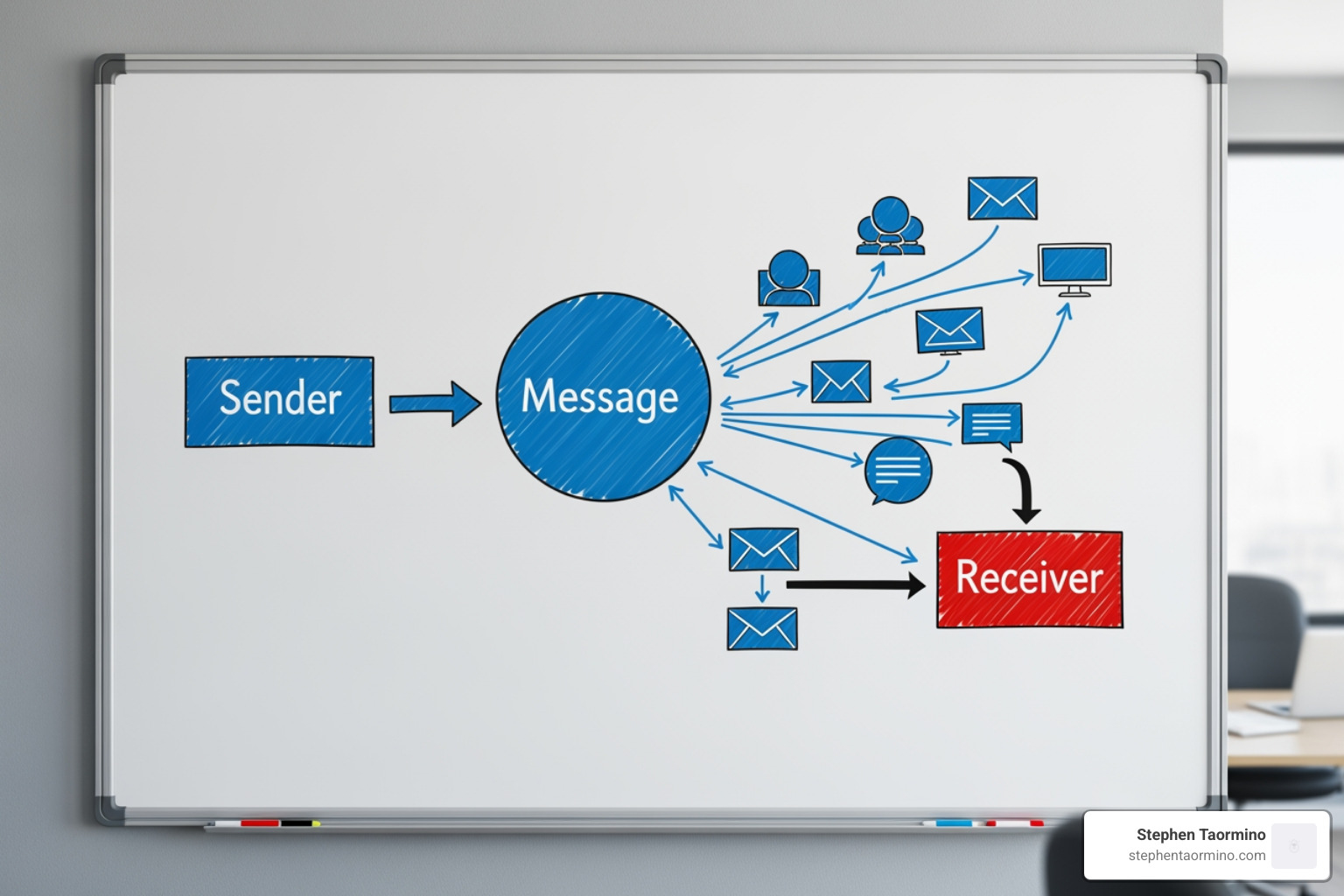
Truly effective communication skills training is built on core competencies that create a complete toolkit for any professional situation. The best programs ground their approach in established frameworks, like the U.S. Department of Education’s Employability Skills Framework, focusing on practical, workplace-ready abilities. This comprehensive approach recognizes that communication is about understanding the human element, which is why exploring the psychology of communication provides such valuable insight.
Core Verbal and Non-Verbal Skills
What we say is just the tip of the iceberg. Beneath the surface, our non-verbal signals often carry more weight.
- Active listening is the heart of any meaningful exchange. It’s not waiting for your turn to talk, but fully absorbing another’s message and perspective.
- Empathy allows you to step into someone else’s shoes, adapting your style to build trust and connection.
- Presenting with confidence is a learnable skill. Training helps you organize thoughts, engage an audience, and use storytelling to make an impact.
- Articulation and clarity ensure your message lands as intended, free from confusion.
- Body language, facial expressions, and tone of voice can either reinforce or undermine your words. Awareness of these signals is crucial, especially in virtual settings where intent can be misread.
Essential Written and Digital Communication
In a world of emails and instant messages, written skills are paramount.
- Professional writing etiquette for emails and reports is fundamental. The goal is to craft messages that are clear, concise, and achieve results.
- Crafting persuasive messages is invaluable for pitching ideas or making a case to clients, often applying insights into marketing psychology to motivate an audience.
- Virtual communication best practices are now non-negotiable. This includes maintaining presence on video calls, keeping participants engaged, and using instant messaging professionally.
What to Expect from Communication Skills Training
Effective programs are hands-on and experiential. Expect role-playing scenarios to practice difficult conversations in a safe environment and constructive feedback to identify blind spots. Through interactive exercises and group discussions, you’ll gain diverse perspectives. Most importantly, you’ll leave with practical application frameworks—concrete strategies you can implement immediately. For those interested in leading these sessions, it’s worth exploring how to learn how to facilitate training. This journey is key to mastering effective communication.
From Theory to Practice: Applying Communication Skills to Workplace Challenges

Communication skills training isn’t about abstract theories; it’s about handling the real, complex situations that arise at work. It provides practical frameworks to resolve conflicts, lead with influence, and collaborate effectively, turning daily challenges into opportunities for growth. These skills are the building blocks of professional success and are central to more on leadership development.
Leadership, Influence, and Persuasion
Leadership is communication. To succeed, you must learn to:
- Motivate teams without authority: Get results through persuasion rather than position by understanding what matters to people.
- Present a vision: Paint a picture of the future so vividly that others are inspired to join you on the journey.
- Gain buy-in from stakeholders: Build consensus and get people on board by anticipating objections and communicating a compelling case.
- Communicate with assertiveness and tact: Deliver messages with confidence while remaining respectful and considerate.
- Build trust and credibility: Establish a reputation for trustworthiness through consistent, authentic, and honest communication.
These foundational skills are at the heart of effective executive leadership training options.
Conflict Resolution and Difficult Conversations
Conflict is inevitable, but how we handle it defines our success. Training transforms our approach to conflict, helping us see it as an opportunity for growth. Key skills include:
- De-escalation techniques: Calm tense situations to create space for productive dialogue.
- Finding common ground: Identify underlying interests to turn adversarial situations into collaborative problem-solving.
- Mediating disputes: Guide people toward a resolution by listening to all sides without taking one.
- Delivering constructive criticism: Give feedback in a way that builds people up and inspires change, rather than creating defensiveness.
- Responding to feedback non-defensively: Receive criticism with an open mind, a hallmark of emotional intelligence and maturity.
Understanding how cultural differences shape communication can further strengthen these skills. Explore cross-cultural leadership insights to deepen your effectiveness.
Choosing Your Path: Online, In-Person, and Blended Training Models

With so many communication skills training options, the challenge is choosing the format that fits your lifestyle, budget, and learning style. The modern professional development landscape offers incredible flexibility, from self-paced online courses to immersive in-person workshops.
| Modality | Flexibility | Cost | Interactivity | Networking Opportunities |
|---|---|---|---|---|
| Online (Self-Paced) | High (learn anytime, anywhere) | Low to Medium | Self-directed, forums, peer review | Limited, mostly virtual |
| Live Online (Instructor-Led) | Medium (fixed schedules, remote) | Medium to High | Real-time Q&A, group exercises | Moderate, virtual connections |
| In-Person | Low (fixed location and schedule) | High | High (direct interaction, role-playing) | High (face-to-face networking) |
Self-paced online courses offer maximum convenience and are often the most affordable. Live online programs provide a hybrid benefit, combining remote access with real-time interaction. In-person workshops remain the gold standard for deep, immersive learning and powerful networking. For those ready to dive in, you can explore available workshops.
Finding the Right Communication Skills Training for You
To choose wisely, start with a clear self-assessment.
- Assess your goals: Are you overcoming a fear of public speaking or mastering virtual leadership? Define what success looks like.
- Consider your budget: Options range from free introductory lessons to comprehensive executive programs. Find the right balance between cost and depth.
- Evaluate the curriculum: Look beyond titles. Does the course cover the specific skills you need with practical exercises?
- Check for credentials: Certifications and continuing education credits add tangible value to your professional profile and signal your commitment to growth.
- Understand the time commitment: Be realistic about what you can sustain. The best program is the one you’ll actually complete.
For personalized advice, seeking guidance from a professional development speaker can provide valuable, customized perspective.
The Rise of Digital and Remote Communication Training
The shift to hybrid work demands new communication competencies. Modern training has evolved to address these needs, focusing on:
- Adapting to virtual teams and mastering the tools that facilitate modern teamwork.
- Enhancing digital body language to ensure tone and intent are clear in emails and on video calls.
- Using asynchronous communication strategies to collaborate effectively across different time zones.
- Maintaining human connection remotely to build rapport and trust without sharing a physical space.
This evolution reflects a broader change in how we work. You can explore various training categories that address both traditional and emerging communication needs.
Frequently Asked Questions about Communication Skills Training
As you consider investing in communication skills training, you likely have questions. Here are answers to the ones I hear most often.
How long does it take to see improvement from communication skills training?
You can see immediate wins. Applying a new active listening technique or feedback framework can make a difference in your very next conversation. However, comprehensive behavioral change—the kind that transforms your leadership presence or negotiation ability—unfolds over several months of consistent practice. Think of it like learning an instrument: you can play a simple tune quickly, but mastery requires dedication. Key techniques can show results in weeks, while deeper skills develop over months of real-world application.
Can communication training help introverts become better leaders?
Absolutely. Training isn’t about changing your personality; it’s about equipping you with tools that work with your natural strengths. Introverts are often thoughtful listeners and observers. Training provides structured approaches for situations that may feel uncomfortable, like public speaking or networking. It gives them frameworks to communicate their vision authentically and confidently, leveraging their innate skills to build genuine connection. Exploring more on leadership expertise can provide further guidance.
Is communication skills training worth the investment for a small business?
Yes—it’s arguably more critical for small businesses. In a small company, every interaction impacts the bottom line. Poor communication leads to lost sales, customer frustration, and employee turnover. Conversely, effective communication immediately improves sales conversations, customer service, and team collaboration. The ROI is remarkably high because improvements touch every aspect of the business, reducing errors and increasing efficiency. For targeted support, corporate coaching services can be custom to your specific challenges.
Conclusion: Your Next Step Towards Mastery
Investing in communication skills training is more than a professional development task; it’s a fundamental change in how you connect, lead, and build relationships that drive your career and organization forward. When you improve how you communicate, you open up potential, drive tangible business results, and gain a powerful competitive advantage in a world where genuine connection is rare.
The real magic happens when you understand the psychology behind human connection—what motivates people and how they make decisions. This understanding transforms every interaction into an opportunity to inspire, influence, and build trust.
Throughout my 25 years of working with leaders, I’ve seen how training grounded in human behavior creates profound shifts. It’s not about becoming someone else; it’s about becoming more authentically and powerfully you, communicating with a clarity that makes people listen.
Your next step doesn’t have to be overwhelming. Start by focusing on one skill, practicing it consistently, and seeking feedback. Mastery is a continuous journey of growth.
Ready to empower your team with the skills to thrive in any communication landscape? Take the next step and explore expert-led group facilitation training to empower your team. Let’s transform how your organization connects, collaborates, and achieves its goals together.