French
  English
  Spanish
  German


Leadership development programs: Top 5 Strategies
Why Leadership Development Programs Transform Organizations
Leadership development programs are structured initiatives designed to improve the skills, knowledge, and capabilities of current and potential leaders within an organization. These programs combine various learning methodologies—including coaching, mentorship, experiential learning, and feedback mechanisms—to develop essential leadership competencies at every organizational level.
Key Components of Effective Leadership Development Programs:
- Assessment and Goal Setting – Identifying leadership gaps and defining clear development objectives
- Multi-Modal Learning – Combining workshops, coaching, mentorship, and real-world application
- Level-Specific Content – Custom curriculum for frontline, mid-level, and senior leaders
- Measurement and Evaluation – Tracking progress and business impact through data-driven metrics
- Cultural Integration – Embedding development within supportive organizational environments
Organizations investing in these programs see significant returns: companies prioritizing continuous learning realize extraordinary potential, while 85% of participants recognize skills needed to improve their current performance. The most successful programs align closely with business priorities, provide personalized feedback through validated assessment tools, and create lasting behavioral change through ongoing support and coaching.
I’m Steve Taormino, and I’ve spent over 25 years helping organizations open up human potential through strategic leadership development and marketing psychology. My expertise in understanding how people learn, connect, and grow has enabled me to design leadership development programs that deliver measurable business results for companies worldwide.
The Blueprint for Success: Core Components of Effective Leadership Development Programs
Effective leadership development programs require a solid foundation of core components working in concert. It’s not about cramming information; it’s about creating experiences that shift how leaders see themselves and their impact.
The foundation begins with self-awareness, often initiated through 360-degree feedback where peers, reports, and supervisors provide honest insights. This awareness is then translated into action through:
- Executive coaching: One-on-one sessions with a trained professional to work through real-world challenges.
- Mentorship: Pairing developing leaders with seasoned professionals for guidance and wisdom.
- Experiential learning: Business simulations, role-playing, and action learning projects that allow leaders to practice new skills in a safe environment and apply them to actual business problems.
- Peer learning: Creating a support network where participants share struggles and breakthroughs.
This holistic approach, integrating assessment, coaching, and experiential learning, drives real business results. Our corporate leadership coaching services combine these elements with insights from psychology to create lasting change.
Identifying the Need: Assessment and Goal Setting
Before launching a program, it’s crucial to define the business problem you’re trying to solve. This ensures program alignment with specific organizational challenges and opportunities, rather than just following trends.
The process starts with a thorough analysis of your business priorities. Are you focused on retention, market expansion, or engagement? Each goal requires a different leadership approach. Next, a skill gap analysis—using surveys, interviews, and performance reviews—assesses where your leaders are versus where they need to be.
Finally, these insights are used for defining success metrics. Instead of vague goals, establish measurable targets like, “Increase team engagement scores by 15%.” This provides a clear target and accountability. Our leadership development consulting always begins with this crucial alignment phase.
Cultivating Talent: Coaching, Mentorship, and Experiential Learning
This is where lasting change is forged. One-on-one coaching helps leaders process insights and work through specific challenges, such as developing emotional intelligence. Group coaching builds a community of learners who solve problems together, realizing they aren’t alone in their struggles. Peer mentorship deepens these connections, creating relationships that last for years.
However, the most profound growth comes from experiential learning. Business simulations and role-playing allow leaders to practice difficult decisions and conversations without real-world consequences. On-the-job challenges bridge the gap to reality, asking participants to apply new concepts to actual work situations, like leading a cross-functional project or turning around an underperforming team. This combination of personalized support and practical application creates leaders who don’t just know leadership principles—they live them. Understanding human motivation and learning how to give feedback are crucial skills that transform how leaders connect with their teams.
Tailoring the Journey: Adapting Programs for Every Leadership Level
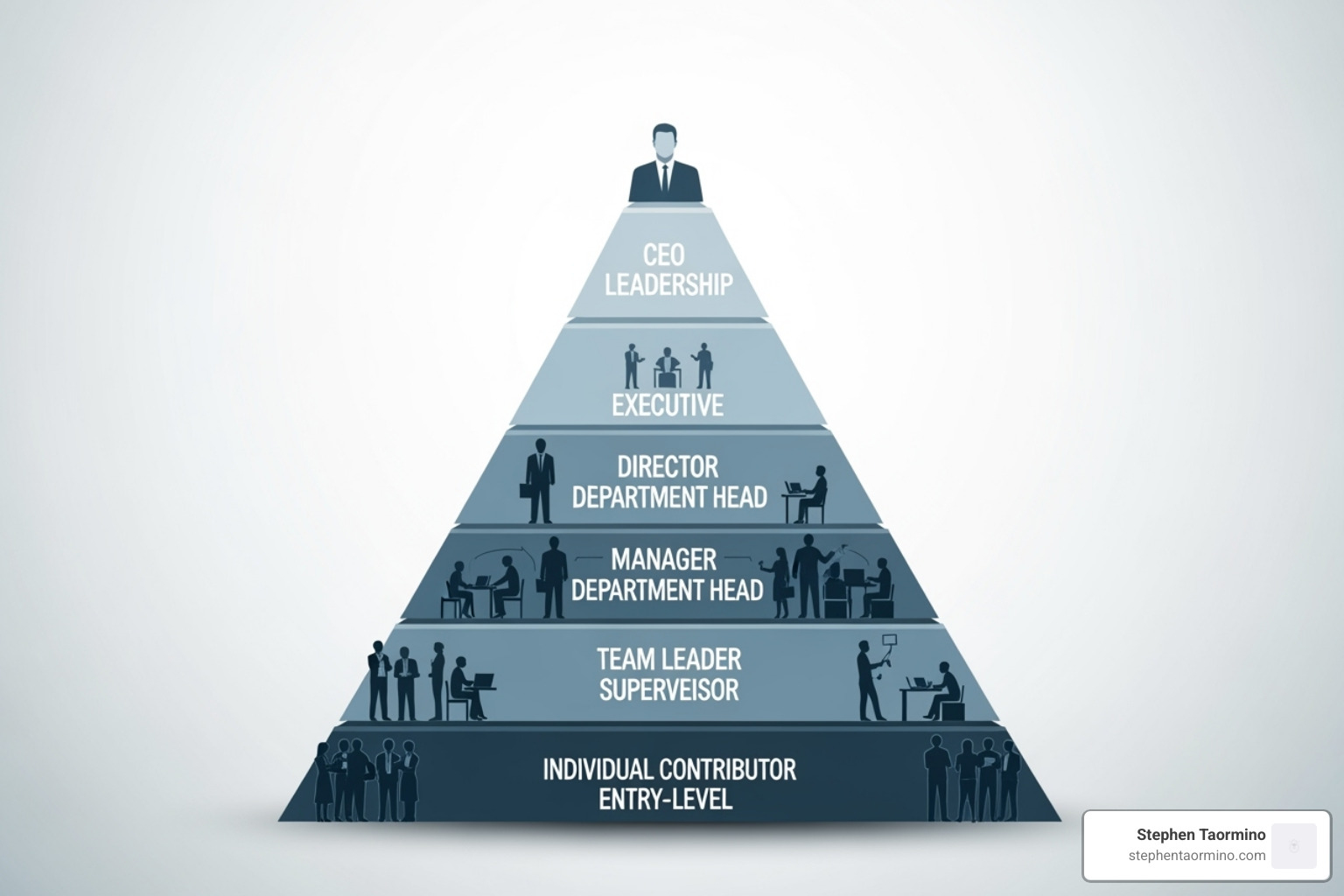
A one-size-fits-all approach yields generic results. Effective leadership development programs are customized for the unique challenges at each stage of the leadership pipeline. The skills needed to manage people are different from those needed to shape organizational strategy. Our leader development programs create a roadmap that grows with each person’s career progression.
For Frontline Leaders: From Contributor to Manager
The transition from individual contributor to manager is one of the toughest career shifts. Success is no longer about personal output but about achieving results through others. Development at this stage focuses on foundational skills:
- Communication: Learning to give constructive feedback and articulate expectations clearly.
- Delegation: Developing team capabilities by matching tasks to individual growth needs.
- Performance Management: Setting clear goals and motivating individuals effectively.
- Conflict Resolution: Addressing team issues constructively before they escalate.
These skills are essential for building high-performing teams.
For Mid-Level Leaders: Leading from the Middle
Mid-level leaders act as a bridge between senior leadership’s vision and their teams’ execution. They must lead other managers and influence peers without direct authority. Key competencies include:
- Strategic Thinking: Connecting departmental work to broader organizational goals.
- Influencing Across Departments: Building coalitions and gaining buy-in from peers.
- Change Management: Guiding teams through uncertainty and implementing new initiatives.
- Cross-Functional Collaboration: Breaking down silos to drive collective success.
Our change management keynote speaker programs dive deep into these dynamics.
For Senior and Executive Leaders: Shaping the Future
At the executive level, the focus shifts from managing the present to creating the future. These leaders are responsible for the long-term health and direction of the business. Their development centers on:
- Organizational Vision: Anticipating trends and creating a compelling future state.
- Driving Innovation: Fostering a culture of psychological safety and calculated risk-taking.
- Leading Through Disruption: Navigating market volatility and technological change with resilience.
- Executive Presence & Stakeholder Management: Commanding respect and balancing the needs of all stakeholders.
- Cultivating Culture: Setting the tone for the organization’s values and behaviors.
Our executive leadership training and programs on leadership for business growth address these complex challenges.
Measuring What Matters: Gauging the Impact and ROI of Your Program

To justify investment, organizations must measure the tangible business impact of their leadership development programs. This requires moving beyond satisfaction surveys to data-driven decisions that connect leadership growth to organizational success.
A best practice is to establish key performance indicators (KPIs) aligned with business goals before the program begins. The Kirkpatrick Model offers a useful framework with four levels of evaluation:
- Reaction: Did they find the training favorable?
- Learning: Did they acquire the intended knowledge and skills?
- Behavior: Are they applying what they learned on the job?
- Results: Did the targeted outcomes occur as a result of the training?
A comprehensive business impact analysis, using pre- and post-program assessment, allows you to calculate the true return on investment (ROI).
Collecting Actionable Feedback
Actionable feedback is essential for program improvement. Use feedback mechanisms that provide specific insights for optimizing your strategy.
- Surveys: Ask targeted questions about skill application, not just satisfaction.
- Interviews and Focus Groups: Uncover the “why” behind the data and gain nuanced understanding.
- Performance Data: Combine 360-degree feedback with metrics like productivity and team engagement to identify patterns and create a continuous improvement loop.
Linking Development to Business Outcomes
The ultimate test of a program is its effect on the bottom line. Connect leadership development to concrete business results by tracking metrics such as:
- Employee Retention & Promotion Rates: Are participants advancing and staying with the company?
- Team Productivity & Project Completion Rates: Is leadership effectiveness improving team output?
- Revenue Growth & Customer Satisfaction: Can you link leadership initiatives to bottom-line financial performance and client happiness?
Success stories that tie a leader’s development to specific business wins provide compelling proof of the program’s value.
Creating Fertile Ground: The Role of Culture and Continuous Learning

Even the best leadership development programs will fail if the organizational culture doesn’t support growth. A culture of continuous learning and psychological safety is required for new leadership skills to take root. When leaders return from training, they need an environment that encourages them to experiment and apply what they’ve learned, rather than reverting to old habits.
The Power of Executive Sponsorship
The single biggest predictor of a program’s success is authentic executive sponsorship. When senior leaders are actively involved, it signals the organization’s true commitment to development.
- Leaders as Teachers: Executives who participate as learners and share their own experiences create a culture where vulnerability is a strength.
- Demonstrating Commitment: Senior leaders must protect development time and champion the program’s value.
- Removing Roadblocks: Active sponsorship helps clear obstacles that prevent participants from applying new skills.
Fostering a Culture of Continuous Learning
A true learning culture goes beyond formal training. It’s about changing how the organization views growth and potential.
- Personalized & Autonomous Learning: Provide diverse resources and give people the freedom to pursue what is most relevant to them.
- Social Learning & Knowledge Sharing: Create forums, like communities of practice, where leaders can learn from each other’s experiences.
- Celebrating Effort: Recognize and reward leaders for taking risks and trying new approaches, even if they don’t succeed perfectly the first time.
People have extraordinary potential in environments that support their growth. When the culture is right, leadership development transforms the entire organization.
Modern Leadership: Essential Skills and Delivery Methods for Today’s World
The demands on leaders are constantly evolving, requiring leadership development programs that cultivate future-ready skills and leverage flexible delivery methods. Modern leaders need a sophisticated blend of emotional intelligence, adaptability, and digital literacy to succeed in today’s complex business landscape.
The delivery methods for these programs must also be flexible, engaging, and accessible to meet the needs of a diverse workforce.
| Delivery Method | Pros | Cons | Best For |
|---|---|---|---|
| In-Person Workshops | High engagement, deep networking, immersive | Higher cost, logistical complexity, limited scalability | Intensive skill-building, team cohesion, executive programs |
| Virtual Instructor-Led | Flexibility, broader reach, lower cost | Potential for distraction, less spontaneous interaction | Global teams, skill refreshers, foundational concepts |
| Blended Learning | Combines best of both, sustained engagement | Requires careful design, technology integration | Long-term development, diverse learning styles |
| Self-Paced Online | Ultimate flexibility, cost-effective, accessible | Requires self-discipline, potential isolation | Large-scale rollouts, foundational knowledge, pre-work |
| Microlearning | Quick, digestible, just-in-time support | Not for complex topics, limited depth | Reinforcement, addressing specific skill gaps |
Essential Skills and Mindsets for Modern Leaders
Effective modern leaders are built on a foundation of curiosity, compassion, and courage. These mindsets enable human-centered leadership and support the development of other critical skills:
- Learning Agility: The ability to quickly learn from experience and apply lessons in new situations.
- Systems Thinking: Understanding how decisions impact the entire organization, not just one’s immediate team.
- Resilience and Adaptability: The capacity to bounce back from setbacks and adjust approaches in the face of change.
These skills are central to our cross-cultural leadership training and professional development speaker engagements.
Choosing the Right Delivery Method for Your Leadership Development Programs
The best approach often involves creating a learning ecosystem that combines multiple delivery methods.
- In-person workshops are ideal for intensive, interactive skill-building.
- Virtual instructor-led training (VILT) offers flexibility for global teams without sacrificing live interaction.
- Blended learning combines online modules with live sessions, turning learning into a sustained journey rather than a single event.
- Self-paced online courses and microlearning provide just-in-time support for specific challenges, a key focus of our digital change keynote speaker topics.
By matching the delivery method to the learning objective, organizations can create more effective and engaging development experiences.
Frequently Asked Questions about Leadership Development Programs
Here are answers to common questions organizations have when considering leadership development programs.
What is the difference between leadership development and management training?
These two terms are often confused, but they serve different purposes.
- Management training focuses on tactical skills for operational efficiency: budgeting, project planning, and scheduling. It’s about doing things right.
- Leadership development focuses on adaptive and relational skills to inspire people and drive change: emotional intelligence, strategic thinking, and vision. It’s about doing the right things.
Both are essential, but leadership development is what enables an organization to grow and transform.
How long should a leadership development program be?
There is no single answer; the duration should match the program’s goals. A program can range from an intensive multi-day workshop to a year-long journey that includes coaching, peer learning, and real-world projects.
The key is not the length but sustained engagement. Lasting behavioral change requires time, practice, and ongoing support. A blended approach that unfolds over several months is often more effective than a one-time event because it gives participants time to apply and refine new skills.
How do you select participants for a leadership development program?
Effective selection aligns with strategic needs. While strong performance is a factor, the best predictor of success is learning agility—the ability and willingness to learn from experience.
Look for candidates who demonstrate a genuine commitment to growth, align with company values, and are curious about feedback. The goal is to identify high-potential individuals who are not just seeking a promotion but are interested in developing themselves to help others succeed. You are investing not just in them, but in everyone they will lead in the future.
Conclusion: Your Next Step in Leadership Excellence
Investing in robust leadership development programs is a strategic imperative for securing your organization’s future. It’s about changing managers into inspiring leaders who open up the potential in their teams.
An effective program is built on a clear alignment with business goals, custom to different leadership levels, and supported by a culture of continuous learning. By focusing on core components like coaching and experiential learning, and by measuring the impact on business outcomes, you move leadership development from a cost center to a key driver of growth.
Modern leadership requires adaptability, emotional intelligence, and a human-centered approach. With flexible delivery methods, you can provide development that is both impactful and accessible.
I leverage deep expertise in marketing psychology and human behavior to help organizations build impactful leaders. My approach combines the science of how people learn with practical strategies that deliver measurable results. To create a leadership development strategy that truly transforms your organization, explore how to apply these behavioral economics and marketing techniques.
Your next step toward leadership excellence begins with the decision to invest in your people’s potential. The framework is proven, and the opportunity to transform your organization through exceptional leadership is here.