French
  English
  Spanish
  German


Moderator questions panel discussion: 10 Killer Qs
Why Effective Moderator Questions Panel Discussion Skills Matter
Effective moderator questions panel discussion skills are what separate a captivating conversation from a forgettable presentation. The quality of your questions directly determines the quality of the insights your audience receives.
Great questions are open-ended, relevant to the panelists’ expertise, and designed to solve audience challenges. They spark genuine conversation and uncover insights that can’t be found with a simple search online. The best moderators prepare 5-7 core questions for a 45-60 minute panel, with another 10-15 in reserve. This structure allows for a natural flow from broad topics to specific applications, with ample time for audience Q&A.
Essential question types include:
- Icebreakers: “What’s one surprising fact about your work that most people don’t know?”
- Deep Dives: “What’s the biggest challenge facing our industry right now?”
- Provocative Inquiries: “What’s a widely accepted best practice you think is ineffective?”
- Future-Focused Queries: “Where do you see this field heading in the next 5 years?”
- Actionable Closers: “If the audience remembers one thing today, what should it be?”
As a moderator for technology, marketing, and business conferences, I’ve learned that the secret to engagement is crafting questions that reveal the human story behind professional expertise. Preparation and genuine curiosity are the foundation for conversations that truly matter.
Moderator questions panel discussion terms explained:
- best practices for moderating a panel discussion
- how to moderate a panel discussion
- moderated panel discussion
The Moderator’s Playbook: Preparation and Essential Qualities
When you master moderator questions panel discussion preparation, you transform from someone simply asking questions into a conductor orchestrating meaningful dialogue. The difference between a forgettable panel and one that leaves audiences buzzing isn’t luck—it’s preparation. This section covers the foundational work required before stepping on stage.
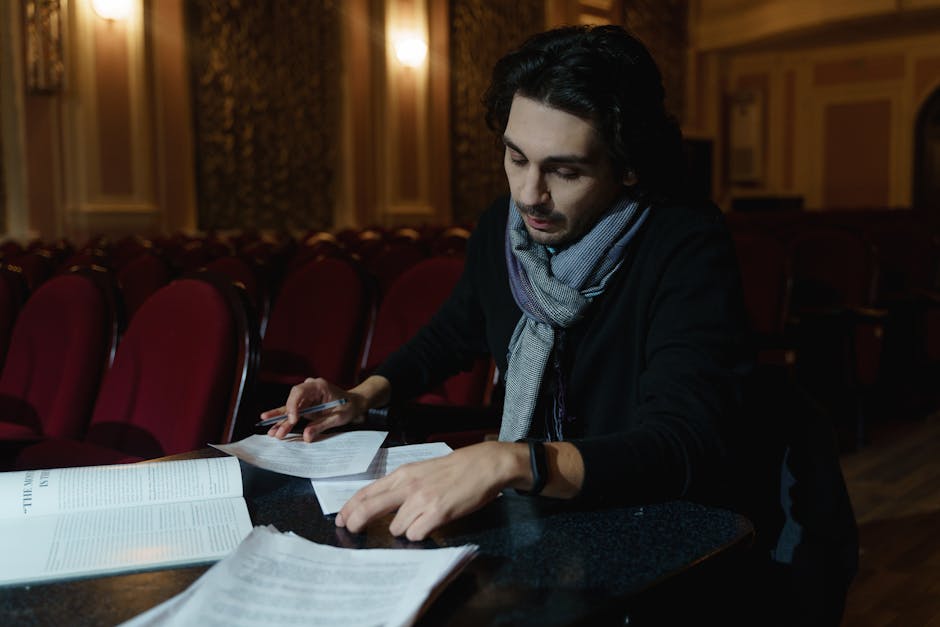
The Core Qualities of an Effective Moderator
Think of yourself not as the star, but as the ultimate host. Your job is to help everyone else shine while ensuring the audience has an amazing experience. The best moderators embody several key qualities: they are servant leaders who make panelists look brilliant, audience advocates who voice the crowd’s curiosities, and expert facilitators with an intuitive sense of pacing. They are also disciplined timekeepers, remain calm under pressure, and maintain an unbiased stance. Above all, genuine curiosity fuels the best questions and follow-ups, as it shows you’re truly listening and engaged. The power of active listening in communication is invaluable here.
How to Prepare for a Flawless Panel Discussion
Strategic over-preparation gives you the confidence to be spontaneous. While you may only ask 5-7 core questions, preparing 30-50 in total is a common practice among top moderators.
- Research Your Panelists: Go beyond their bios. Understand their recent work, unique perspectives, and personal stories to craft questions that feel personal and insightful.
- Understand Your Audience: Are they beginners or experts? Tailor your language and the complexity of your topics to their experience level.
- Define Clear Objectives: Work with the event organizer to determine what attendees should know, feel, or do after the session. This clarity will be your guide.
- Communicate with Panelists: A few brief, purposeful touchpoints before the event build rapport without over-rehearsing. Share the format, objectives, and general flow.
- Create a Question Framework: Develop 5-7 core, open-ended questions that tap into panelist expertise. Have a backup list of 10-15 additional questions ready for any conversational turn.
- Prepare Compelling Introductions: A strong hook captures immediate attention. Keep panelist intros brief—just 3-5 sentences on what they do and why they’re relevant to the topic. Learn how to hook an audience with a compelling introduction to master this moment.
Structuring the Flow for Maximum Impact
A great panel feels effortless, but that naturalness comes from a deliberate structure designed to guide the audience from curiosity to action.
- The Opening: Start with a strong hook. You might use a soft icebreaker, a provocative question to spark debate, or a poll to gauge the room’s experience.
- The Discussion Body: Structure your questions to move from broad, strategic topics to specific, tactical applications. This progression helps the audience build understanding layer by layer.
- Audience Q&A: Allocate at least 15-20 minutes for audience questions. Instead of saving them all for the end, consider weaving them throughout the discussion to keep attendees engaged.
- The Closing: End with a powerful summary. Ask each panelist for their single key takeaway or most important piece of advice. This provides a clear, memorable conclusion.
The Ultimate List of Moderator Questions for a Panel Discussion
Crafting the perfect questions transforms a simple Q&A into a riveting conversation. The best moderator questions panel discussion success comes from asking questions that people genuinely want to hear answered. Great questions are open-ended, specific enough to avoid generic responses, and designed to leverage your panelists’ unique expertise for the audience’s benefit.
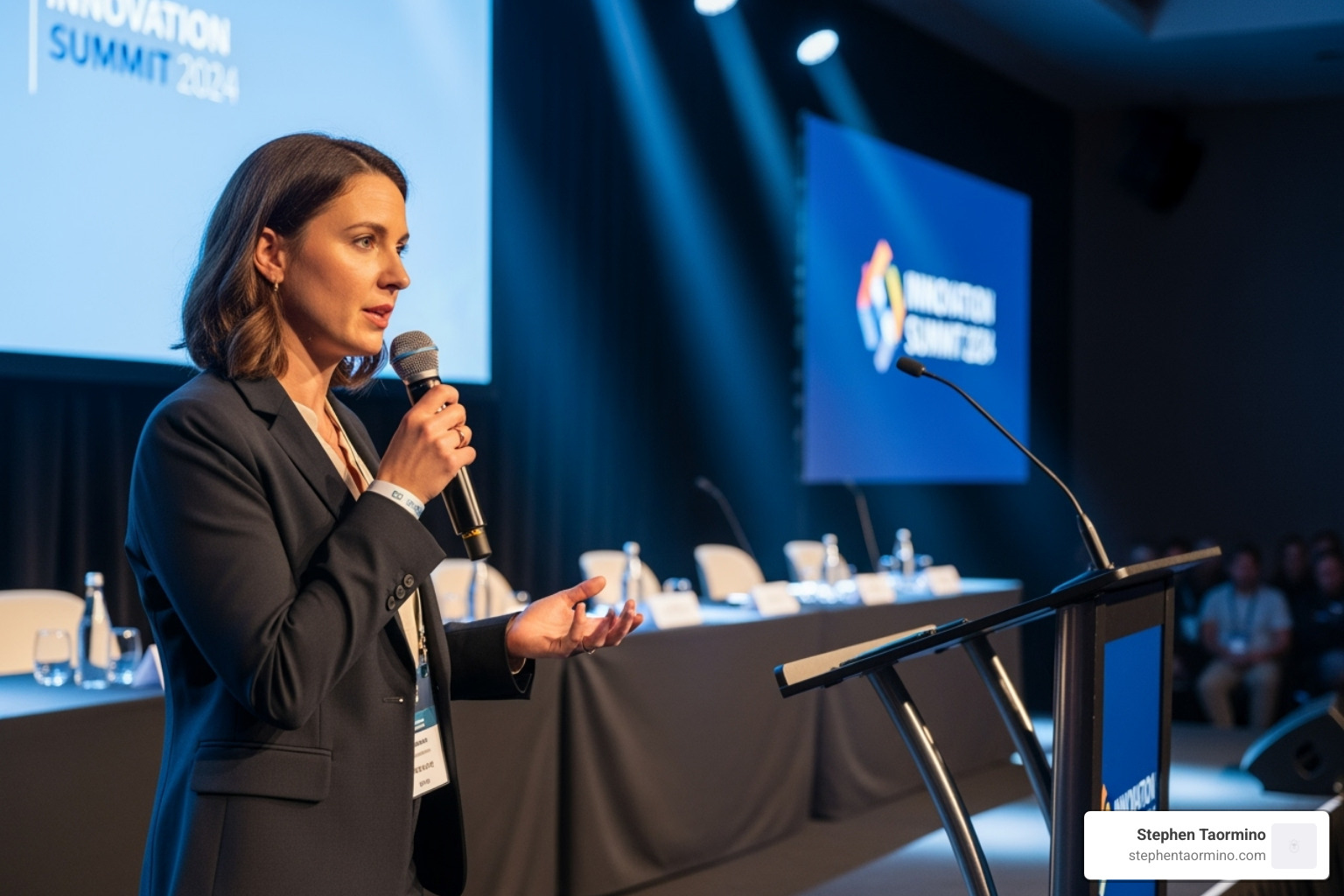
Here are questions organized into five strategic categories. Think of them as your toolkit—you won’t use every one, but having them ready prepares you for any conversational direction.
Category 1: Icebreakers and Opening Questions
Your opening question sets the tone. Make it personal enough to be interesting but professional enough to establish credibility. These questions let the audience see panelists as real people.
- “What drew you to this industry or area of expertise?”
- “Can you share a defining moment in your career that shaped your current perspective?”
- “What’s one common myth about your field you’d love to debunk?”
Category 2: Deep Dive and Topic-Specific Questions
Once warmed up, dig into the core topic. These questions should translate your panelists’ hard-won experience into practical wisdom for the audience.
- “What’s the biggest challenge professionals in this industry face right now?”
- “Can you share a real-world example of a strategy that worked—or didn’t—in your experience?”
- “What’s an underrated strategy or trend that more people should be paying attention to?”
- “How do you measure success in this area, and what metrics matter most?”
Category 3: Provocative and Debate-Driven Questions
Provocative questions create memorable moments by sparking healthy debate, not uncomfortable confrontation. Use them when the conversation has good momentum.
- “What’s a widely accepted best practice that you think is actually ineffective?”
- “What’s an overrated trend in this industry that’s getting too much attention?”
- “Is new technology like AI improving this industry, or are we losing something valuable in the process?”
Category 4: Future-Focused and Forward-Looking Questions
These questions position your panelists as thought leaders and give your audience a competitive edge by helping them prepare for what’s next.
- “What’s the biggest shift you expect to see in this industry over the next five years?”
- “What skills will professionals need to develop to stay competitive in the future?”
- “If you had unlimited resources, what’s the first problem you would solve in this industry?”
Category 5: Closing and Action-Oriented Questions
Your closing questions should crystallize the conversation into something actionable and memorable. They provide the final gift to your audience.
- “If the audience remembers just one thing from this panel, what should it be?”
- “What’s one action item attendees can apply immediately after this event?”
- “Where can people follow your work or connect with you after today?”
The principles of behavioral science that drive effective marketing also drive effective panel discussions—both rely on understanding what motivates people. You can explore more about using behavioral science in communication. These questions are a starting point, not a script. The best moments often come from the follow-up questions you ask based on what panelists actually say.
Advanced Moderation: Navigating Challenges and Engaging Everyone
Even with the best moderator questions panel discussion preparation, the real art of moderation is adapting in the moment. Great moderators are nimble facilitators, ready to handle any situation while keeping the conversation productive and inclusive.

Ensuring Equal Airtime: Managing Dominant and Quiet Panelists
A balanced conversation is crucial. It’s your job to ensure every expert gets a chance to contribute their unique perspective.
- To engage quiet panelists, watch for non-verbal cues like nodding or leaning in. Invite them directly into the conversation: “Sarah, I see you nodding along—what are your thoughts on this point?” or “Mike, your background is so relevant here. What’s your perspective?”
- To manage talkative speakers, wait for a natural pause and transition smoothly. Acknowledge their point and redirect: “That’s a fascinating point, Jennifer. I want to make sure we hear from everyone. David, how does this resonate with your experience?” If time is short, be direct but kind: “In the interest of time, let’s move to David for his thoughts.”
- Use non-verbal cues like eye contact and gestures to signal whose turn it is to speak. These silent cues are often more effective than words.
Crafting Compelling Moderator Questions for a Panel Discussion on the Fly
While prepared questions provide the backbone, spontaneous follow-ups create the most memorable moments. This is where active listening pays off.
- Dig deeper when a panelist says something intriguing. Don’t just move on. Ask, “Can you elaborate on that?” or “What are the practical implications of that finding?”
- Braid panelist language to create a seamless flow. If one panelist mentions “digital fatigue,” weave it into your next question for another panelist. This makes the conversation feel organic and interconnected.
- Push past generic responses by asking for specifics. “Can you give us a real-world example of that?” or “Tell us about a time you saw that principle in action.” Stories and examples resonate far more than abstract concepts.
Encouraging and Managing Audience Engagement
Treat your audience as the “fourth panelist.” Their participation transforms a one-way presentation into a dynamic conversation.
- Use digital tools like live polls to gauge the room’s experience or Q&A platforms to organize questions and allow upvoting. This is especially useful for large audiences.
- Prime the pump early. Announce at the start that you’ll be taking audience questions throughout the session. You might even begin by asking the audience to share their biggest challenge in the chat.
- Acknowledge contributors by name when possible (“Great question from Maria in the chat…”) to reinforce that their input is shaping the discussion.
- Choose the right tool for the job. Live polls offer instant feedback, digital Q&A tools are efficient, passing a microphone creates personal connection, and chat enables broad participation. Match the method to your event’s format and goals.
Handling Challenging Moderator Questions for a Panel Discussion from the Audience
When an audience question is off-topic, loaded, or aggressive, your role is to be a diplomatic shield.
- Stay neutral and maintain calm, professional body language.
- Reframe off-topic questions by finding a kernel of relevance. “That’s an interesting point. How might that influence the strategies we’ve been discussing today?”
- Acknowledge and redirect loaded questions without engaging the premise. “Thank you for that perspective. We’re focusing on practical implementation today, so let’s bring it back to that.”
- Protect your panelists from inappropriate questions. Step in decisively: “That’s a very specific situation, and perhaps something to discuss directly with the panelist during the networking break.”
- Use a polite “parking lot” phrase for irrelevant queries: “That’s a great question, but it falls a bit outside today’s scope. I encourage you to connect with our panelists afterward.”
Frequently Asked Questions about Moderating a Panel
Even seasoned moderators have questions. Here are concise answers to the most common inquiries we receive, based on years of experience on stages around the world.
How many questions should a moderator prepare for a panel discussion?
Always prepare more than you think you’ll need. For a typical 45-60 minute panel, have 5-7 core, well-researched questions that form the backbone of your discussion. These should align with your key objectives.
In addition, prepare a backup list of 10-15 additional questions. This is your insurance policy against brief answers, unexpected lulls, or conversational detours. This deep preparation gives you the flexibility to adapt to the natural flow of the discussion and explore interesting tangents without losing momentum.
How do you ensure a panel discussion stays on time?
Effective time management is a non-negotiable skill for a moderator. Start by communicating expectations clearly with panelists beforehand, including the total time and target response length (e.g., 2-3 minutes).
During the panel, keep time visible for yourself, either with a clock in the room or a timer on your screen. Don’t be afraid to be firm but graceful when guiding the conversation. A simple, “That’s a great insight, and in the interest of time, let’s move to our next point,” is usually appreciated. Finally, create a mental roadmap with rough time allocations for introductions, the main discussion, audience Q&A, and the closing to help you stay on track.
What is the biggest mistake a panel moderator can make?
The most common and damaging mistake is a two-part failure: trying to be the star of the show and being underprepared.
- Mistake 1: Making it about you. The audience is there to hear from the expert panelists, not the moderator. When moderators dominate the conversation, answer their own questions, or use the platform to showcase their own knowledge, they fail in their primary role. Your job is to make the panelists shine.
- Mistake 2: Being underprepared. Assuming you can “wing it” is a recipe for disaster. It leads to generic questions, awkward silences, and a discussion that wanders aimlessly. Thorough research and a thoughtful question strategy are essential. Preparation is what enables you to be spontaneous and confident, guiding a conversation that truly delivers value.
Conclusion: Leading a Conversation That Matters
A successful panel discussion depends on the moderator’s ability to ask insightful moderator questions panel discussion style and guide a dynamic conversation. By preparing thoroughly, structuring the discussion thoughtfully, and staying agile, you create an experience that resonates with your audience long after the event ends.

Your role as a moderator is to serve as a bridge—between expert knowledge and audience curiosity, between differing perspectives on stage, and between abstract ideas and actionable insights. The best panels aren’t just informative; they’re transformative. They spark new ideas, challenge assumptions, and create “aha!” moments.
My work in marketing psychology has shown me that the best leaders—and moderators—know how to connect with people on a deeper level. They understand that behind every professional challenge is a human story. When you moderate with genuine curiosity and a servant-leader mindset, you’re not just facilitating a discussion; you’re fostering meaningful dialogue.
The stage is yours. The questions are ready. Now it’s time to lead a conversation that truly matters.
Want to dive deeper into communication and leadership strategies? Watch our videos on expert communication and leadership strategies.