
Moderator in a panel discussion: 8 Essential Roles
The Linchpin of a Great Discussion
A moderator in a panel discussion is the crucial bridge between expert insights and audience understanding, changing what could be a chaotic conversation into a structured, engaging experience that delivers real value.
Key responsibilities of a panel moderator include:
- Champion for the Audience – Ensuring discussions remain relevant and valuable
- Facilitator – Managing conversation flow and participant engagement
- Timekeeper – Maintaining schedule and pacing throughout the session
- Logistician – Coordinating technical aspects and smooth operations
- Instigator – Asking probing questions that spark meaningful dialogue
- Content Coordinator – Preventing redundancy and ensuring diverse perspectives
- Energizer – Maintaining audience engagement and discussion momentum
- Neutral & Objective – Remaining impartial while guiding the conversation
The difference between a panel that crackles with energy and one where the audience is checking iPhones by the fifteen-minute mark often comes down to one person: the moderator. Research shows that everything depends on the moderator’s ability to serve the audience, set the tone, and keep conversations both lively and focused.
Yet many professionals find themselves thrust into this role with little guidance beyond “ask good questions.” The reality is that effective moderation requires specific skills in preparation, facilitation, and audience psychology.
I’m Steve Taormino. With over 25 years in strategic communications and marketing psychology, I’ve seen how the right moderator in a panel discussion can lift both the panelists’ expertise and the audience’s experience. My work has shown me that great moderation is both an art and a learnable skill.
Handy moderator in a panel discussion terms:
- best practices for moderating a panel discussion
- how to moderate a panel discussion
- questions to ask when moderating a panel
- event-planning guide for speakers
Need more? Explore our library of resources on speaking engagements to deepen your facilitation skills.
Before the Curtain Rises: The Foundation of Flawless Moderation
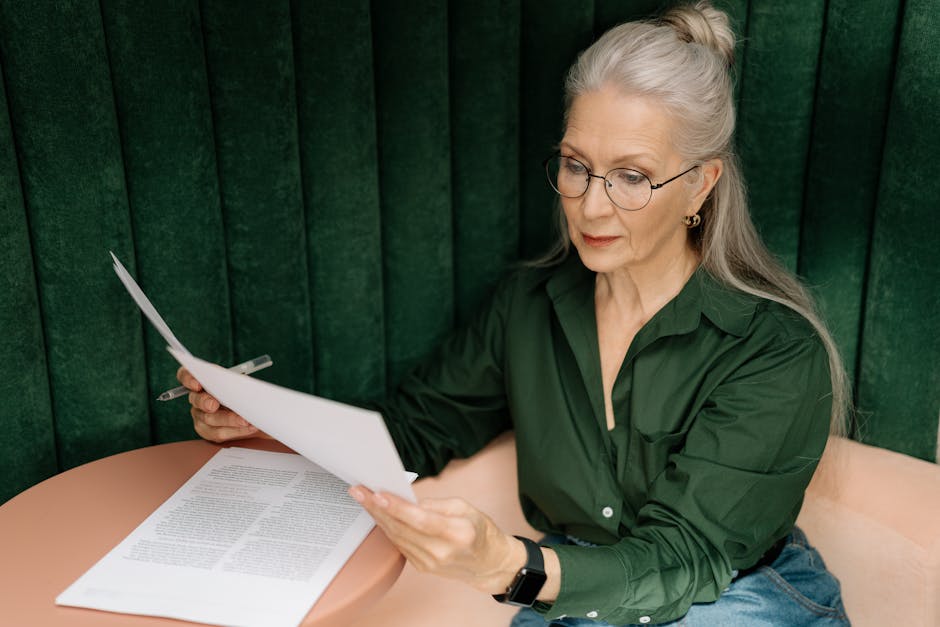
The best panel discussions feel effortless, but that magic is the result of meticulous preparation. Like a master chef prepping ingredients, a skilled moderator in a panel discussion invests significant time researching, planning, and coordinating to create what appears effortless to the audience.
Pre-Event Prep: The Foundation for a Successful Moderator in a Panel Discussion
Your journey begins with genuine curiosity. You don’t need to be the world’s leading expert, but you must understand the fundamentals and why the topic matters to your audience.
-
Topic research means diving deep into recent developments, trends, and common questions. This research helps you spot the gaps between what experts typically discuss and what your audience wants to know.
-
Panelist research is about understanding each panelist’s unique expertise and perspective. Study their backgrounds and recent work to understand how their different viewpoints can create a rich discussion and help you craft questions that showcase their complementary strengths.
-
Audience analysis is crucial. Understand your audience’s level of expertise, their challenges, and their goals. This knowledge should shape every aspect of your panel, from the questions you ask to the depth of the discussion.
-
Defining clear objectives keeps everyone aligned. Work with event organizers to establish what success looks like. Are you aiming to educate, inspire, or solve specific problems? These objectives become your North Star.
-
Creating a detailed run-of-show provides an actionable structure. Create a precise roadmap with realistic timeframes for introductions, discussion points, and audience Q&A. Allocating specific time limits for responses keeps the discussion focused.
-
When preparing questions, focus on open-ended inquiries that invite storytelling. Aim for 8-10 core questions, ranked by importance, with at least one custom question for each panelist.
For optimal dynamics, I recommend the “fabulous four” approach: four expert panelists plus the moderator. This size allows for diverse viewpoints while keeping the conversation manageable. Plan for 45-60 minutes total. Most importantly, seek panelists who bring different perspectives—healthy disagreement often sparks the most engaging discussions.
Coordinating with Your Panelists
Once your research is complete, build relationships with your panelists. Schedule a pre-event call a week or two before the discussion to establish rapport and ensure smooth collaboration.
During the call, confirm logistics: name pronunciations, current titles, and areas of expertise. Share the detailed agenda and time expectations so everyone understands the flow and pacing.
Setting clear expectations helps prevent surprises. Gently discourage prepared speeches or PowerPoint presentations; you want authentic conversation, not mini-lectures. Instead, encourage panelists to prepare anecdotes and real-world examples.
It’s also wise to discuss any off-limit topics to help you steer the conversation sensitively. Consider a brief rehearsal (15-20 minutes) to build chemistry and align expectations.
Your role is to make panelists feel confident, informed, and excited. When they trust you and understand the vision, they become true partners in creating an exceptional audience experience.
The Art of Execution: What a Moderator in a Panel Discussion Actually Does
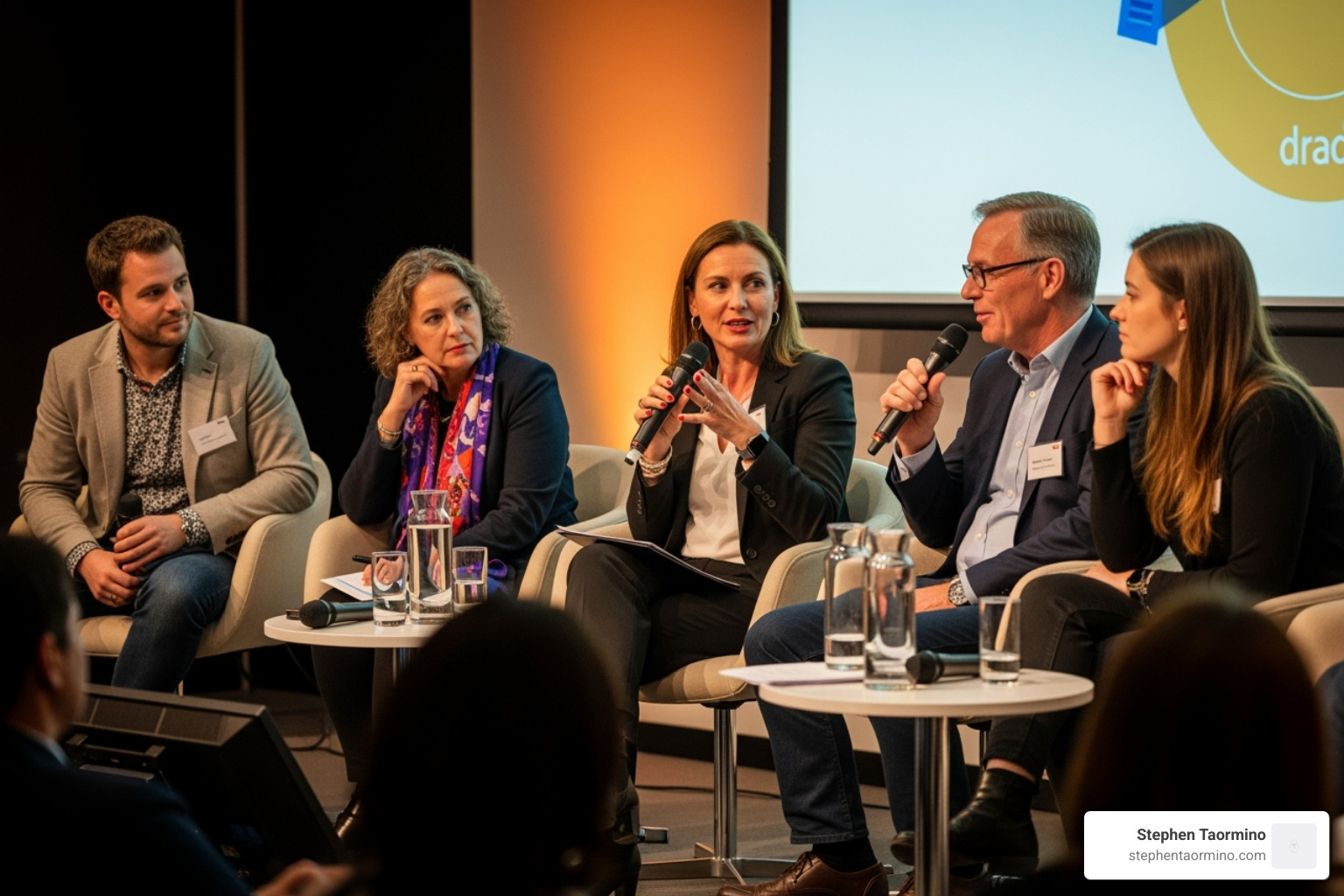
All your preparation culminates on stage. As the moderator in a panel discussion, you shift from orchestrator to conductor. Skilled moderation appears effortless, but it’s a mental juggling act: tracking time, reading body language, and listening for opportunities to dig deeper or redirect.
Kicking Off with Impact: Introductions and Opening Remarks
The first few minutes are critical. Hook your audience immediately with a surprising statistic, a provocative question, or a brief story that illustrates why the discussion matters. When introducing panelists, don’t just read their bios. Answer the audience’s unspoken question: “Why should I care what this person thinks?” Highlight why their insights are relevant to this specific conversation. A small, humanizing detail can also make panelists more relatable.
Mastering the Flow: Essential Techniques for a Moderator in a Panel Discussion
Great moderation feels like a natural conversation, but it’s a carefully orchestrated dance. Here are key techniques:
- Active listening is your superpower. Catch intriguing but undeveloped points and use them to fuel follow-up questions, turning surface-level answers into genuine insights.
- Weave conversation threads together. Connect a point from one panelist to another’s experience to help the audience see broader patterns.
- Ensure balanced participation. Gently guide the conversation by directing questions to quieter members or creating space by saying, “That’s a fascinating point. Before we go deeper, let’s hear from others.”
- Use your body language. Leaning forward shows engagement, while a gentle hand gesture can redirect the flow without interruption.
- Gracefully redirect. When responses get long-winded or off-topic, acknowledge the point, then steer the conversation back on track while maintaining a warm tone.
Engaging the Audience: Beyond the Q&A
Great panels create a dialogue with the audience, not a lecture. Instead of saving Q&A for the end, integrate it throughout to keep energy high. Use polling tools for instant feedback and to make the audience active participants. For live questions, ensure smooth logistics with roving mics (in person) or a Q&A platform online. Always repeat audience questions clearly before directing them to a panelist.
Wrapping Up: How to End on a High Note
In the final minutes, shift to synthesizer. Summarize key takeaways, highlighting the most important themes and actionable advice. Give each panelist a final spotlight moment, asking for the one thing they want the audience to remember. Provide a specific, achievable call to action. Finally, genuinely thank the panelists, audience, and organizers, and share any follow-up resources. The goal is to send the audience away feeling energized and equipped.
Navigating Challenges: How to Handle Difficult Situations
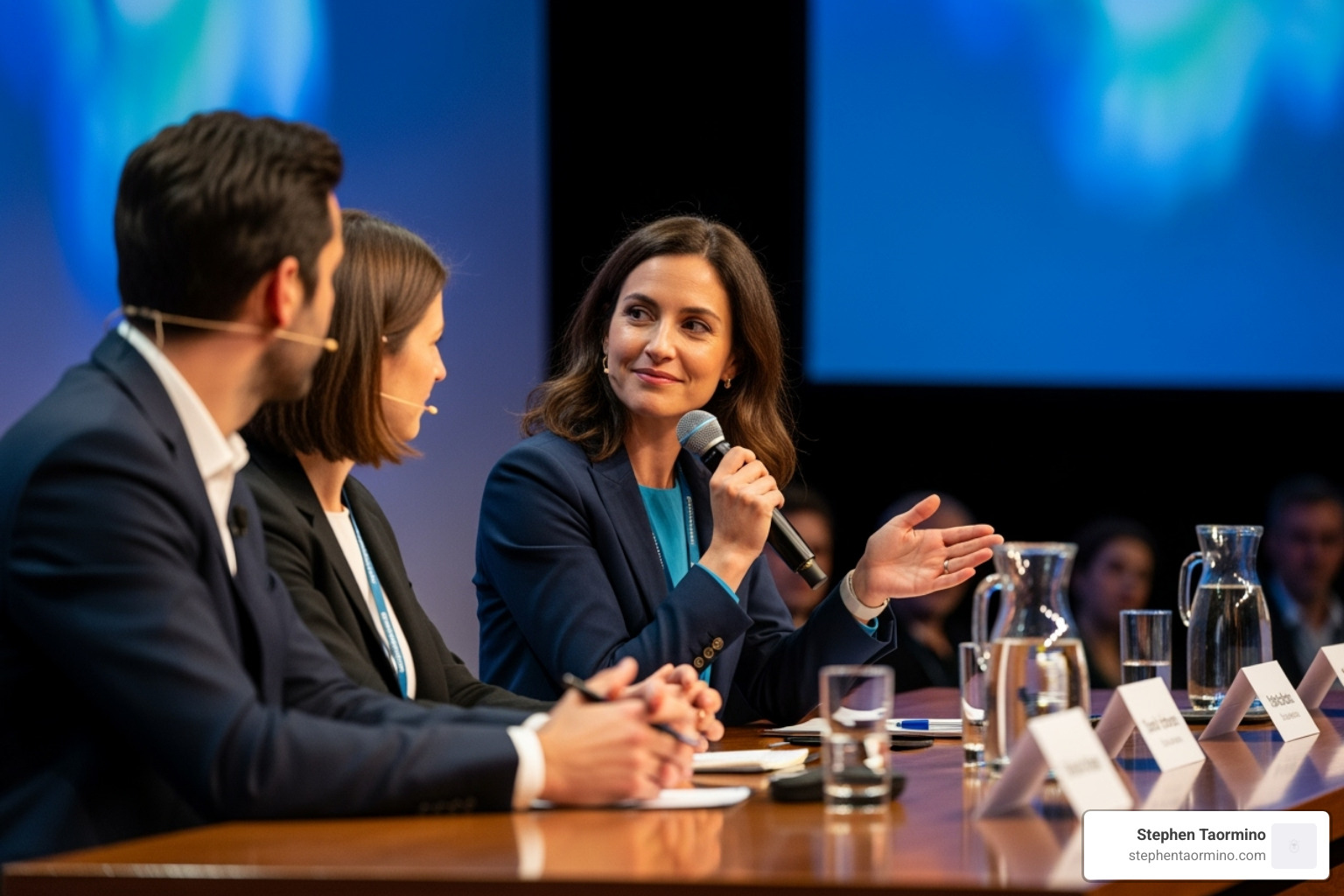
Even the best-planned panels can have unexpected challenges. A skilled moderator in a panel discussion handles these moments with grace and composure. The key is to stay calm, think quickly, and always prioritize the audience’s experience.
Managing Difficult Panelists
- The Dominant Panelist: To manage someone monopolizing the conversation, redirect without causing embarrassment. Acknowledge their contribution, then pivot: “Thank you, Sarah, for that perspective. Michael, I’d love to hear your take on this.”
- The Quiet Panelist: For a quiet expert, watch for non-verbal cues like a nod or lean forward. Use these as an invitation: “James, I noticed you nodding. What’s your take on this, especially given your work in the nonprofit sector?”
- The Tangent Specialist: When a panelist goes off-topic, redirect tactfully: “That’s a fascinating connection. For now, let’s bring this back to how these trends are affecting small businesses.”
- The Stumped Panelist: If a panelist can’t answer, stay calm. A moment of silence might just be deep thought. If needed, reframe the question, gently redirect it to another panelist, or even pose it to the audience. The goal is to maintain flow while preserving everyone’s dignity.
Common Mistakes to Avoid
- Losing neutrality. Avoid showing favoritism through words or body language. Your role is to guide, not to judge the content.
- Talking too much. You’re the conductor, not the orchestra. Your words should primarily be questions, transitions, and clarifications.
- Poor time management. Stick to your run-of-show to ensure all topics are covered and there’s time for audience Q&A.
- Reading questions verbatim. Use your notes as a guide, not a script, to keep the conversation feeling natural and organic.
- A Q&A free-for-all. Politely interrupt rambling audience members to clarify their question and keep the session on track.
- Failing to connect with the audience. Every question and transition should serve the people who came to listen.
Successfully navigating challenges often creates the most memorable moments. Handling difficult situations with skill demonstrates thoughtful leadership and makes the discussion unforgettable.
Frequently Asked Questions about Moderating a Panel
Panel moderation can feel overwhelming, especially for first-timers. Here are answers to the most common questions I receive from professionals stepping into this role.
What is the single most important responsibility of a panel moderator?
Your single most important responsibility as a moderator in a panel discussion is to serve the audience. Not the panelists or organizers, but the people who invested their time to be there. Every decision—from the questions you ask to how you manage time—should flow from this principle: “How does this create value for my audience?” When you truly champion the audience, everything else falls into place.
How many questions should a moderator prepare in advance?
Aim for eight to ten core questions for a typical 45-60 minute panel. Here’s how to approach it:
- Rank them by importance to ensure you cover the most critical topics.
- Prepare at least one custom question for each panelist to highlight their unique expertise.
- Have backup questions ready in case the discussion moves quickly.
- Focus on open-ended questions (starting with “How,” “Why,” or “What if”) to spark discussion, not yes/no answers.
How do you keep a virtual panel discussion engaging?
Virtual panels require extra energy to break through the screen barrier. Here’s how to keep your audience engaged:
- Bring more energy. Your enthusiasm, facial expressions, and vocal variety are crucial for connection.
- Prioritize technical quality. Crystal-clear audio is non-negotiable. Ensure panelists have stable internet and good microphones.
- Use interactive features. Leverage live polls, chat, and Q&A platforms to transform passive viewers into active participants.
- Use visual aids sparingly. A well-timed chart can help, but avoid slide-heavy presentations that feel like a lecture.
The key is to create frequent engagement touchpoints to hold the audience’s attention. By applying principles from behavioral economics, you can design an engaging virtual experience that rivals an in-person event.
Conclusion: From Moderator to Master Facilitator
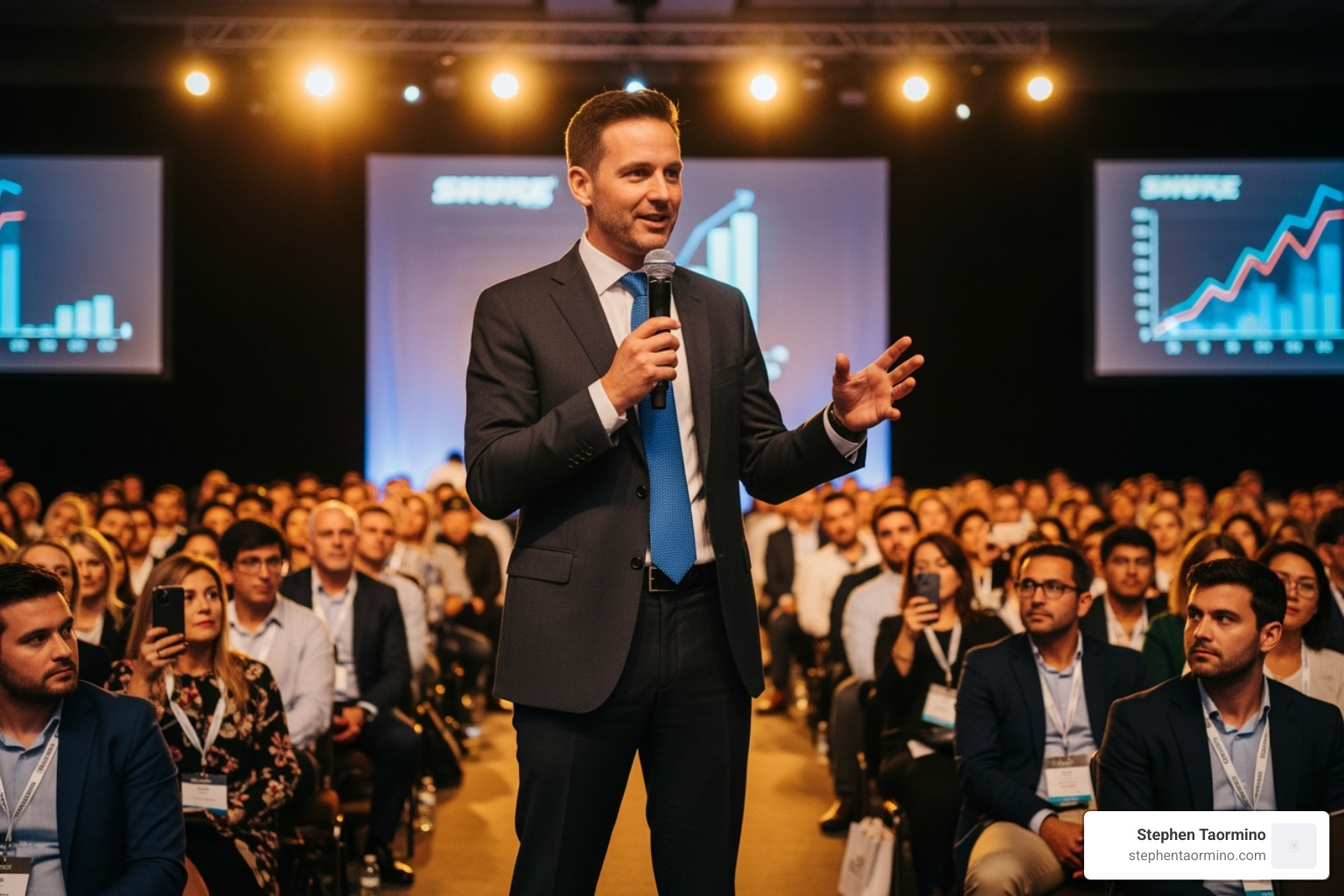
The journey from nervous question-asker to confident moderator in a panel discussion is one of the most rewarding in professional communication. When we master facilitation, we become the bridge that connects expert insights with audience needs and the catalyst that turns ordinary discussions into extraordinary experiences.
We’ve seen that exceptional moderation rests on three pillars: meticulous preparation to build a solid foundation; skillful execution to guide the live conversation; and the composure to turn challenges into opportunities for deeper engagement.
The skills of a great moderator—understanding audience motivation, reading nonverbal cues, and creating compelling narratives—are rooted in marketing psychology and are invaluable in any leadership role. This expertise in human connection and authentic communication transforms how you show up in every professional interaction, helping you to facilitate meaningful change.
Ready to take your communication skills to the next level? Watch our videos for more public speaking and marketing insights that will help you become not just a better moderator, but a more impactful leader who can facilitate meaningful conversations wherever your career takes you.