
Why Knowing How to Moderate a Panel Can Make or Break Your Event
Knowing how to moderate panel discussions is one of the most valuable skills a leader or executive can develop — and most people underestimate how much preparation it actually takes.
Here is a quick overview of the core steps:
- Prepare thoroughly — Research the topic, know your panelists, and prepare 6-8 questions in advance
- Serve the audience first — Your job is to engage and enlighten attendees, not to satisfy panelist agendas
- Craft strong questions — Use open-ended, specific questions rather than broad or yes/no prompts
- Manage time and balance — Give every panelist equal airtime and keep the discussion moving
- Handle Q&A well — Reserve at least 25% of total panel time for audience questions
- Close with purpose — Summarize key themes, end on an actionable note, and thank everyone clearly
Panel discussions are a staple at conferences and events — but whether they’re memorable or forgettable almost always comes down to one person: the moderator.
A great moderator does not just ask questions down a list. They read the room, balance competing voices, keep time without being robotic, and make sure the audience walks away with real value. A weak moderator lets the session drift, lets one panelist dominate, and leaves attendees wondering why they showed up.
The good news? This is a learnable skill — not a personality trait reserved for extroverts or natural performers.
I’m Steve Taormino, President & CEO of CC&A Strategic Media and a professional speaker with deep expertise in communication strategy, leadership development, and marketing psychology — all of which directly inform how to moderate a panel discussion that actually moves an audience. In the guide below, I’ll walk you through every stage of the process, from preparation to closing remarks, so you can step onto that stage with clarity and confidence.
How to moderate panel word roundup:
How to Moderate Panel: The Core Role
To truly understand how to moderate panel discussions, we must first redefine what a moderator actually does. Many people assume a moderator is simply a human timekeeper who reads speaker biographies and passes a microphone around. In reality, the moderator is the director of a live, unscripted conversation.
Our primary objective as a moderator is to engage and enlighten the audience. We are not there to show off our own expertise, nor are we there to help the panelists pitch their products or satisfy their personal egos. We are the ultimate advocate for the audience.
Every decision we make — from the questions we ask to the way we manage the clock — must serve the audience’s interests. If a panelist begins steering the discussion toward a self-serving sales pitch, it is our responsibility to gently but firmly steer them back to delivering genuine value. For a deeper look at establishing this dynamic, you can read our Ultimate Panel Moderator Guide.
According to the comprehensive How to Moderate a Panel Discussion: Step-by-Step Guide, the moderator must remain strictly neutral throughout the session. This means facilitating a balanced flow of ideas rather than participating as an active debater. Our job is to manage the group dynamics, ensuring that no single voice dominates the stage and that contrasting viewpoints are explored in a constructive, respectful manner.
Setting the Stage as an Audience Advocate
To act as an effective advocate, we must understand exactly why the audience is sitting in those seats. What pain points are they hoping to solve? What industry trends are they trying to make sense of?
Before the session begins, we should clearly define our session goals. When we open the panel, we must immediately articulate these goals to the audience, framing the upcoming conversation around the specific value they will receive. By setting this expectation early, we establish a shared purpose for the session. You can learn more about how to set this tone from the very first minute in our guide on How to Start a Panel Discussion as a Moderator.
Avoiding Common Moderator Pitfalls
One of the most common mistakes new moderators make is falling into a “robotic delivery.” This happens when we treat our list of prepared questions like a rigid checklist. We ask Question 1, a panelist answers, and instead of reacting to their response, we immediately jump to Question 2. This destroys the natural flow of conversation and makes the panel feel like a series of isolated interviews rather than a dynamic discussion.
Over-rehearsing is another dangerous trap. While preparation is essential, scripting every single transition can make the session feel stale. Good panels have tension, quirks, and surprises that cannot be fully scripted.
Additionally, we must avoid taking sides or validating certain answers over others. A subtle trap is responding to a panelist’s answer with “good point” or “well said.” While this feels polite, it implicitly suggests that other panelists’ points may be less valuable. Instead, we should remain neutral, using transitions that bridge different perspectives without passing judgment. For more on avoiding these behaviors, explore our Best Practices for Moderating a Panel Discussion.
Step-by-Step Preparation and Panelist Research
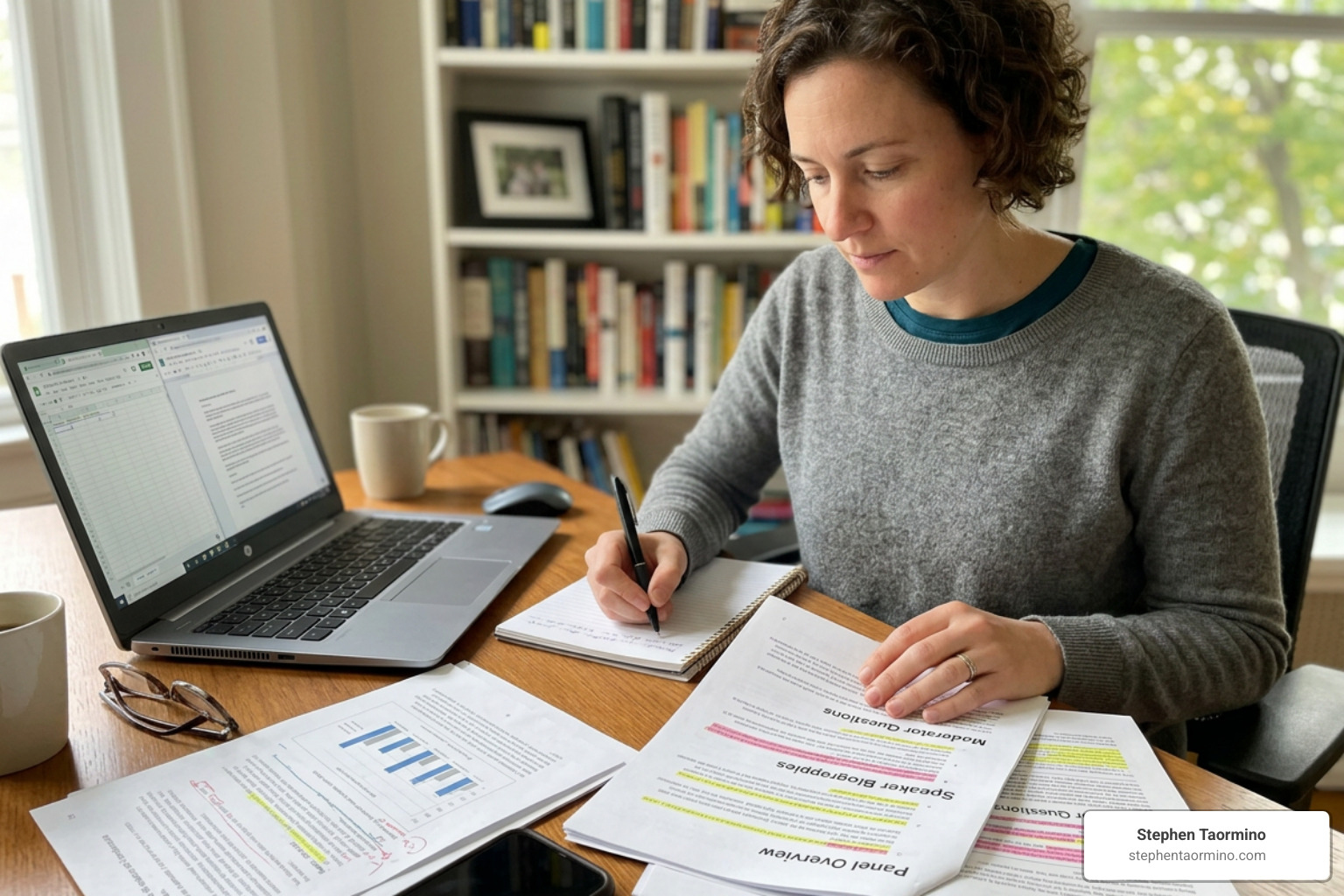
A successful panel discussion may look spontaneous and effortless on stage, but that ease is always the result of rigorous preparation. As moderators, we must build a solid foundation of knowledge before we ever step in front of an audience.
First, we need to master the topic fundamentals and stay up-to-date on recent industry developments. We do not need to be the leading expert on the stage, but we must understand the language, current debates, and core challenges surrounding the subject. This baseline knowledge allows us to ask intelligent follow-up questions and spot when a panelist is sharing something truly groundbreaking.
Our preparation process should always include creating a detailed checklist. We highly recommend reviewing our Ready, Set, Panel: Your Ultimate Preparation Checklist to make sure no technical or content details slip through the cracks.
Part of this preparation involves sending our speakers a panelist briefing pack. This document outlines the event’s theme, the primary audience demographics, the logistics, and the broad topics we plan to cover. Following the briefing pack, we should schedule a brief preparation call with all panelists. This call is not for rehearsing the actual answers — which can make the live session feel rehearsed and flat — but rather for building rapport, aligning on the session’s direction, and identifying areas where the panelists naturally hold differing, exciting perspectives.
Crafting the Perfect Panelist Introductions
Long, dry introductions where the moderator reads multi-paragraph biographies word-for-word are an absolute energy killer. By the time the third biography is read, the audience has often checked out. Furthermore, asking panelists to introduce themselves is a massive risk; they will frequently take too much time, hand over control of the schedule, and dive into a lengthy history of their company.
Instead, we should take charge of the introductions ourselves, keeping them to two concise sentences per person. Focus on who they are, what they do, and why their unique perspective matters to this specific topic.
To ensure a professional and smooth delivery, we must verify the phonetic pronunciation of every panelist’s name beforehand. For example, if you are introducing a panelist named Saoirse, write “SUR-sha” in large, bold letters on your notes. Managing these early moments effectively keeps the control of the stage firmly in your hands. For practical templates on opening scripts, consult our Moderator Speech Panel Discussion Guide 2026.
Designing High-Impact Questions
The quality of a panel discussion is directly tied to the quality of the questions asked. We should design open-ended, thoughtful, and highly specific questions that prompt stories and lived experiences rather than simple “yes” or “no” answers.
A great strategy is to use a three-tier question structure:
- The Icebreaker / Broad Opening: A simple, high-level question to warm up the panelists and establish the core theme.
- The Targeted Discussion: Specific questions tailored to individual panelists based on their unique expertise.
- The Lightning Round: A , high-energy question where each panelist must provide a brief, actionable takeaway.
To keep the conversation fresh, we should prepare 6-8 questions but aim to use only 4-5 during the live session. This gives us the flexibility to let natural conversations develop without feeling rushed. When delivering these questions, we should contextualize them to make them feel spontaneous. Instead of reading from a card, try framing them naturally: “I’ve heard that industry trends are shifting toward automation. Sam, here’s one for you: how is your team handling this shift?”
For a deeper dive into crafting these prompts, refer to our guide on Questions to Ask When Moderating a Panel and check out the templates available in How to Moderate a Panel Discussion: Script, Template, Examples + Guide.
Mastering Time Management and Flow Control
Keeping a panel on schedule is one of the trickiest parts of learning how to moderate a panel. When you have multiple expert speakers on stage, each passionate about the topic, time can slip away incredibly fast.
To maintain control, we must design a clear timing structure and share it with our panelists before the session starts. Let’s look at how we should structure our time for standard panel formats:
| Panel Segment | 45-Minute Virtual Panel | 60-Minute In-Person Panel |
|---|---|---|
| Intro & Topic Setup | 3 Minutes | 5 Minutes |
| Opening Remarks / Warm-up | 7 Minutes | 10 Minutes |
| Moderator-Led Discussion | 20 Minutes | 25 Minutes |
| Audience Q&A | 12 Minutes | 15 Minutes |
| Closing Action Items & Wrap-up | 3 Minutes | 5 Minutes |
According to data from Keeping panel discussions on time as a moderator | EventTimer, using a visible countdown timer keeps panels on schedule 80% more effectively than relying on silent mental tracking or subtle hand gestures. Having a physical timer visible to both the moderator and the panelists depersonalizes time management; speakers can see exactly how much time is left in the segment, making them much more cooperative when we need to transition.
To help map out your transitions and timing cues, we recommend drafting a flexible script using our Panel Discussion Script Guide.
How to Moderate Panel Q&A Sessions
Audience engagement is the lifeblood of a successful panel. Industry research shows that panels that allocate at least 25% of their total time to audience Q&A are significantly more engaging for attendees. For a standard 60-minute panel, this means reserving a full 15 minutes for questions.
To make the most of this time, we must establish clear ground rules. When opening the floor, ask audience members to keep their questions to a single sentence and ensure they end with a question mark, rather than turning their turn at the microphone into a personal speech.
If audience questions temporarily dry up, we should be prepared with our own backup questions to keep the momentum going. If an audience member tries to hijack the session with a long-winded statement, we must step in politely but firmly: “Thank you for sharing that context. What is your specific question for our panelists?” For more techniques on managing audience-driven segments, see our Moderator Questions Panel Discussion Guide.
Managing Long-Winded Speakers Tactfully
Every moderator eventually encounters a panelist who talks too long, taking up valuable airtime that should be shared among the group. Part of our Skills for Facilitators training involves learning how to interrupt these speakers gracefully without causing awkwardness on stage.
The secret is to use appreciative, forward-moving language. Wait for the speaker to take a breath, and then step in:
“That is a fascinating point about digital transformation, [Panelist Name]. I want to make sure we bring in [Other Panelist]’s perspective on how this applies to smaller businesses.”
We can also establish pre-agreed physical signals during our prep calls, such as a subtle hand gesture or a nod, to let a panelist know they need to wrap up their point. This keeps the conversation balanced and ensures every voice on stage is heard.
Adapting to Different Formats: Virtual vs. In-Person

As virtual and hybrid events have become standard, a modern moderator must be equally comfortable leading discussions online and on a physical stage. While the core goals remain the same, the execution differs significantly between these two environments.
How to Moderate Panel Discussions Online
Virtual panels require a heightened focus on pacing and technology. Because of screen fatigue and shorter attention spans in digital environments, virtual panels should be kept to a maximum of 45 minutes.
We must also utilize interactive tools to keep the audience from clicking away to other browser tabs. Features like live audience polls, chat-based questions, and real-time upvoting are incredibly effective. Platforms that include interactive elements see much higher engagement rates than traditional Q&A-only formats.
When moderating online, we must also pay close attention to virtual cues. Because we lack physical proximity, we should call on panelists by name to prevent them from speaking over one another: “Let’s start with Sarah on this, followed by David.” For more tips on managing digital rooms, see How to Moderate a Panel Like a Pro — Angelica Malin – Emcee & Event Moderator and check out our Panel Discussion Moderator Guide 2026.
Optimizing the In-Person Stage Setup
For in-person panels, physical staging has a massive impact on the energy of the room. Avoid placing panelists behind a long, formal table, which acts as a physical barrier between the speakers and the audience.
Instead, opt for comfortable chairs or sofas arranged in a shallow curve. Position yourself as the moderator at one end of this curve. This setup allows you to easily make eye contact with all panelists while keeping the focus on the speakers.
Ensure that every panelist has a dedicated microphone, and run a thorough technical check before the doors open. Having a seamless audio setup allows you to focus entirely on the conversation rather than worrying about technical glitches. To dive deeper into managing physical stage presence, read our guide on the role of a Conference Moderator.
Frequently Asked Questions About Panel Moderation
How many panelists are ideal for a balanced discussion?
A panel with 3-4 panelists provides the best balance of variety and manageability. If you have fewer than three speakers, the session can feel more like a basic interview than a dynamic panel. If you have five or more, it becomes incredibly difficult to give everyone equal airtime, and the discussion can easily descend into chaos.
A diverse group of 3-4 speakers ensures a wide range of perspectives while allowing you to keep the conversation focused. For more advice on managing speaker dynamics, explore Panel Perfection: Your Guide to Speaking Like a Pro.
How do you handle a quiet panelist?
Handling a quiet panelist requires active listening and gentle, deliberate inclusion. If you notice a speaker has been quiet for several minutes, look for physical cues that they want to speak, such as nodding or leaning forward.
Instead of cold-calling them with a difficult question, loop them in naturally by referencing their unique background: “Marcus, I know your team recently went through a similar transition. What was your biggest takeaway from that experience?” This makes them feel comfortable and valued without putting them on the spot. You can learn more about balancing speaker participation in our guide to a successful Moderated Panel Discussion.
What is the best way to wrap up a panel?
The worst way to end a panel is to let it fizzle out when the time runs out. Instead, we want to go out with a bang.
A great technique is to ask each panelist for one final, highly actionable tip: “What is one concrete step our audience can take tomorrow to implement what we discussed today?”
After the panelists share their tips, provide a quick, memorable summary of the session’s key themes, share where the audience can find follow-up resources, and thank both the panelists and the audience for their time. For more inspiration on crafting a powerful ending, check out the recommendations in How to Moderate a Panel Discussion Like a Pro.
Conclusion
Learning how to moderate a panel discussion is one of the most powerful ways to build your professional brand, develop your leadership skills, and deliver immense value to your industry. By shifting your mindset from a passive timekeeper to an active audience advocate, preparing thoroughly, and mastering the art of timing and flow, you can transform any panel from a dry presentation into an unforgettable, high-energy conversation.
At Stephen Taormino, we specialize in using marketing psychology and advanced communication strategies to help leaders, executives, and organizations unlock their full potential. Whether you are preparing to moderate your very first panel or looking to elevate your organization’s speaker training, we are here to support your journey.
Ready to take your presentation and facilitation skills to the next level? Learn more about professional panel discussions and discover how our tailored coaching can help you speak, lead, and connect with absolute confidence.